Post by : Saif
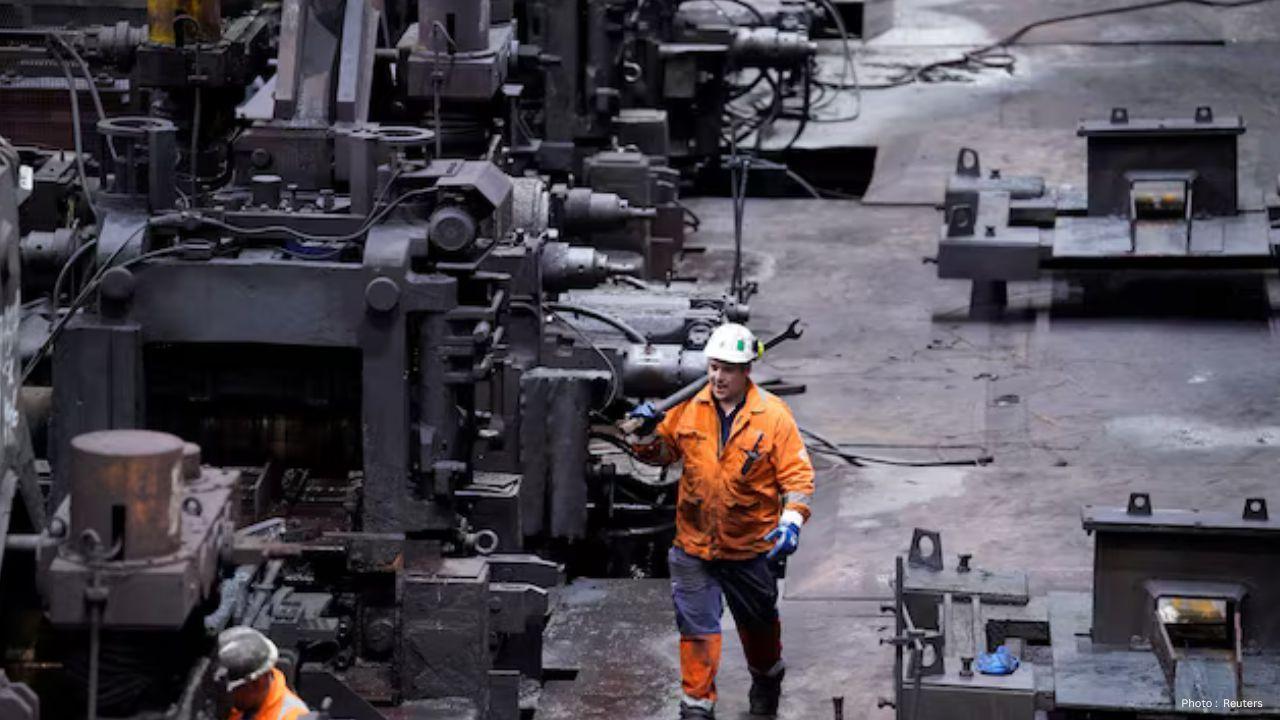
British government has moved a step closer to nationalising British Steel, signalling that public ownership is increasingly likely as officials seek to secure the future of one of the country's most important industrial assets. The latest development comes after months of discussions over the company's future and growing concerns about the long-term survival of domestic steel production in the United Kingdom.
Government officials have stated that they are "strongly minded" to bring the company into public ownership if it is determined to be in the national interest. The move would mark one of the most significant state interventions in British industry in recent years and reflects growing concerns about economic resilience, industrial capacity, and national security.
British Steel has been under government control since April 2025 after authorities intervened to prevent disruption to operations at its Scunthorpe site. The company had faced serious financial difficulties, and efforts to secure a commercial solution failed to produce an agreement that the government considered acceptable for taxpayers. As a result, ministers began exploring stronger measures to safeguard production and protect thousands of jobs linked to the steel sector.
The proposed nationalisation is part of a broader strategy aimed at preserving the country's ability to manufacture steel domestically. Industry leaders and government officials argue that maintaining steelmaking capacity is essential for infrastructure projects, defence requirements, transportation networks, and economic stability. They believe losing domestic production would increase dependence on foreign suppliers and weaken Britain's industrial base.
Prime Minister Sir Keir Starmer's administration has already introduced legislation that would give the government the legal authority to take steel companies into public ownership when a public interest test is met. The legislation does not automatically nationalise any company, but it creates a framework that could be used if ministers determine such action is necessary.
Supporters of the proposal argue that steel remains a strategic industry that deserves protection during periods of economic uncertainty. They point out that the sector supports thousands of direct jobs and many more positions throughout supply chains. Factories, engineering firms, construction companies, and transport operators all depend on a stable supply of steel products. Protecting production capacity is therefore seen as important for both economic growth and national resilience.
The government's position has been influenced by difficulties faced by the company under previous ownership. Chinese-owned Jingye acquired the business in 2020 and invested in operations, but ongoing financial challenges and market pressures continued to affect performance. More recently, the owner sought compensation after the government assumed operational control, adding another layer of complexity to the situation.
Global conditions have also contributed to the industry's struggles. Steel producers across many countries have faced intense competition, rising operating costs, changing environmental regulations, and pressure from lower-priced imports. These challenges have made it difficult for traditional manufacturers to remain profitable while continuing to invest in modern facilities and cleaner technologies.
Another important factor behind the government's approach is the future of green steel production. Officials have repeatedly stated that any long-term plan should include modernisation and a transition toward cleaner manufacturing methods. Public ownership could provide greater flexibility to invest in new technology, improve efficiency, and support environmental goals while maintaining domestic production.
The decision also arrives at a time when many countries are reassessing the role of government in strategic industries. Recent global events have highlighted vulnerabilities in supply chains, leading policymakers to place greater emphasis on self-sufficiency and industrial security. In this environment, sectors such as steel, energy, and advanced manufacturing are receiving increased attention from governments around the world.
For workers and local communities, the possibility of public ownership offers a degree of certainty after years of uncertainty. Thousands of families depend directly or indirectly on steel production, particularly in areas where the industry remains a major employer. Maintaining operations could help protect jobs, preserve skills, and support regional economies that rely heavily on manufacturing activity.
However, critics of nationalisation argue that government ownership is not always the most effective solution. Some economists warn that public control can place financial burdens on taxpayers and may not guarantee long-term competitiveness. Others believe that attracting private investment and encouraging innovation could provide a more sustainable path forward. These concerns are likely to remain part of the debate as lawmakers consider the future of the company.
The outcome will be closely watched by industry leaders, investors, employees, and international partners. The steel sector plays a key role in manufacturing, infrastructure development, and economic planning, making its future an issue of national importance. Decisions taken in the coming months could shape the direction of Britain's industrial strategy for years to come.
In conclusion, Britain's growing willingness to nationalise British Steel reflects a broader effort to protect strategic industries, safeguard jobs, and preserve domestic manufacturing capacity. While the final decision has yet to be made, the government's latest statements indicate that public ownership is becoming an increasingly likely option. As economic and geopolitical challenges continue to evolve, the future of the steel industry will remain a central issue in the country's industrial and economic policy.
#trending #latest #BritishSteel #UKSteelIndustry #UnitedKingdom #SteelManufacturing #Nationalisation #UKGovernment #KeirStarmer #IndustrialPolicy #ManufacturingNews #EconomicPolicy #SteelWorkers #IndustryNews







Advances in Aerospace Technology and Commercial Aviation Recovery
Insights into breakthrough aerospace technologies and commercial aviation’s recovery amid 2025 chall

Defense Modernization and Strategic Spending Trends
Explore key trends in global defense modernization and strategic military spending shaping 2025 secu

Tens of Thousands Protest in Serbia on Anniversary of Deadly Roof Collapse
Tens of thousands in Novi Sad mark a year since a deadly station roof collapse that killed 16, prote

Canada PM Carney Apologizes to Trump Over Controversial Reagan Anti-Tariff Ad
Canadian PM Mark Carney apologized to President Trump over an Ontario anti-tariff ad quoting Reagan,

The ad that stirred a hornets nest, and made Canadian PM Carney say sorry to Trump
Canadian PM Mark Carney apologizes to US President Trump after a tariff-related ad causes diplomatic

Bengaluru-Mumbai Superfast Train Approved After 30-Year Wait
Railways approves new superfast train connecting Bengaluru and Mumbai, ending a 30-year demand, easi



