Post by : Saif
The electric vehicle company Lucid Motors has revealed a bold vision for the future of transportation by unveiling a two-seater robotaxi concept and announcing new plans for self-driving technology. The announcement was made during the company’s investor event in New York, where Lucid shared its long-term strategy for electric vehicles, autonomous driving, and future growth.
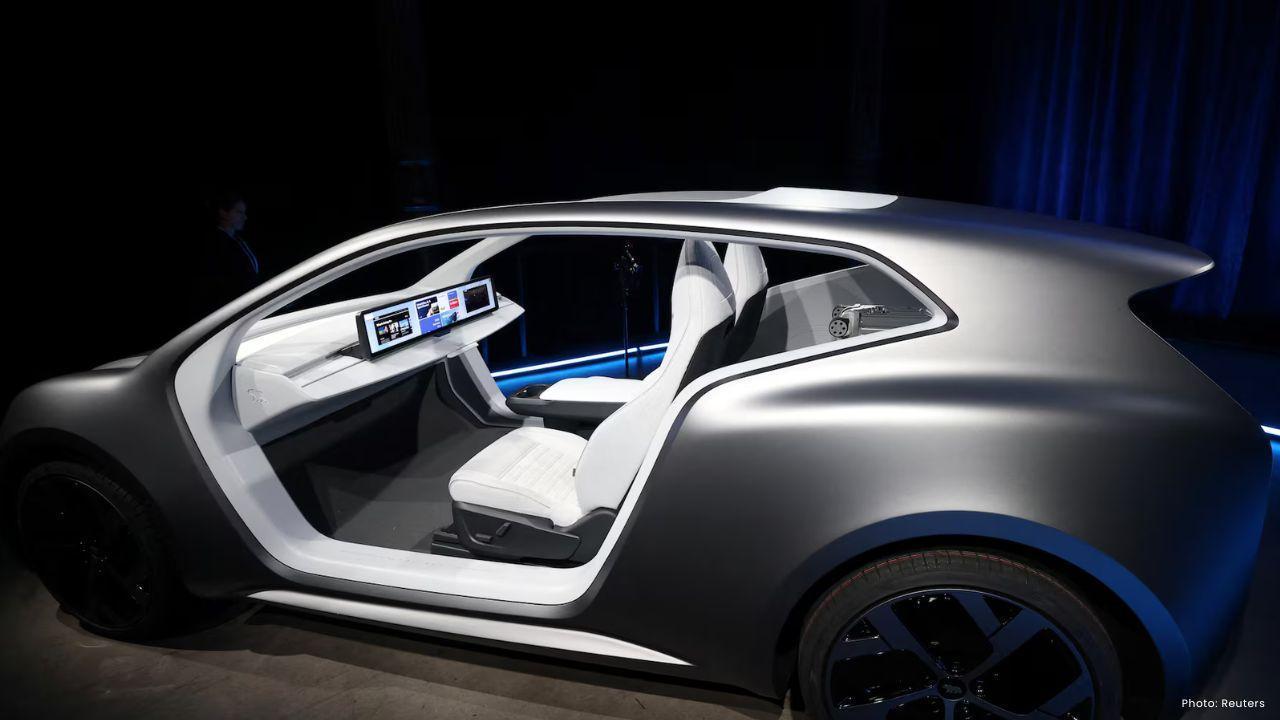
The concept vehicle, called “Lunar,” is designed as a fully autonomous taxi. It has no steering wheel and no pedals, meaning the car is built to drive itself without any human driver inside. The vehicle is intended to operate as part of a robotaxi fleet that can transport passengers automatically through cities.
Lucid says this project represents an important step toward a future where transportation is powered by electric vehicles and controlled by advanced artificial intelligence.
The two-seat robotaxi is different from most traditional cars because it is built only for autonomous travel. Instead of being designed for a driver, the vehicle focuses on passenger comfort and efficient transportation. By removing the steering wheel and pedals, engineers can redesign the interior to give passengers more space and a different travel experience.
According to the company, the robotaxi could have operating costs about 40 percent lower than many current robotaxi services. The vehicle is also expected to be highly energy-efficient, reaching about 5.5 miles per kilowatt-hour, which is an important measure of efficiency for electric vehicles.
The company did not announce when the robotaxi might enter commercial service, and executives made it clear that the vehicle is still a concept. However, the design shows how Lucid is preparing for a future where autonomous transportation becomes more common.
Alongside the robotaxi concept, Lucid also introduced a new business model for its self-driving technology. The company plans to offer autonomous driving software through a monthly subscription system. Prices are expected to range from $69 to $199 per month, depending on the level of automation and features included.
This approach reflects a broader trend in the automotive industry, where car companies are increasingly treating software as an ongoing service rather than a one-time purchase.
Lucid’s plan places it in competition with other major companies working on autonomous vehicles. Automakers such as Tesla and Rivian have also introduced subscription-based services for advanced driver-assistance systems and self-driving features.
The race to develop fully autonomous vehicles has become one of the most important technological battles in the global auto industry. Companies believe that robotaxis could transform urban transportation by reducing traffic accidents, lowering costs, and making travel easier for people who cannot drive.
Lucid is also working with technology and transportation partners to develop its robotaxi services. The company has partnered with Uber and the robotics firm Nuro to launch autonomous ride-hailing vehicles based on its Gravity SUV platform. These vehicles are expected to begin operating as robotaxis in the near future.
Through these partnerships, Lucid hopes to expand its presence in the growing robotaxi market without having to build an entire transportation network on its own.
The company also revealed that its robotaxi concept is built on a new mid-size electric vehicle platform that will support future Lucid models. This platform is expected to help increase production and make the company’s vehicles more affordable.
Lucid’s current lineup includes luxury electric cars such as the Air sedan and the Gravity SUV. While these vehicles are known for high performance and long driving range, they target the premium market and are relatively expensive. By introducing a mid-size platform, Lucid hopes to reach a much larger group of customers.
Executives say the company aims to increase annual vehicle deliveries to around 100,000 units in the coming years as it expands its product lineup.
However, the company faces several challenges. Demand for electric vehicles has slowed in some markets, and rising competition from both traditional automakers and new EV startups has made the industry more competitive.
Investor reactions to Lucid’s announcements were mixed. After the company presented its plans, Lucid’s shares dropped nearly 8 percent, showing that some investors remain cautious about the company’s long-term strategy.
Analysts say investors are concerned about production costs, supply chain pressures, and the time it may take for autonomous driving technology to become widely accepted.
Still, Lucid believes that its focus on efficiency, advanced battery , and software could help it stand out in the crowded EV market. Company leaders say autonomy will play a major role in the future of transportation and could eventually become a major source of revenue.
The robotaxi concept represents a vision of what cities might look like in the future. Instead of privately owned cars, fleets of autonomous electric vehicles could move people through urban areas with fewer accidents and lower environmental impact.
For now, Lucid’s Lunar robotaxi remains a concept vehicle. But the announcement signals that the company is preparing for a future where autonomous driving, artificial intelligence, and electric vehicles reshape how people travel.
The next decade will likely determine whether robotaxis become a normal part of everyday life. Lucid’s latest announcement shows that the race to build that future is already underway.
#trending #latest #LucidMotors #Robotaxi #AutonomousVehicles #SelfDrivingCars #ElectricVehicles #EVTechnology #FutureOfTransport #MobilityInnovation #TechNews #armustnews





Advances in Aerospace Technology and Commercial Aviation Recovery
Insights into breakthrough aerospace technologies and commercial aviation’s recovery amid 2025 chall

Defense Modernization and Strategic Spending Trends
Explore key trends in global defense modernization and strategic military spending shaping 2025 secu

Tens of Thousands Protest in Serbia on Anniversary of Deadly Roof Collapse
Tens of thousands in Novi Sad mark a year since a deadly station roof collapse that killed 16, prote

Canada PM Carney Apologizes to Trump Over Controversial Reagan Anti-Tariff Ad
Canadian PM Mark Carney apologized to President Trump over an Ontario anti-tariff ad quoting Reagan,

The ad that stirred a hornets nest, and made Canadian PM Carney say sorry to Trump
Canadian PM Mark Carney apologizes to US President Trump after a tariff-related ad causes diplomatic

Bengaluru-Mumbai Superfast Train Approved After 30-Year Wait
Railways approves new superfast train connecting Bengaluru and Mumbai, ending a 30-year demand, easi



