Post by : Avinab Raana
Photo : X / @Scs_Connect
Tensions in the East China Sea have once again surged as Japan formally demanded a Chinese research vessel halt its operations within its Exclusive Economic Zone (EEZ), triggering a fresh geopolitical standoff in one of the world’s most sensitive maritime regions. The incident is not just a routine territorial disagreement—it highlights the growing strategic importance of maritime data, underwater intelligence, and control over critical sea zones that are increasingly shaping global security dynamics.
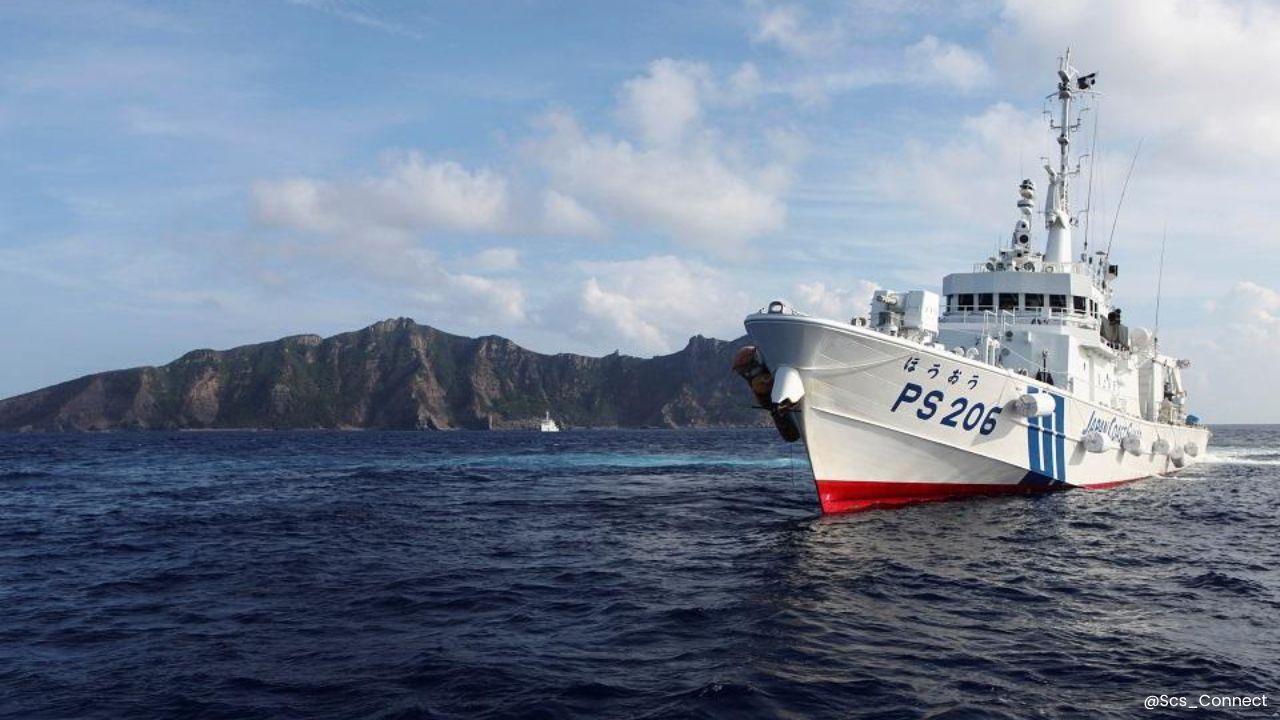
The situation escalated when Japan’s Coast Guard detected a Chinese marine research vessel operating near the disputed Senkaku Islands, an area administered by Japan but claimed by China. The vessel was observed deploying specialized equipment into the sea, indicating active oceanographic research. In response, Japanese authorities issued direct radio warnings, clearly stating that any form of scientific research within its EEZ without prior consent is not permissible.
While labeled as a research mission, such operations carry deeper strategic implications. Oceanographic surveys are critical for mapping seabed conditions, underwater acoustics, and environmental variables data that can significantly enhance submarine navigation, stealth operations, and anti-submarine warfare capabilities. This dual-use nature of research vessels blurs the line between scientific exploration and military intelligence gathering, making such incidents far more sensitive than they appear on the surface.
The waters surrounding the Senkaku Islands have long been a hotspot for maritime confrontations, with both Japan and China regularly deploying coast guard and surveillance vessels to assert their claims. This latest incident marks yet another chapter in a series of recurring standoffs, reflecting the fragile balance of control in the region. Japan maintains administrative authority over the islands, but China continues to challenge this position through sustained maritime presence and operational activity.
The timing of this incident adds another layer of complexity, as regional tensions between Japan and China have been steadily increasing. Strategic posturing, defense commitments, and broader Indo-Pacific dynamics are all contributing to a more assertive approach from both sides. Maritime encounters like this are no longer isolated. They are part of a larger geopolitical narrative where control over sea lanes, resources, and strategic positioning plays a defining role in regional power dynamics.
As nations invest heavily in undersea capabilities, the focus of maritime competition is shifting from surface dominance to underwater intelligence. The ability to map, monitor, and understand the ocean floor is becoming a decisive factor in modern naval strategy. This incident underscores a critical reality future conflicts may not begin with visible confrontation, but with silent data collection beneath the waves.
Japan’s firm response sends a clear message about its stance on sovereignty and maritime rights, while also highlighting the growing complexity of enforcing them in contested waters. As technology continues to evolve and the demand for strategic maritime intelligence increases, such encounters are likely to become more frequent. The East China Sea is no longer just a disputed region, it is emerging as a key theatre in the evolving landscape of global maritime power.
T#trending #latest,#JapanChinaTensions #EEZDispute #MaritimeSecurity #SenkakuIslands #NavalGeopolitics







Advances in Aerospace Technology and Commercial Aviation Recovery
Insights into breakthrough aerospace technologies and commercial aviation’s recovery amid 2025 chall

Defense Modernization and Strategic Spending Trends
Explore key trends in global defense modernization and strategic military spending shaping 2025 secu

Tens of Thousands Protest in Serbia on Anniversary of Deadly Roof Collapse
Tens of thousands in Novi Sad mark a year since a deadly station roof collapse that killed 16, prote

Canada PM Carney Apologizes to Trump Over Controversial Reagan Anti-Tariff Ad
Canadian PM Mark Carney apologized to President Trump over an Ontario anti-tariff ad quoting Reagan,

The ad that stirred a hornets nest, and made Canadian PM Carney say sorry to Trump
Canadian PM Mark Carney apologizes to US President Trump after a tariff-related ad causes diplomatic

Bengaluru-Mumbai Superfast Train Approved After 30-Year Wait
Railways approves new superfast train connecting Bengaluru and Mumbai, ending a 30-year demand, easi



