Post by : Avinab Raana
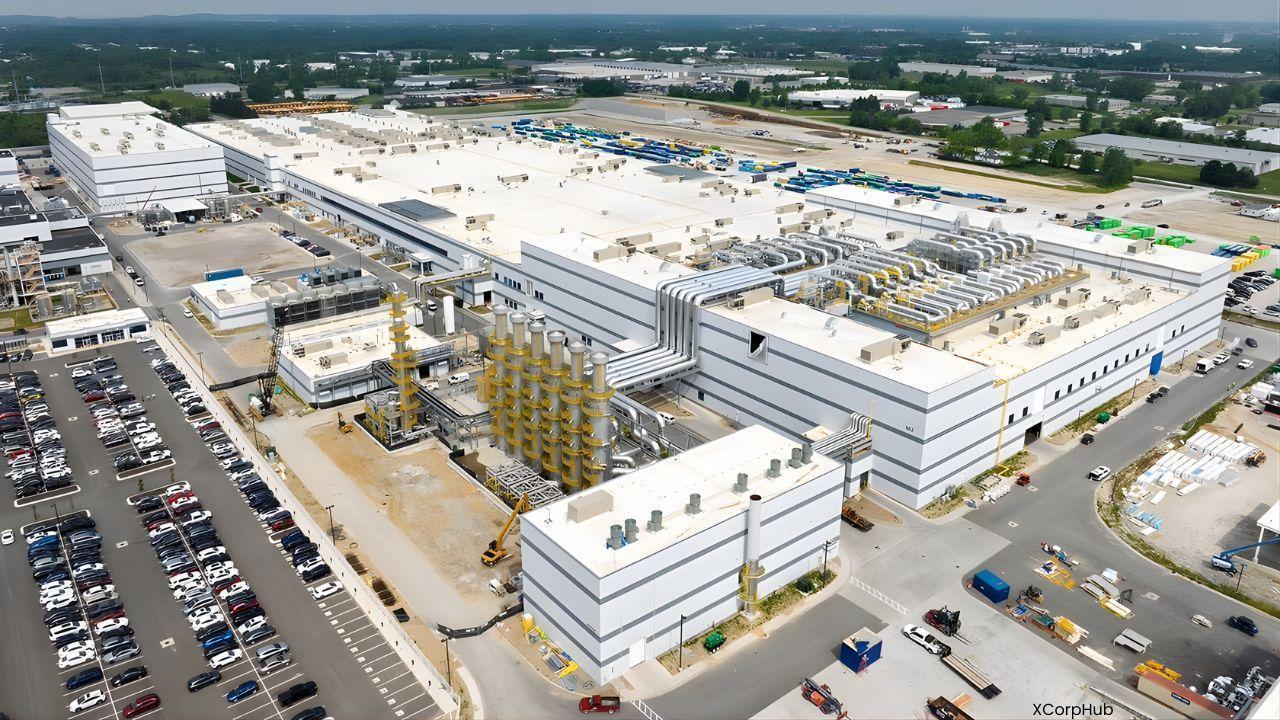
Photo : X / XCorpHub
General Motors and LG Energy Solution are reshaping their battery manufacturing strategy by converting their Tennessee battery plant to produce energy storage batteries instead of focusing solely on electric vehicle battery cells. The shift reflects a broader adjustment across the automotive and battery industries as companies respond to changing EV demand patterns and emerging opportunities in large-scale energy storage. The move comes through the companies’ joint venture, Ultium Cells, which operates battery manufacturing facilities designed to supply next-generation electric vehicle platforms.
The Tennessee facility is being retooled to manufacture lithium-iron-phosphate batteries designed primarily for stationary energy storage systems rather than vehicle propulsion. Retooling a battery plant requires significant engineering changes, including new production equipment, revised material sourcing, and updated quality control processes. These energy storage batteries are expected to support applications such as grid-scale storage, renewable energy balancing, and power backup for large infrastructure projects.
As part of the plant’s operational transformation, the companies plan to bring back approximately 700 workers who had previously been laid off during a slowdown in EV battery demand. The recall of workers indicates that production preparations are advancing and that the facility is moving closer to launching its new battery manufacturing operations. The workforce return also reflects the growing importance of energy storage as an emerging market for battery manufacturers.
The global demand for energy storage systems is expanding rapidly as electricity grids integrate larger volumes of renewable energy sources such as solar and wind power. Energy storage batteries help stabilize power supply by storing excess electricity and releasing it when demand rises. The rise of data centers, electrification infrastructure, and renewable energy deployment has also accelerated the need for large battery storage installations.
Automotive battery manufacturers are increasingly adapting production strategies as the electric vehicle market evolves. While EV adoption continues to grow globally, short-term fluctuations in vehicle demand have prompted companies to diversify battery applications. By shifting part of their production capacity toward stationary energy storage systems, battery producers can utilize existing manufacturing infrastructure while tapping into a rapidly expanding energy sector.
The transformation of the Tennessee plant highlights how the battery industry is becoming a central pillar of the broader energy transition. Batteries are no longer tied solely to electric vehicles; they are now essential infrastructure for modern power systems. For GM and LG, the move represents a strategic step toward balancing automotive battery production with the rising demand for large-scale energy storage solutions, positioning the companies to serve multiple high-growth markets simultaneously.
GM LG battery plant Tennessee, energy storage battery production, Ultium Cells Tennessee plant, GM LG battery strategy shift, EV battery demand slowdown, lithium iron phosphate batteries energy storage, GM LG workforce recall






Advances in Aerospace Technology and Commercial Aviation Recovery
Insights into breakthrough aerospace technologies and commercial aviation’s recovery amid 2025 chall

Defense Modernization and Strategic Spending Trends
Explore key trends in global defense modernization and strategic military spending shaping 2025 secu

Tens of Thousands Protest in Serbia on Anniversary of Deadly Roof Collapse
Tens of thousands in Novi Sad mark a year since a deadly station roof collapse that killed 16, prote

Canada PM Carney Apologizes to Trump Over Controversial Reagan Anti-Tariff Ad
Canadian PM Mark Carney apologized to President Trump over an Ontario anti-tariff ad quoting Reagan,

The ad that stirred a hornets nest, and made Canadian PM Carney say sorry to Trump
Canadian PM Mark Carney apologizes to US President Trump after a tariff-related ad causes diplomatic

Bengaluru-Mumbai Superfast Train Approved After 30-Year Wait
Railways approves new superfast train connecting Bengaluru and Mumbai, ending a 30-year demand, easi



