Post by : Avinab Raana
Photo : X / Financial Chronicle
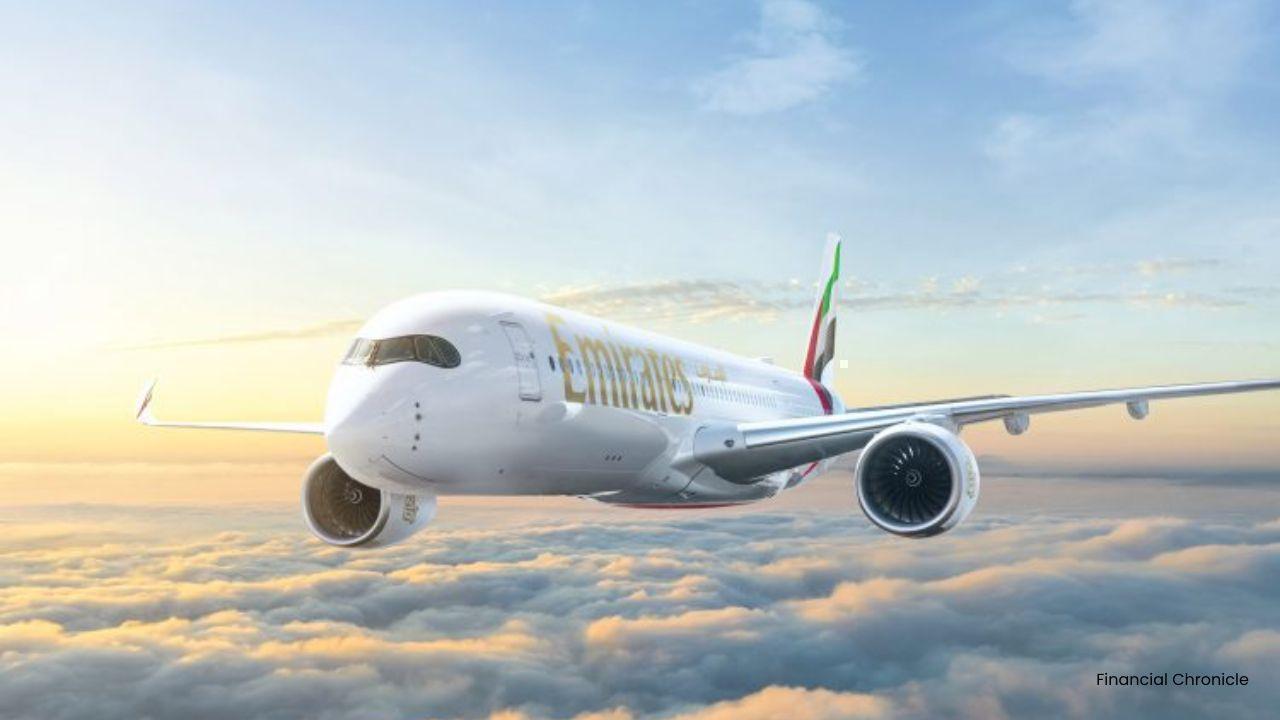
International aviation has begun moving toward stability as Emirates flights gradually return to the skies following the partial reopening of regional airspace across parts of the Middle East. The Dubai-based airline confirmed that it has resumed a reduced number of operations, restoring select routes after disruptions forced airlines across the region to suspend or reroute services.
The cautious restart reflects the complex nature of aviation recovery whenever airspace restrictions affect major global transit hubs. With Dubai acting as a crucial gateway connecting continents, the return of Emirates flights signals the first step toward rebuilding disrupted travel networks.
Airlines are approaching the reopening of regional airspace carefully, restoring services only where safe and approved flight corridors are available. Emirates has adjusted its schedules to operate a limited number of flights while coordinating closely with aviation authorities and air traffic control agencies.
The airline’s reduced operations aim to maintain essential passenger and cargo connectivity while avoiding overcrowded skies during the early stages of airspace normalization. For travelers and logistics operators alike, even a partial restoration of services provides some stability after days of uncertainty.
The disruption has highlighted just how important Dubai aviation is to the global transport ecosystem. Dubai International Airport serves as one of the world’s busiest international hubs, acting as a bridge between Asia, Europe, Africa, and the Americas.
When flight operations slow down in this region, the ripple effects spread quickly across global aviation networks. Airlines must reroute aircraft, adjust schedules, and manage passenger transfers, often affecting long-haul routes far beyond the Middle East.
The resumption of Emirates flights also restores critical cargo movement through Dubai’s extensive aviation logistics network. Many flights carry not only travelers but also high-value goods, pharmaceuticals, and time-sensitive shipments that rely on reliable air transport.
Airlines are urging passengers to check flight updates and confirm travel plans before heading to airports as schedules continue to evolve. Because the reopening of regional airspace remains gradual, further changes in flight availability may occur as authorities monitor the situation.
While the return of limited operations is encouraging, the aviation sector understands that a full recovery will take time. Restoring normal schedules requires stable airspace access, coordinated international aviation rules, and confidence among airlines and passengers.
For Dubai aviation, the phased return of Emirates flights represents a crucial step toward reconnecting global travel routes. As airspace restrictions ease and flight corridors expand, airlines hope to gradually rebuild one of the world’s most important aviation crossroads.
Emirates flights, regional airspace, Dubai aviation









Advances in Aerospace Technology and Commercial Aviation Recovery
Insights into breakthrough aerospace technologies and commercial aviation’s recovery amid 2025 chall

Defense Modernization and Strategic Spending Trends
Explore key trends in global defense modernization and strategic military spending shaping 2025 secu

Tens of Thousands Protest in Serbia on Anniversary of Deadly Roof Collapse
Tens of thousands in Novi Sad mark a year since a deadly station roof collapse that killed 16, prote

Canada PM Carney Apologizes to Trump Over Controversial Reagan Anti-Tariff Ad
Canadian PM Mark Carney apologized to President Trump over an Ontario anti-tariff ad quoting Reagan,

The ad that stirred a hornets nest, and made Canadian PM Carney say sorry to Trump
Canadian PM Mark Carney apologizes to US President Trump after a tariff-related ad causes diplomatic

Bengaluru-Mumbai Superfast Train Approved After 30-Year Wait
Railways approves new superfast train connecting Bengaluru and Mumbai, ending a 30-year demand, easi



