Post by : Avinab Raana
Photo : X / ITLN Live
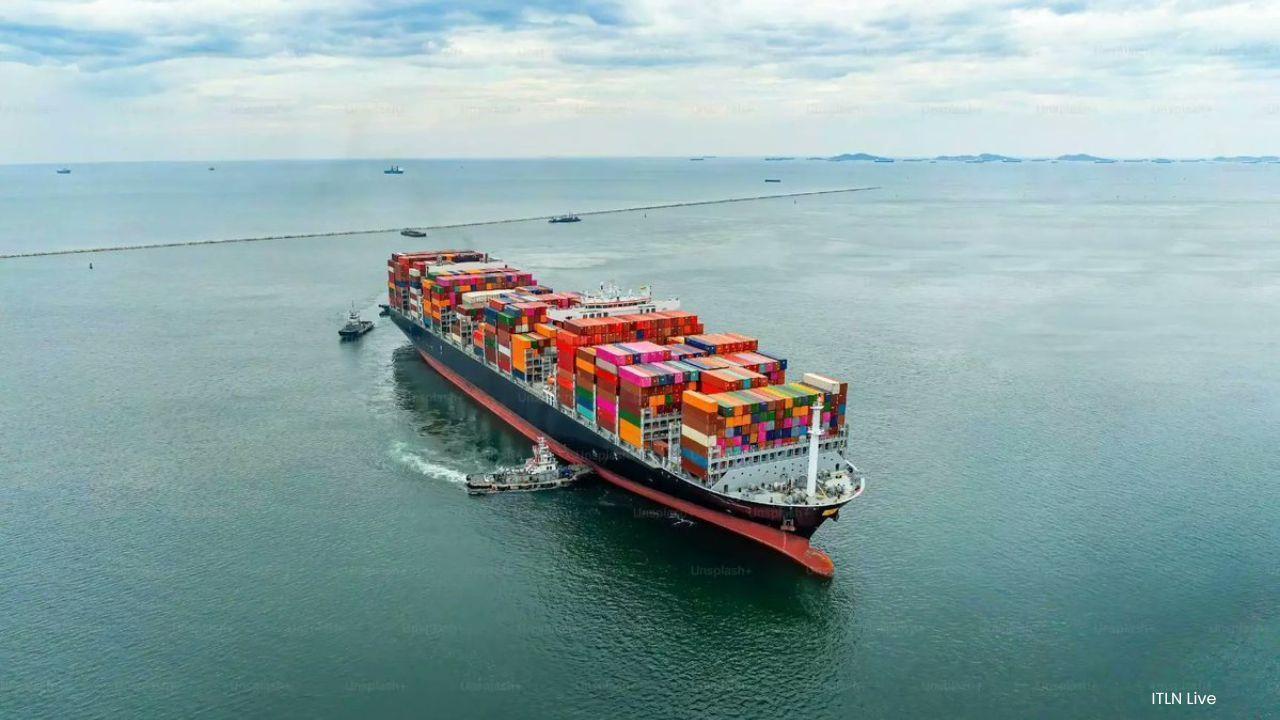
Growing geopolitical tensions surrounding the Strait of Hormuz are beginning to shake the foundations of global shipping, as shipping companies and maritime authorities react to mounting security risks in one of the world’s most vital sea lanes. The narrow channel linking the Persian Gulf to international waters carries a massive volume of oil, gas, and cargo shipments every day, making it a critical artery for maritime trade.
Recent incidents near the strategic waterway have heightened concerns across the shipping industry. Operators are closely monitoring the situation, aware that even minor disruptions in the Strait of Hormuz can rapidly impact global logistics networks, energy flows, and freight operations.
With uncertainty increasing in the Gulf region, shipping companies have started evaluating alternative navigation strategies to protect their vessels and crews. Some carriers are adjusting schedules or considering longer routes to avoid potential risks linked to the Strait of Hormuz.
Such moves highlight how sensitive global shipping routes are to geopolitical developments. The shipping industry depends heavily on stable maritime corridors, and any disruption in a strategic chokepoint can quickly create congestion, delays, and higher operational costs across global trade networks.
For cargo operators and logistics planners, even temporary caution from shipping companies can translate into delays in maritime trade, affecting everything from energy deliveries to industrial supply chains.
The uncertainty surrounding the Strait of Hormuz is already beginning to influence shipping economics. Insurance providers are reassessing risk levels for vessels operating in the region, pushing up war-risk premiums and operational costs for shipowners.
When risks rise along key maritime corridors, freight rates often follow. As a result, companies involved in global shipping may face higher expenses related to security protocols, insurance coverage, and possible route diversions. These additional costs often ripple across industries that rely on maritime transport, including energy, manufacturing, and global retail supply chains.
The Strait of Hormuz is widely considered one of the most strategically important maritime chokepoints in the world. A significant share of global oil and gas exports pass through this narrow waterway, linking major Gulf energy producers with markets across Asia, Europe, and beyond.
Any disruption to maritime trade in the region could therefore trigger wider economic consequences. Delays in tanker movements or cargo shipments could influence energy prices, supply chains, and international trade patterns. For many countries, maintaining stability in the strait is essential to ensuring uninterrupted access to critical energy resources.
As tensions continue to unfold, the global maritime community remains on high alert. Shipping companies, port authorities, and logistics networks are watching developments closely, aware that the stability of global shipping depends heavily on secure and open maritime corridors.
The situation surrounding the Strait of Hormuz serves as a reminder of how quickly geopolitical tensions can reshape the dynamics of maritime trade. For now, the industry is proceeding cautiously, balancing operational continuity with safety as one of the world’s most important shipping routes faces renewed uncertainty.
Strait of Hormuz, global shipping, maritime trade






Advances in Aerospace Technology and Commercial Aviation Recovery
Insights into breakthrough aerospace technologies and commercial aviation’s recovery amid 2025 chall

Defense Modernization and Strategic Spending Trends
Explore key trends in global defense modernization and strategic military spending shaping 2025 secu

Tens of Thousands Protest in Serbia on Anniversary of Deadly Roof Collapse
Tens of thousands in Novi Sad mark a year since a deadly station roof collapse that killed 16, prote

Canada PM Carney Apologizes to Trump Over Controversial Reagan Anti-Tariff Ad
Canadian PM Mark Carney apologized to President Trump over an Ontario anti-tariff ad quoting Reagan,

The ad that stirred a hornets nest, and made Canadian PM Carney say sorry to Trump
Canadian PM Mark Carney apologizes to US President Trump after a tariff-related ad causes diplomatic

Bengaluru-Mumbai Superfast Train Approved After 30-Year Wait
Railways approves new superfast train connecting Bengaluru and Mumbai, ending a 30-year demand, easi



