Post by : Saif
A new generation of U.S. defense technology startups is borrowing ideas and components from the automotive, oil and gas, pharmaceutical, and manufacturing industries to produce missiles and rocket systems faster and at lower cost.
The growing demand for weapons following global conflicts, including the Russia-Ukraine war and tensions in the Middle East, has encouraged startups to challenge traditional defense contractors by introducing modern production techniques and commercial supply chains.
Industry executives and experts say these innovations could help strengthen America's defense manufacturing capacity while reducing production delays.
Missile Demand Drives Manufacturing Innovation
The United States has significantly increased the production and use of rockets, missiles, and other precision-guided weapons in recent years.
According to Pentagon data, tens of thousands of rocket-powered weapons have been used or supplied since Russia invaded Ukraine in 2022. Rising global security challenges have pushed the U.S. government to expand defense manufacturing while simplifying procurement rules.
The U.S. has allocated approximately $53 billion to strengthen missile and rocket production capacity as demand continues to grow.
Automotive Technology Finds New Military Role
Defense startup Castelion is using electronic chips originally designed for advanced driver assistance systems and electric vehicles to help guide missiles.
Instead of relying solely on expensive aerospace-grade processors, the company is adapting automotive Field-Programmable Gate Arrays (FPGAs), which are available at a fraction of the cost and can be delivered much faster.
The company is also sourcing specialized high-pressure metal tubes from the oil and gas industry. These pipes, originally developed for hydraulic fracturing (fracking), are capable of handling the high temperatures and pressures required for rocket motors while being more affordable and widely available than aerospace alternatives.
Pharmaceutical Manufacturing Improves Rocket Production
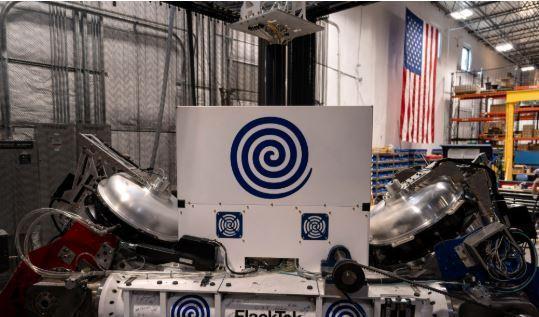
Another defense technology company, Anduril, is applying pharmaceutical manufacturing techniques to improve the production of rocket propellants.
The company has adopted bladeless centrifugal mixing systems originally developed for manufacturing precision medicines, including cancer treatments.
These advanced mixers produce consistent chemical mixtures much faster than conventional industrial equipment while reducing contamination risks.
According to the company, the technology increases production capacity by more than ten times compared to previous manufacturing methods.
3D Printing Reduces Production Time
Several defense companies are also embracing 3D printing to accelerate missile manufacturing.
Companies including X-Bow Systems, Firehawk Aerospace, and traditional defense contractor Northrop Grumman have introduced additive manufacturing technologies for rocket motors and production tools.
3D printing significantly shortens manufacturing timelines by producing components more quickly than traditional machining methods.
Some companies say production lines that previously required several years to establish can now be built within months, while rocket fuel production has been reduced from weeks to just a few hours.
These advances are expected to improve flexibility, lower costs, and increase production capacity.
Challenges Still Remain
Despite rapid innovation, experts caution that defense manufacturing remains highly complex.
Rocket motors require multiple stages of production, including chemical mixing, casting, curing, baking, X-ray inspections, machining, and extensive quality testing before deployment.
Specialized equipment such as industrial curing ovens and X-ray inspection systems continues to create production bottlenecks.
In addition, startups must demonstrate they can consistently manufacture weapons at large scale while meeting strict military certification and safety standards.
Future of U.S. Defense Manufacturing
The Pentagon continues to encourage new suppliers to increase competition within the defense industry and reduce dependence on a small number of major contractors.
Companies such as Lockheed Martin, RTX (formerly Raytheon Technologies), Boeing, Northrop Grumman, and L3Harris are also investing heavily in advanced manufacturing technologies, including automation and 3D printing.
As global security challenges continue to drive demand for missiles and precision weapons, defense startups are expected to play an increasingly important role in modernizing U.S. military production.
However, long-term success will depend on their ability to scale manufacturing, secure multi-year government contracts, and consistently deliver high-quality defense systems.
#trending #latest #Defense #Pentagon #Military #Technology #Innovation #Missiles #3DPrinting #DefenseTech #Weapons #Manufacturing #USDefense #Anduril #Startup #BusinessNews #MeastBulletin









Advances in Aerospace Technology and Commercial Aviation Recovery
Insights into breakthrough aerospace technologies and commercial aviation’s recovery amid 2025 chall

Defense Modernization and Strategic Spending Trends
Explore key trends in global defense modernization and strategic military spending shaping 2025 secu

Tens of Thousands Protest in Serbia on Anniversary of Deadly Roof Collapse
Tens of thousands in Novi Sad mark a year since a deadly station roof collapse that killed 16, prote

Canada PM Carney Apologizes to Trump Over Controversial Reagan Anti-Tariff Ad
Canadian PM Mark Carney apologized to President Trump over an Ontario anti-tariff ad quoting Reagan,

The ad that stirred a hornets nest, and made Canadian PM Carney say sorry to Trump
Canadian PM Mark Carney apologizes to US President Trump after a tariff-related ad causes diplomatic

Bengaluru-Mumbai Superfast Train Approved After 30-Year Wait
Railways approves new superfast train connecting Bengaluru and Mumbai, ending a 30-year demand, easi



