Post by : Avinab Raana
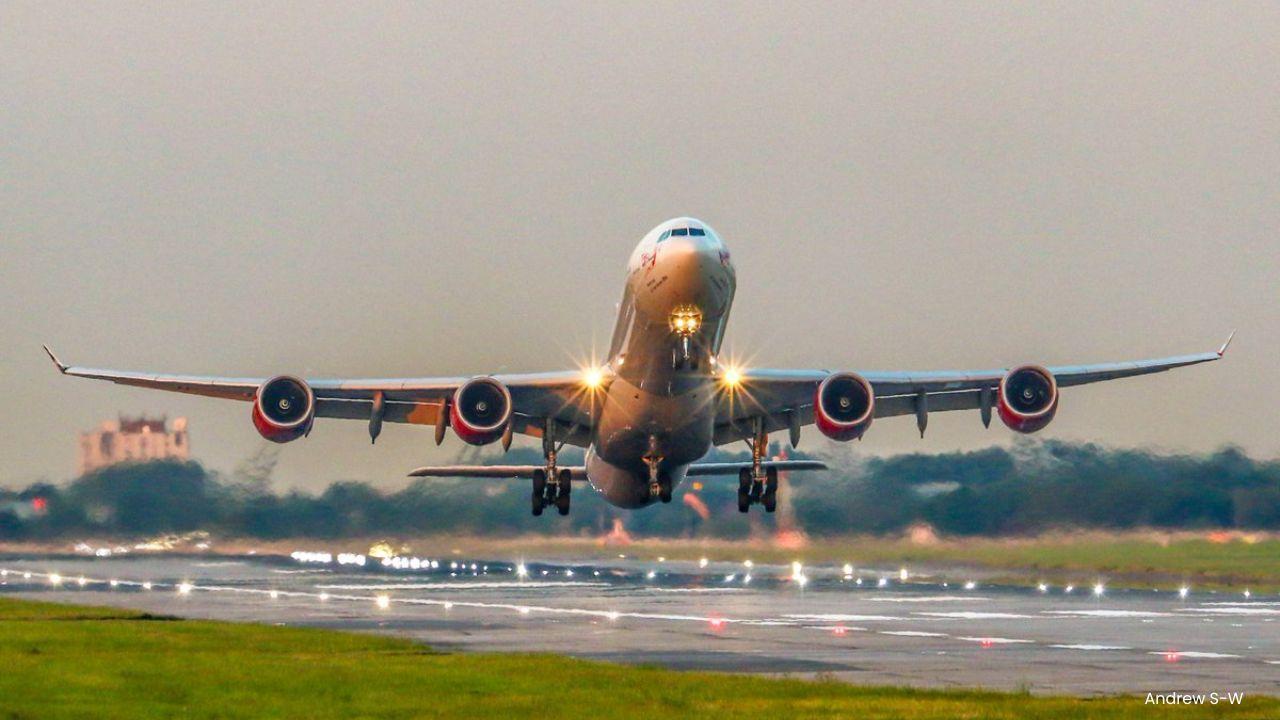
photo : X / Andrew S-W
The BAe 146 retirement marks the end of one of aviation’s most distinctive aircraft stories. For decades, the BAe 146 aircraft served airlines around the world as a dependable and remarkably quiet regional jet. Known for its unusual four-engine configuration and its ability to operate from short runways and noise-sensitive airports, the aircraft became a favorite among regional carriers. With the final retirement of the type, aviation is saying goodbye to a plane that helped define the quiet regional jet era.
The story of the BAe 146 aircraft began in the late 1970s when manufacturers sought to build a regional jet capable of flying into airports located close to city centers. Noise restrictions were becoming stricter, and airlines needed an aircraft that could meet these limits while still carrying a meaningful number of passengers.
The result was the BAe 146, a design unlike most other aircraft. Instead of two large engines, engineers installed four smaller turbofan engines on a high-mounted wing. This configuration allowed the aircraft to operate with lower noise levels, making it ideal for airports surrounded by residential areas. Over time, the aircraft became widely recognized as the ultimate quiet regional jet, especially for short-haul European routes.
Airlines valued the BAe 146 aircraft for its versatility. It could land on short runways, handle steep approaches, and operate in challenging weather conditions. These capabilities allowed it to serve airports that other jets simply could not access easily.
Because of these strengths, the aircraft was used extensively across Europe, Australia, and North America. It became particularly famous for operating into difficult airports where noise restrictions were strict. For passengers, the aircraft offered smooth flights and a surprisingly quiet cabin compared with other jets of its era, reinforcing its reputation as a true quiet regional jet.
Over the years, several variants were introduced, carrying between 70 and 100 passengers. The aircraft also found new life in specialized roles, including cargo transport and aerial firefighting, extending its operational life well beyond its original expectations.
The final BAe 146 retirement symbolizes a broader shift in the aviation industry. Modern regional jets now rely on more efficient twin-engine designs with advanced aerodynamics and improved fuel efficiency. While these aircraft outperform older models in many ways, they lack the unique character that defined the BAe 146.
The aircraft’s retirement also highlights how aviation technology evolves. Planes that once represented cutting-edge engineering eventually give way to newer, more efficient designs. Yet the legacy of the BAe 146 aircraft remains firmly embedded in aviation history.
Even after the BAe 146 retirement, the aircraft will continue to be remembered as one of the most distinctive regional jets ever built. Its unusual design, exceptional noise performance, and operational flexibility made it a favorite among pilots, airlines, and aviation enthusiasts alike.
For many, the aircraft symbolized a period when regional aviation expanded rapidly and connected smaller cities to major travel networks. As the industry moves forward, the legacy of the quiet regional jet will remain an important chapter in the evolution of modern air travel.
BAe 146 retirement, BAe 146 aircraft, quiet regional jet









Advances in Aerospace Technology and Commercial Aviation Recovery
Insights into breakthrough aerospace technologies and commercial aviation’s recovery amid 2025 chall

Defense Modernization and Strategic Spending Trends
Explore key trends in global defense modernization and strategic military spending shaping 2025 secu

Tens of Thousands Protest in Serbia on Anniversary of Deadly Roof Collapse
Tens of thousands in Novi Sad mark a year since a deadly station roof collapse that killed 16, prote

Canada PM Carney Apologizes to Trump Over Controversial Reagan Anti-Tariff Ad
Canadian PM Mark Carney apologized to President Trump over an Ontario anti-tariff ad quoting Reagan,

The ad that stirred a hornets nest, and made Canadian PM Carney say sorry to Trump
Canadian PM Mark Carney apologizes to US President Trump after a tariff-related ad causes diplomatic

Bengaluru-Mumbai Superfast Train Approved After 30-Year Wait
Railways approves new superfast train connecting Bengaluru and Mumbai, ending a 30-year demand, easi



