Post by : Saif
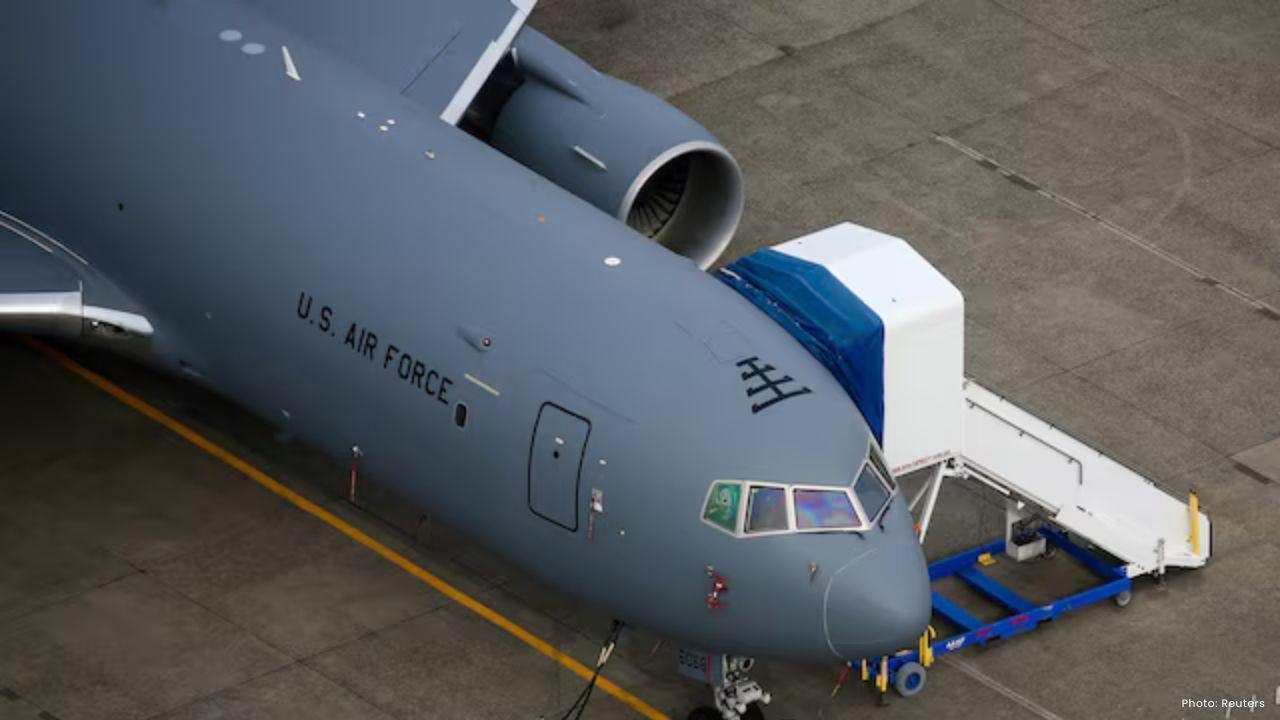
The United States Air Force has sent a strong message to Boeing regarding its KC-46 Pegasus aerial refueling tanker program. Senior military officials have made it clear that the company must resolve several ongoing technical problems with the aircraft before the Air Force agrees to buy more of them.
The warning comes as Boeing continues to deal with delays, technical issues, and rising costs linked to the tanker program. The KC-46 is designed to refuel military aircraft in mid-air, allowing fighter jets, bombers, and other aircraft to travel longer distances and stay in the air for extended missions. However, problems with some of its systems have raised concerns inside the U.S. military.
During a recent hearing before the U.S. Senate Armed Services Committee, Air Force Vice Chief of Staff General John Lamontagne told lawmakers that the military expects Boeing to correct the aircraft’s problems before additional tanker purchases are approved. The Air Force has already ordered 183 KC-46 aircraft, and more than 100 have been delivered so far. Even with these deliveries, several technical issues still need to be addressed.
One of the most important concerns involves the aircraft’s refueling boom, which is the long arm used to transfer fuel from the tanker to another aircraft during flight. The boom must be extremely precise and reliable because it connects with another aircraft while both planes are moving through the air at high speed. Problems with the boom system in the past caused damage to receiving aircraft during refueling operations.
Another major issue involves the Remote Vision System. This system allows the boom operator inside the tanker to control the refueling process using cameras and sensors instead of directly looking through windows. The system was designed to improve safety and give operators a better view, but early versions produced distorted images and depth-perception problems. These issues made it difficult for operators to guide the boom accurately during refueling.
Because of these problems, Boeing has been working with the Air Force to develop an upgraded version of the Remote Vision System. The new design is expected to improve camera quality, depth perception, and lighting conditions so operators can perform refueling operations more safely.
The KC-46 program has faced difficulties for many years. The aircraft was developed to replace older tanker planes such as the KC-135 Stratotanker, which has served in the U.S. Air Force for decades. Many of these older aircraft are still operating today, but they are becoming increasingly expensive to maintain. The KC-46 was intended to modernize the tanker fleet and support U.S. military operations around the world for many years.
However, the development process did not go smoothly. Several technical flaws were discovered during testing and early operations. At different times, deliveries were temporarily halted because of structural concerns, fuel system issues, or other mechanical problems. Each delay added pressure on Boeing and raised questions about the program’s reliability.
The financial impact has also been significant for Boeing. The tanker program operates under a fixed-price contract, which means the company must cover the extra costs caused by technical fixes and delays. Because of this structure, Boeing has already recorded more than seven billion dollars in losses connected to the KC-46 project. Recently, the company added another charge of about 565 million dollars related to the program.
Despite these challenges, the U.S. Air Force still sees the KC-46 as an important part of its future. Tanker aircraft are essential for military operations because they allow combat planes to travel long distances without landing for fuel. This capability is critical for missions that require aircraft to operate far from their home bases.
The Air Force also depends on tanker aircraft to support allies, conduct surveillance operations, and provide logistical support during conflicts. Without aerial refueling, many modern military missions would be far more difficult or even impossible.
Because of this strategic importance, the Air Force is continuing to use the KC-46 while working with Boeing to correct its remaining problems. Officials say progress has been made, but they want to see the fixes fully implemented and tested before committing to new orders.
Future tanker purchases are expected as part of the Air Force’s long-term modernization plan. Military planners have discussed the possibility of buying up to 75 additional KC-46 aircraft in the next phase of the program. However, that decision will depend heavily on Boeing’s ability to solve the aircraft’s existing technical issues.
For Boeing, the tanker program has become a major test of its defense manufacturing capabilities. The company has faced several challenges in recent years across both its commercial aviation business and military projects. Successfully fixing the KC-46’s problems would help restore confidence among military customers and government leaders.
The coming years will be important for the future of the tanker program. If Boeing resolves the aircraft’s technical issues and proves the KC-46 can operate safely and reliably, the Air Force may move forward with additional orders. If problems continue, the program could face further scrutiny from lawmakers and defense experts.
#trending #latest #Boeing #KC46 #USAirForce #MilitaryAviation #DefenseNews #AerospaceIndustry #Pentagon #GlobalSecurity #AirRefueling #AviationNews






Advances in Aerospace Technology and Commercial Aviation Recovery
Insights into breakthrough aerospace technologies and commercial aviation’s recovery amid 2025 chall

Defense Modernization and Strategic Spending Trends
Explore key trends in global defense modernization and strategic military spending shaping 2025 secu

Tens of Thousands Protest in Serbia on Anniversary of Deadly Roof Collapse
Tens of thousands in Novi Sad mark a year since a deadly station roof collapse that killed 16, prote

Canada PM Carney Apologizes to Trump Over Controversial Reagan Anti-Tariff Ad
Canadian PM Mark Carney apologized to President Trump over an Ontario anti-tariff ad quoting Reagan,

The ad that stirred a hornets nest, and made Canadian PM Carney say sorry to Trump
Canadian PM Mark Carney apologizes to US President Trump after a tariff-related ad causes diplomatic

Bengaluru-Mumbai Superfast Train Approved After 30-Year Wait
Railways approves new superfast train connecting Bengaluru and Mumbai, ending a 30-year demand, easi



