Post by : Saif
The ongoing conflict in the Middle East is beginning to affect global trade in a major way. Air freight prices have jumped sharply as shipping routes and air corridors across the region face disruptions. Companies that move goods around the world are now dealing with delays, higher costs, and growing uncertainty about how long the crisis will last.
Industry experts say the conflict has blocked important trade routes and forced airlines and cargo companies to change their normal paths. This sudden shift has pushed freight prices higher and made global supply chains more fragile.
According to logistics data and industry sources, air freight rates on some routes have increased by as much as 70 percent since the conflict intensified.
The Middle East sits at the center of global trade networks. Many cargo flights normally pass through airports in the Gulf region, linking Asia, Europe, Africa, and North America. When conflict spreads across this region, the effects can quickly reach markets across the world.
The crisis has already forced airlines to avoid certain areas of airspace. Some Middle Eastern air corridors have been restricted or closed because of security risks. As a result, aircraft must take longer routes around the conflict zone. Longer flights mean higher fuel costs and fewer cargo trips per day.
The situation has become even more complicated because shipping at sea has also been affected. Dozens of cargo ships have reportedly been stranded near the Strait of Hormuz, one of the most important shipping passages in the world.
This narrow waterway connects the Persian Gulf to the open ocean and handles a large share of global energy and cargo transport. When ships cannot move safely through the strait, trade across the region slows down dramatically.
With maritime shipping facing risks, many companies have started sending goods by air instead. However, air cargo is far more expensive than sea transport. In many cases, shipping by plane costs five to ten times more than sending goods by ship.
Because of this shift, demand for cargo space on aircraft has surged. Freight companies are competing for limited space on planes, pushing prices even higher.
Industry data shows that the cost of sending cargo from South Asia to Europe recently reached about $4.37 per kilogram, a sharp increase compared with earlier weeks.
Routes to North America and the Middle East have also experienced strong price increases as airlines adjust to the new situation.
Another factor driving prices up is the cost of fuel. Jet fuel prices have doubled since the conflict began, forcing airlines to add fuel surcharges and special war-risk fees to shipments.
Airlines must now fly longer routes while paying more for fuel, which increases the total cost of transporting cargo.
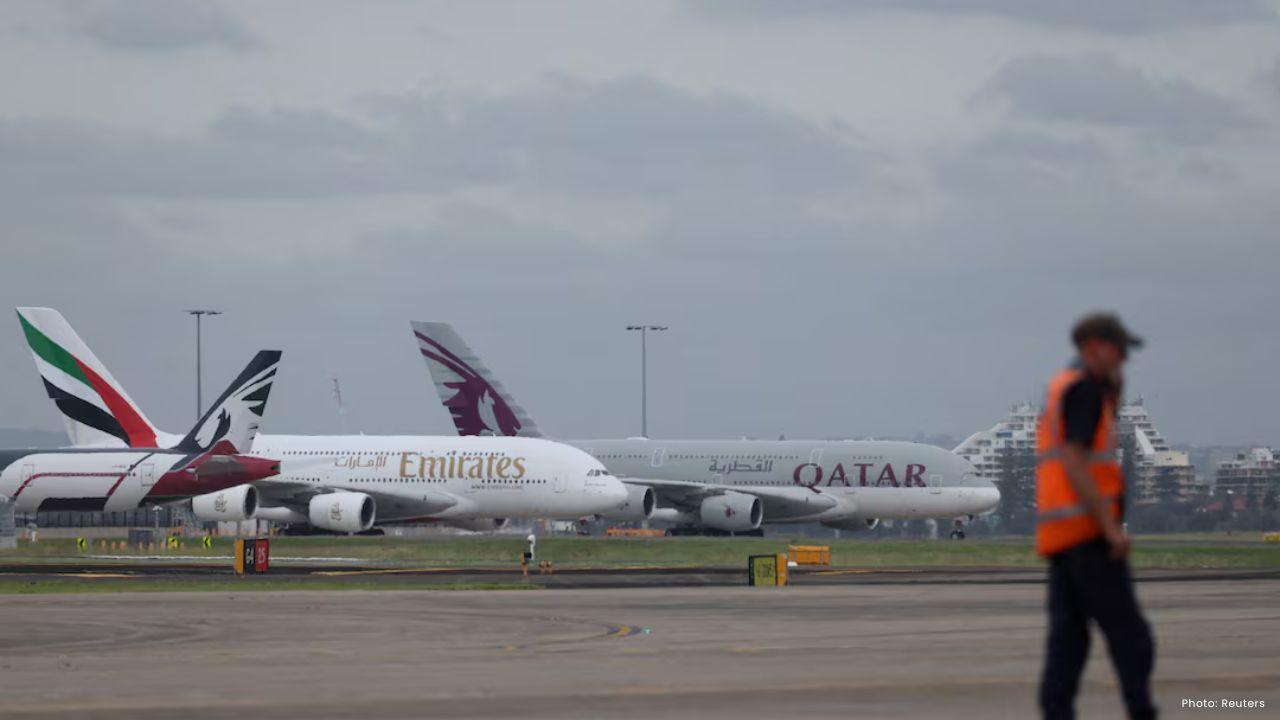
The disruptions are also affecting major logistics hubs in the Gulf region. Airports in cities such as Dubai and Doha normally act as global transit centers where cargo is transferred between flights. When these hubs face operational problems or restrictions, global cargo movement slows down.
Air cargo networks depend on precise timing. When flights are delayed or rerouted, the effects spread through the entire system. Even small disruptions can cause large delays in the delivery of goods.
Experts say this situation is already affecting industries that depend on fast shipments. Items such as fresh food, medical supplies, electronics, and aircraft parts often travel by air because they need to arrive quickly. When cargo flights become more expensive or harder to find, companies must either pay higher costs or face delivery delays.
The impact is already being felt in several markets. Some pharmaceutical shipments from India that normally travel by sea are now moving by air because maritime routes have become uncertain. This change increases transport costs and may push prices higher for medicines in some regions.
Global supply chains were already under pressure in recent years due to pandemics, geopolitical tensions, and shipping disruptions. The new conflict in the Middle East adds another layer of difficulty.
Analysts warn that if the conflict continues for a long time, the impact could spread beyond logistics companies. Higher transportation costs could lead to rising prices for many everyday products.
For example, if food, electronics, or medicines cost more to transport, businesses may pass those costs on to consumers. This could contribute to inflation in several countries.
Shipping companies are now trying to adjust to the situation by changing routes and adding more cargo flights where possible. Some airlines are also slowly restoring operations in safer parts of the region.
There are early signs that freight rates may begin to stabilize as airlines reorganize their networks and increase capacity on alternative routes. However, experts say the situation remains uncertain.
Much will depend on how long the conflict continues and whether key trade corridors in the Middle East reopen fully.
For now, the crisis shows how closely connected the global economy has become. A conflict in one region can quickly disrupt supply chains thousands of miles away.
As businesses and governments watch the situation closely, the world’s transportation networks are once again being tested by geopolitics.
#trending #latest #AirFreight #GlobalTrade #MiddleEastConflict #SupplyChain #LogisticsCrisis #FreightRates #WorldEconomy #ShippingNews #TradeRoutes #GlobalBusiness






Advances in Aerospace Technology and Commercial Aviation Recovery
Insights into breakthrough aerospace technologies and commercial aviation’s recovery amid 2025 chall

Defense Modernization and Strategic Spending Trends
Explore key trends in global defense modernization and strategic military spending shaping 2025 secu

Tens of Thousands Protest in Serbia on Anniversary of Deadly Roof Collapse
Tens of thousands in Novi Sad mark a year since a deadly station roof collapse that killed 16, prote

Canada PM Carney Apologizes to Trump Over Controversial Reagan Anti-Tariff Ad
Canadian PM Mark Carney apologized to President Trump over an Ontario anti-tariff ad quoting Reagan,

The ad that stirred a hornets nest, and made Canadian PM Carney say sorry to Trump
Canadian PM Mark Carney apologizes to US President Trump after a tariff-related ad causes diplomatic

Bengaluru-Mumbai Superfast Train Approved After 30-Year Wait
Railways approves new superfast train connecting Bengaluru and Mumbai, ending a 30-year demand, easi



