Post by : Saif
British government and Nissan are reportedly moving closer to an agreement that could help secure the future of the carmaker’s Sunderland factory, one of the most important manufacturing sites in the United Kingdom. The discussions come at a time when the global automotive industry is facing major changes, including the shift toward electric vehicles, rising competition, and economic uncertainty.
According to reports, officials in London are holding advanced talks with the Japanese vehicle manufacturer about a support package linked to long-term investment commitments. The proposed assistance could include grants, tax benefits, or other financial incentives designed to encourage continued production and job protection at the facility in northeast England.
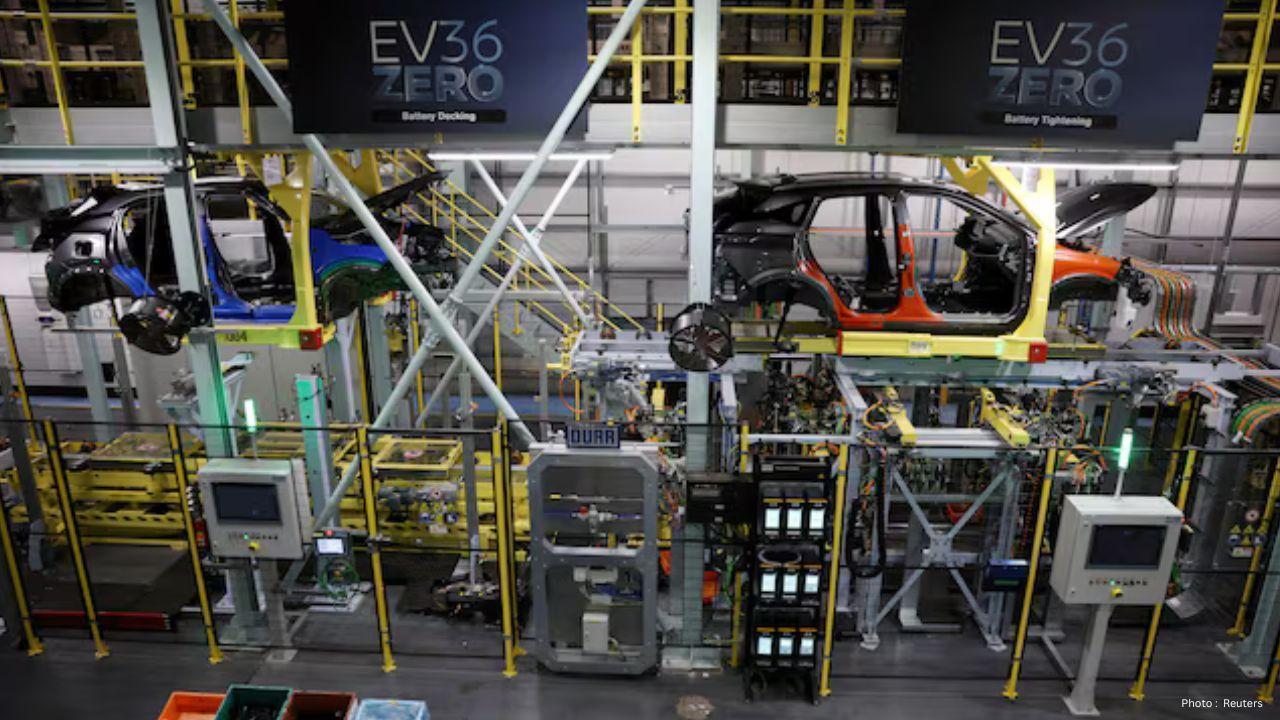
The Sunderland site has long been a cornerstone of Britain's automotive sector. Employing around 6,000 workers directly and supporting thousands of additional jobs through suppliers and related businesses, the factory plays a major role in the regional economy. Any decision affecting its future would have consequences far beyond the plant's gates.
The negotiations arrive during a challenging period for the automaker. The company has been carrying out a global restructuring program to improve efficiency and reduce costs. Several facilities around the world have faced changes as management reviews operations in response to weaker sales in some major markets. Questions about the long-term future of European manufacturing have therefore attracted significant attention from policymakers and industry observers.
Despite those challenges, the Sunderland operation remains a key part of the firm's strategy. In 2023, the company announced a major investment worth more than £1 billion to expand electric vehicle production in the region. That commitment was seen as a strong signal of confidence in British manufacturing and the country's growing role in the transition to cleaner transport. However, demand for battery-powered vehicles has not grown as quickly as many companies expected, creating new pressures across the industry.
Another important development involves cooperation with Chinese automaker Chery. Earlier this month, the two companies signed an agreement to explore producing Chery-branded vehicles at the British facility from 2027. The arrangement could help increase factory utilization and create additional opportunities for production growth. Industry experts view the proposal as part of a wider trend in which established manufacturers partner with emerging brands to make better use of existing facilities.
The discussions between government officials and the automaker are also linked to the future of electric vehicle policies. Britain currently has targets that encourage a growing share of zero-emission vehicle sales. Some manufacturers have argued that these rules should be adjusted to reflect current market conditions. Reports suggest ministers are considering changes that would provide greater flexibility while still supporting environmental goals. Any support package could be connected to these broader policy decisions.
From an economic perspective, securing long-term investment would bring several benefits. Stable production levels would help protect thousands of manufacturing jobs and support local businesses that depend on the factory. The northeast of England has a strong industrial heritage, and continued investment could strengthen the region's position as a center for advanced vehicle production. A successful agreement could also encourage other international companies to expand their operations in Britain.
The potential deal also carries political significance. Governments across Europe are competing to attract investment in electric vehicle production and battery technology. Countries that succeed in building strong manufacturing ecosystems are likely to benefit from future growth in the automotive sector. Supporting major facilities such as Sunderland could therefore become an important part of Britain's industrial strategy in the years ahead.
There are, however, challenges that cannot be ignored. The global vehicle market remains highly competitive, and manufacturers continue to face pressure from lower-cost rivals. Rising production expenses, changing consumer preferences, and international trade issues add further complexity. Financial assistance may help create stability, but long-term success will depend on strong demand, innovation, and effective business planning.
The outcome of these negotiations will be watched closely by workers, suppliers, investors, and policymakers. A successful agreement could provide reassurance that one of Britain's largest automotive facilities will remain a key contributor to the national economy for many years. It would also send a message that the country remains committed to supporting advanced manufacturing during a period of major industrial transformation.
In conclusion, the talks between the UK government and Nissan represent more than a discussion about financial support. They reflect wider questions about jobs, industrial competitiveness, electric vehicle production, and the future of manufacturing in Britain. If both sides reach a final agreement, the Sunderland factory could become an important example of how government and industry can work together to protect employment, attract investment, and prepare for the next chapter of automotive development.
#trending #latest #Nissan #SunderlandPlant #UKEconomy #ElectricVehicles #EVIndustry #UKManufacturing #AutoIndustry #NissanUK #Sunderland #BritishIndustry #IndustrialStrategy #EVProduction #AutomotiveNews









Advances in Aerospace Technology and Commercial Aviation Recovery
Insights into breakthrough aerospace technologies and commercial aviation’s recovery amid 2025 chall

Defense Modernization and Strategic Spending Trends
Explore key trends in global defense modernization and strategic military spending shaping 2025 secu

Tens of Thousands Protest in Serbia on Anniversary of Deadly Roof Collapse
Tens of thousands in Novi Sad mark a year since a deadly station roof collapse that killed 16, prote

Canada PM Carney Apologizes to Trump Over Controversial Reagan Anti-Tariff Ad
Canadian PM Mark Carney apologized to President Trump over an Ontario anti-tariff ad quoting Reagan,

The ad that stirred a hornets nest, and made Canadian PM Carney say sorry to Trump
Canadian PM Mark Carney apologizes to US President Trump after a tariff-related ad causes diplomatic

Bengaluru-Mumbai Superfast Train Approved After 30-Year Wait
Railways approves new superfast train connecting Bengaluru and Mumbai, ending a 30-year demand, easi



