Post by : Saif
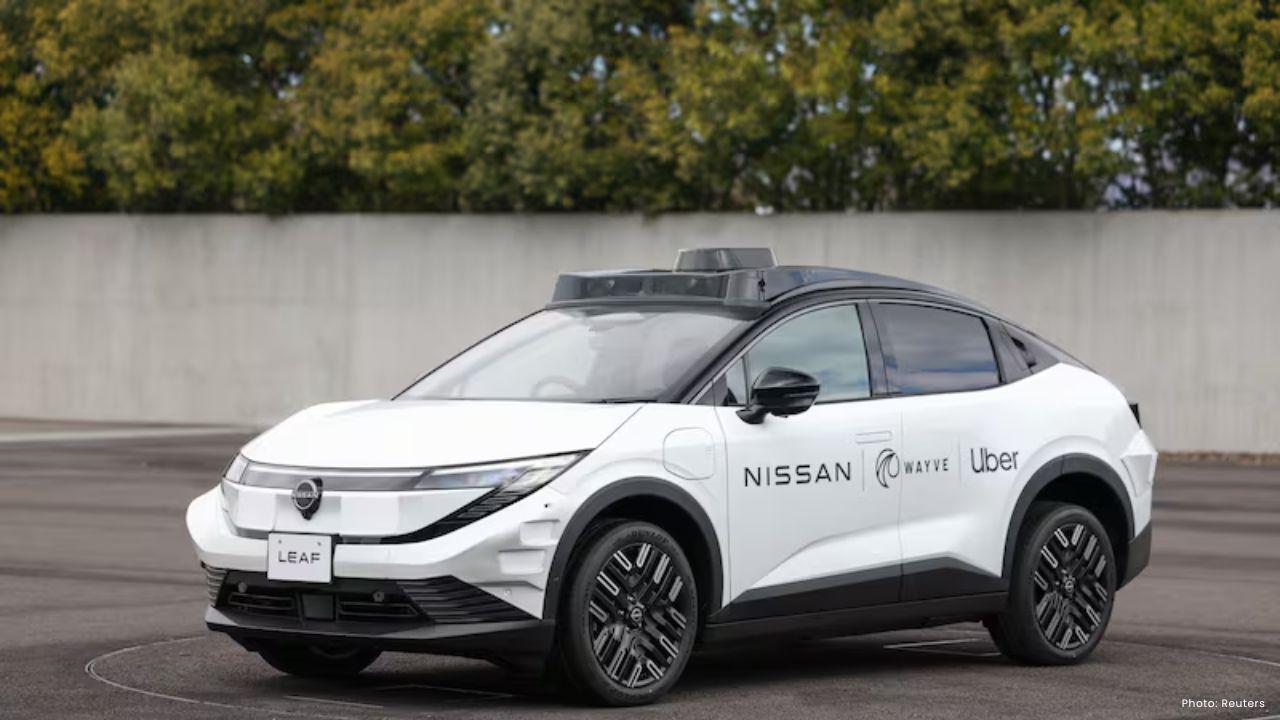
A new partnership between major companies in the automotive and technology sectors could change how people travel in cities. Nissan Motor, ride-hailing company Uber, and British artificial intelligence startup Wayve have announced a collaboration to develop robotaxis, a new type of self-driving taxi service.
The companies plan to begin a pilot program in Tokyo by late 2026. The project aims to introduce autonomous vehicles that can transport passengers without a human driver controlling the car. The service will allow riders to request these vehicles through the Uber app, similar to how they currently book regular rides.
The robotaxis will use the Nissan Leaf electric vehicle equipped with Wayve’s advanced self-driving technology. These vehicles will operate on Uber’s ride-hailing platform, combining Nissan’s manufacturing experience, Wayve’s artificial intelligence software, and Uber’s global transportation network.
At the start of the program, the vehicles will still include trained safety drivers who can take control if necessary. The companies say this approach will help ensure passenger safety while the technology continues to improve.
The partnership marks an important step for Uber because it is the company’s first autonomous vehicle collaboration in Japan. The ride-hailing giant has been expanding its work with self-driving technology companies as it prepares for a future where robotaxis may become common in many cities.
Wayve, the British startup involved in the project, focuses on artificial intelligence systems that allow vehicles to learn how to drive from real-world data. Instead of relying heavily on detailed digital maps, the system is designed to adapt to new roads and traffic conditions by learning from experience. This approach could make it easier to expand robotaxi services to many cities around the world.
According to Wayve’s chief executive Alex Kendall, the company has already been testing its self-driving technology in Japan since early 2025. The pilot program in Tokyo will allow the company to demonstrate the technology in real urban environments while continuing to improve safety and performance.
Nissan will provide the vehicles used in the service. The company has been working on advanced driver-assistance systems and autonomous driving technology for several years. By combining its vehicles with Wayve’s AI software and Uber’s ride-hailing platform, Nissan hopes to play a larger role in the growing market for autonomous transportation.
The companies also said they may expand the partnership beyond Japan in the future. If the pilot program in Tokyo succeeds, similar robotaxi services could be launched in other cities around the world.
The collaboration reflects a broader global race to develop autonomous transportation. Technology companies, automakers, and ride-hailing platforms are investing billions of dollars in self-driving systems that could eventually transform urban mobility.
Robotaxis are seen as one of the most promising uses of autonomous technology. These vehicles are designed to operate without a human driver, using sensors, cameras, artificial intelligence, and advanced software to navigate roads and traffic safely.
Supporters of robotaxis believe they could make transportation safer, cheaper, and more efficient. Self-driving vehicles do not get tired or distracted, which could reduce accidents caused by human error. They could also operate continuously, reducing waiting times for passengers.
In large cities where traffic congestion is a major problem, robotaxis could offer a faster and more flexible way to travel. Passengers would simply request a ride through an app, and a self-driving vehicle would arrive to take them to their destination.
However, there are still many challenges before autonomous vehicles become common on public roads. Safety testing, government regulations, and public trust are all important factors that companies must address.
Many governments require extensive testing before allowing self-driving vehicles to operate widely. Companies must prove that their technology can handle complex road situations such as heavy traffic, pedestrians, bad weather, and unexpected obstacles.
Another challenge is infrastructure. Cities may need new systems to manage autonomous vehicles safely, including updated traffic rules, communication networks, and dedicated pickup areas for robotaxis.
Despite these challenges, the race to develop robotaxis is accelerating. Major companies around the world are forming partnerships to combine expertise in vehicle manufacturing, artificial intelligence, and transportation services.
The partnership between Nissan, Uber, and Wayve shows how collaboration between different industries is becoming essential in developing new transportation technologies.
If successful, the Tokyo pilot program could represent an important step toward a future where autonomous vehicles become a normal part of daily life.
For now, the companies will focus on preparing the vehicles, testing the technology, and working with regulators to ensure the service can operate safely.
As cities continue to grow and transportation needs increase, robotaxis could become a key part of urban mobility. The coming years will reveal whether this technology can move from testing stages into widespread use on city streets.
#trending #latest #Robotaxi #AutonomousVehicles #Nissan #Uber #Wayve #SelfDrivingCars #FutureOfTransport #ElectricVehicles #AItechnology #armustnews






Advances in Aerospace Technology and Commercial Aviation Recovery
Insights into breakthrough aerospace technologies and commercial aviation’s recovery amid 2025 chall

Defense Modernization and Strategic Spending Trends
Explore key trends in global defense modernization and strategic military spending shaping 2025 secu

Tens of Thousands Protest in Serbia on Anniversary of Deadly Roof Collapse
Tens of thousands in Novi Sad mark a year since a deadly station roof collapse that killed 16, prote

Canada PM Carney Apologizes to Trump Over Controversial Reagan Anti-Tariff Ad
Canadian PM Mark Carney apologized to President Trump over an Ontario anti-tariff ad quoting Reagan,

The ad that stirred a hornets nest, and made Canadian PM Carney say sorry to Trump
Canadian PM Mark Carney apologizes to US President Trump after a tariff-related ad causes diplomatic

Bengaluru-Mumbai Superfast Train Approved After 30-Year Wait
Railways approves new superfast train connecting Bengaluru and Mumbai, ending a 30-year demand, easi



