Post by : Avinab Raana
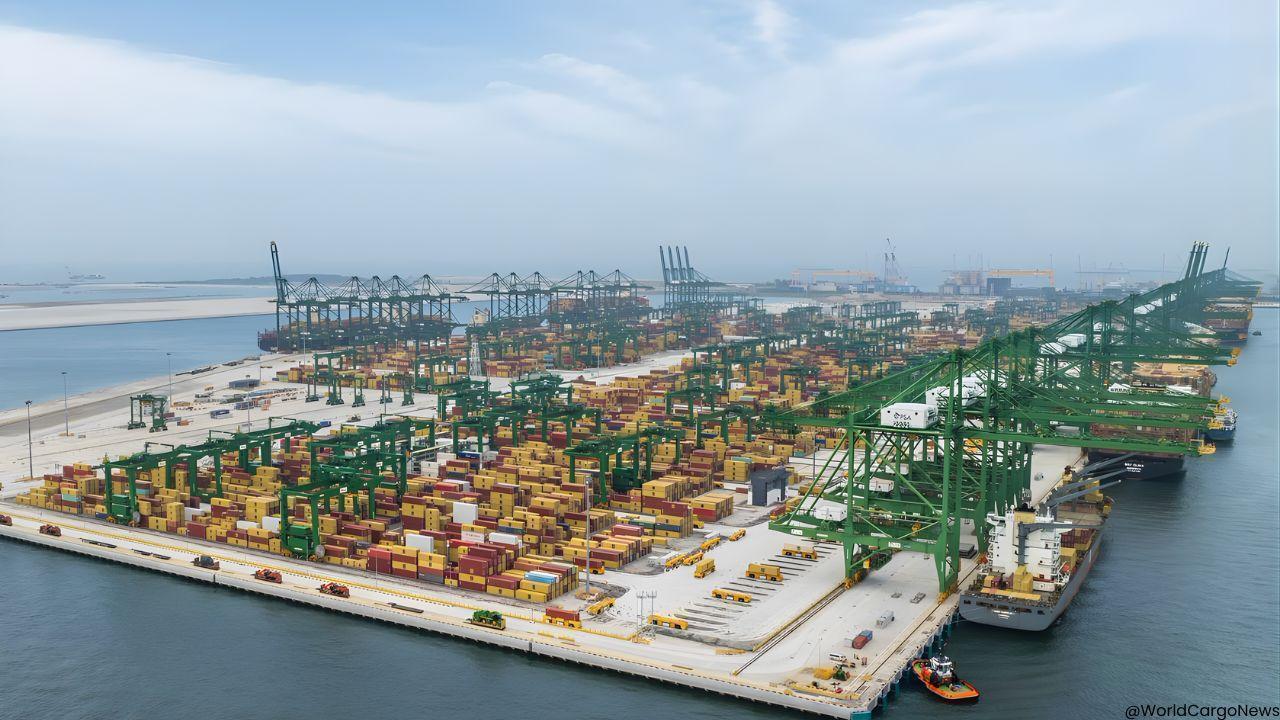
In a bold move that could reshape the future of maritime logistics, Singapore has unveiled its first-ever integrated green shipping service, an ambitious initiative that merges land and sea operations into a unified low-carbon ecosystem. Developed through a strategic collaboration between Pacific International Lines (PIL), PSA International, and supported by DNV, this service is not just another sustainability announcement. It is a real, operational solution designed to tackle one of the shipping industry’s biggest challenges: reducing emissions across the entire supply chain. At a time when global trade continues to expand and environmental scrutiny intensifies, this launch positions Singapore at the forefront of maritime decarbonization, reinforcing its status as a global innovation hub for sustainable logistics.
What sets this initiative apart is its ability to deliver verifiable emissions reductions, not just theoretical improvements. The service works by allocating carbon savings generated through the use of lower-carbon fuels across shipping, port operations, and inland logistics. This means that cargo owners and shippers can directly benefit from measurable reductions in their Scope 3 emissions, the often complex and hardest-to-control segment of a company’s carbon footprint. By integrating multiple modes of transport into a single emissions-accounting framework, the system provides a transparent and credible pathway for companies striving to meet sustainability targets without disrupting operational efficiency.
At the heart of this initiative lies a powerful three-way collaboration, each partner bringing a critical piece of the puzzle. PIL leverages its operational control over vessels, fuel strategies, and voyage execution to generate emissions reductions within maritime operations. PSA International extends this effort into port terminals and landside logistics, ensuring that sustainability is embedded throughout the cargo journey. Meanwhile, DNV introduces a digital backbone that standardizes data collection and ensures independent verification of emissions reductions. This ecosystem-driven approach transforms what has traditionally been a fragmented process into a unified, data-driven model, one that could become the blueprint for global maritime supply chains in the years ahead.
Unlike many pilot concepts that remain confined to theory, this green shipping service is already moving toward practical implementation, with trials scheduled to begin in May 2026. This rapid transition from agreement to execution highlights the urgency with which the maritime industry is addressing climate challenges. The initiative builds on a Memorandum of Understanding signed in March 2025, which focused on improving carbon measurement and reporting across the sector. Now, that foundation is evolving into a tangible solution capable of delivering immediate environmental impact, demonstrating how collaboration and innovation can accelerate progress in an industry often criticized for slow change.
This launch is not just about emissions, it is about strategic positioning. By pioneering a scalable, verifiable green shipping model, Singapore is strengthening its role as a global leader in sustainable trade and logistics. The integration of digital verification systems and cross-sector collaboration aligns with broader industry trends toward transparency, accountability, and data-driven sustainability. As global supply chains face increasing pressure to decarbonize, initiatives like this could give Singapore a competitive edge, attracting environmentally conscious businesses and reinforcing its dominance in global shipping networks.
The introduction of this green shipping service offers a compelling glimpse into the future of global trade, one where sustainability is no longer an add-on but a core operational principle. By enabling real, measurable emissions reductions across the entire logistics chain, Singapore is setting a precedent that other ports and shipping lines will likely follow. As trials progress and adoption expands, this initiative could mark the beginning of a new era in maritime transport where efficiency, transparency, and environmental responsibility move forward together, redefining how goods travel across the world.
#trending #latest #GreenShipping #MaritimeDecarbonization #SingaporePort #SustainableLogistics #ShippingInnovation









Advances in Aerospace Technology and Commercial Aviation Recovery
Insights into breakthrough aerospace technologies and commercial aviation’s recovery amid 2025 chall

Defense Modernization and Strategic Spending Trends
Explore key trends in global defense modernization and strategic military spending shaping 2025 secu

Tens of Thousands Protest in Serbia on Anniversary of Deadly Roof Collapse
Tens of thousands in Novi Sad mark a year since a deadly station roof collapse that killed 16, prote

Canada PM Carney Apologizes to Trump Over Controversial Reagan Anti-Tariff Ad
Canadian PM Mark Carney apologized to President Trump over an Ontario anti-tariff ad quoting Reagan,

The ad that stirred a hornets nest, and made Canadian PM Carney say sorry to Trump
Canadian PM Mark Carney apologizes to US President Trump after a tariff-related ad causes diplomatic

Bengaluru-Mumbai Superfast Train Approved After 30-Year Wait
Railways approves new superfast train connecting Bengaluru and Mumbai, ending a 30-year demand, easi



