Post by : Avinab Raana
Photo : X / Amαr 🇮🇳
PSA Mumbai Marks a Major Milestone
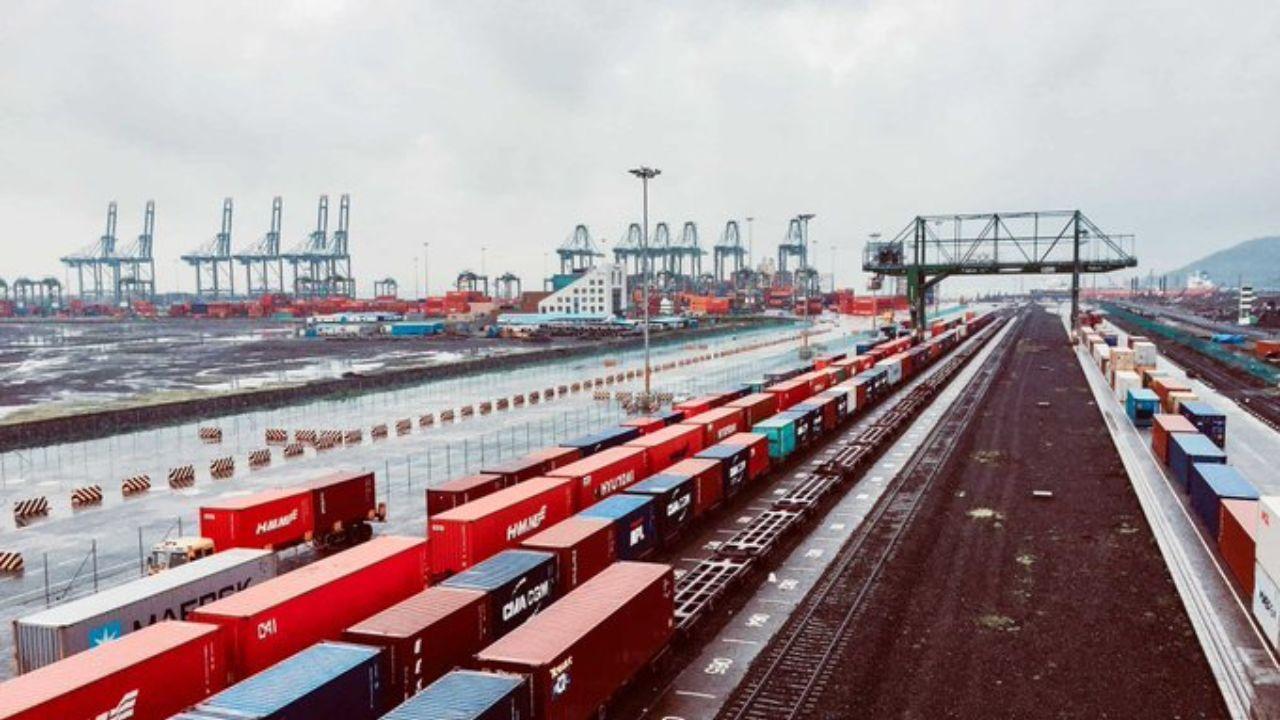
PSA Mumbai has officially inaugurated the Phase 2 expansion of its container terminal at Jawaharlal Nehru Port, setting a new benchmark for maritime operations in India. The expansion doubles the terminal’s annual handling capacity to 4.8 million TEUs, solidifying its status as India’s largest container terminal. This milestone highlights the country’s commitment to strengthening its maritime infrastructure to meet growing trade volumes and global logistics demands.
Strategic Significance of the Expansion
The terminal’s strategic location at JNPT allows it to serve as a critical gateway for international trade. The Phase 2 expansion introduces a continuous 2,000-meter quay capable of accommodating multiple mega container vessels simultaneously. This enhancement ensures that PSA Mumbai can efficiently handle rising trade volumes while reducing congestion and turnaround times, making it a pivotal hub in the country’s logistics and supply chain network.
Advanced Infrastructure and Technology
The expansion incorporates cutting-edge infrastructure, including 44 hectares of additional yard space for container stacking and state-of-the-art handling equipment. Super Post-Panamax STS cranes and electrically powered Rubber-Tyred Gantry (e-RTG) cranes have been deployed to optimize operational efficiency. These investments allow PSA Mumbai to process containers faster, maintain a higher throughput, and support larger vessels, keeping the terminal competitive in the international shipping arena.
Public-Private Partnership Model
The Phase 2 expansion is a testament to the power of public-private collaboration, with PSA International partnering with the Jawaharlal Nehru Port Authority. The SGD 1.7 billion (USD 1.3 billion) investment demonstrates how joint efforts can drive large-scale infrastructure projects. This partnership not only enhances operational capacity but also positions India as a formidable player in the global maritime economy.
Multimodal Connectivity Enhancements
Integration with multimodal logistics networks is a cornerstone of PSA Mumbai’s operational strategy. Six Dedicated Freight Corridor (DFC)-compatible rail tracks connect the terminal to over 63 Inland Container Depots across India. This ensures that containers can move efficiently from the port to inland locations, reducing transit times and easing congestion on highways. The expansion thus complements India’s national infrastructure initiatives, including the PM Gati Shakti master plan.
Commitment to Sustainability
PSA Mumbai has incorporated sustainability as a core principle in Phase 2. The terminal’s operations are powered by renewable energy sources, including solar and wind, and several diesel assets have been progressively electrified. These measures reduce carbon emissions and align the port with global trends in environmentally responsible operations. The sustainable approach reinforces the terminal’s long-term viability and sets an example for other ports in the region.
Economic Impact and Employment Opportunities
The Phase 2 expansion has generated more than 1,500 new jobs, spanning technical, supervisory, and administrative roles. These opportunities contribute to skill development within the maritime sector and bolster local economies. Additionally, the increased capacity allows for greater trade facilitation, which benefits exporters, importers, and the broader supply chain ecosystem.
Boosting Trade Efficiency
By doubling its container handling capacity, PSA Mumbai significantly reduces bottlenecks and increases operational efficiency. The addition of 2,000 meters of quay and modern equipment allows the terminal to service multiple large container ships simultaneously. This ensures faster vessel turnaround, improves shipping schedules, and enhances India’s ability to compete in global trade.
Role in India’s Maritime Growth
PSA Mumbai’s expansion supports India’s broader economic objectives. With the country aiming to enhance port capacity and reduce logistics costs, the terminal serves as a model for modern, high-capacity, technology-driven port operations. By accommodating larger vessels and handling increased cargo volumes, it strengthens India’s position as a regional maritime hub.
Operational Efficiency Through Technology
Technology underpins the terminal’s operational excellence. Automated cranes, advanced container tracking systems, and predictive maintenance tools allow PSA Mumbai to optimize workflow, reduce delays, and improve safety. These innovations ensure the terminal operates at peak efficiency, supporting faster cargo movement and higher throughput.
Supporting Mega Vessel Operations
Phase 2 expansion equips PSA Mumbai to handle the latest generation of mega container ships. The extended quay and high-capacity cranes allow simultaneous unloading and loading of multiple large vessels. This not only increases operational efficiency but also attracts global shipping lines seeking reliable terminals for large-scale operations.
Enhancing Regional Logistics
The terminal’s multimodal connectivity ensures that goods move seamlessly between the port and inland destinations. Integration with DFC-compatible rail lines enables fast, cost-effective transport of containers to major cities and industrial hubs. This connectivity reduces congestion on roads, lowers transportation costs, and improves supply chain reliability across India.
Safety and Regulatory Compliance
All operations at PSA Mumbai adhere strictly to international safety and regulatory standards. Routine inspections, safety drills, and compliance audits ensure the terminal operates at the highest levels of reliability. The emphasis on safety not only protects personnel and assets but also strengthens the terminal’s reputation with shipping lines and trading partners.
Supporting India’s Export-Import Growth
With India’s export and import volumes growing steadily, Phase 2 ensures PSA Mumbai can manage increased cargo flows efficiently. The enhanced capacity reduces dwell time for containers, speeds up delivery schedules, and supports the country’s global trade ambitions. Businesses benefit from reliable, predictable port operations, which is critical for planning and competitiveness.
Workforce Development Initiatives
The expansion includes training programs for employees to manage advanced equipment and complex logistics operations. Continuous skill development ensures that the workforce can operate high-tech machinery efficiently while adhering to safety standards. This investment in human capital complements the technological advancements at the terminal.
Sustainability in Operations
Environmental responsibility is central to Phase 2, with measures like energy-efficient lighting, electrification of yard equipment, and use of renewable energy. By reducing fuel consumption and emissions, PSA Mumbai minimizes its environmental footprint while maintaining high operational standards. These initiatives also align with international expectations for sustainable port operations.
Economic Ripple Effects
Beyond direct employment, the terminal’s expansion has a ripple effect on regional economies. Increased cargo throughput supports transport operators, warehousing companies, and ancillary services. By improving logistics efficiency, Phase 2 also benefits industries reliant on imports and exports, from manufacturing to retail.
Competitive Edge in Global Shipping
The expansion gives PSA Mumbai a distinct competitive advantage in attracting global shipping lines. With high-capacity berths, modern cranes, and fast turnaround times, the terminal is well-positioned to serve major shipping routes. This strengthens India’s position as a reliable and efficient partner in international trade networks.
Integration With National Infrastructure Plans
PSA Mumbai aligns with India’s national vision for integrated infrastructure development. The terminal’s multimodal connectivity complements initiatives like PM Gati Shakti, facilitating seamless movement of goods across the country. This holistic approach supports national economic growth and improves supply chain resilience.
Capacity Planning and Forecasting
Phase 2 allows PSA Mumbai to plan for future trade growth. The terminal’s expanded infrastructure accommodates larger volumes and offers flexibility to handle seasonal surges. Predictive analytics and capacity planning tools help optimize resource allocation, ensuring smooth operations even during peak periods.
Technology-Driven Efficiency Gains
Advanced container handling systems, real-time monitoring, and automated scheduling contribute to operational efficiency. By minimizing idle times for ships and reducing delays in cargo handling, PSA Mumbai maximizes throughput while maintaining high safety and service standards. These technological gains are central to sustaining competitiveness.
Global Trade Facilitation
The terminal’s expansion positions India as a key facilitator of global trade. Increased capacity enables the handling of more imports and exports, supporting international businesses and supply chains. Reliable port operations enhance India’s attractiveness as a trade partner and strengthen its integration into global logistics networks.
Future Expansion Opportunities
Phase 2 is a stepping stone toward further growth at PSA Mumbai. The infrastructure and operational framework established in this phase provide a foundation for future expansions, including additional berths, more advanced cranes, and further electrification. This forward-looking approach ensures the terminal can meet evolving trade demands.
Strengthening India’s Maritime Sector
By doubling its capacity, PSA Mumbai contributes to strengthening India’s overall maritime sector. The terminal sets benchmarks for efficiency, sustainability, and safety, serving as a model for other ports in the country. Its success demonstrates how strategic investments in infrastructure can support national economic objectives and global trade ambitions.
Enhancing Operational Reliability
The combination of advanced equipment, skilled personnel, and optimized processes ensures high operational reliability. Ships experience minimal waiting times, containers move efficiently, and schedules are predictable. This reliability attracts more shipping lines and encourages consistent trade flows through PSA Mumbai.
A Landmark Achievement
The Phase 2 expansion of PSA Mumbai represents a landmark achievement in India’s port development. By doubling container handling capacity, integrating advanced technologies, and emphasizing sustainability, the terminal solidifies its status as India’s largest container terminal. This expansion not only enhances trade efficiency but also supports economic growth, employment, and India’s position in the global maritime industry.
As global trade volumes continue to rise, PSA Mumbai is poised to meet the demands of international shipping lines while setting new standards for operational excellence and sustainability. The terminal’s expanded capacity, multimodal connectivity, and state-of-the-art infrastructure ensure that it remains at the forefront of India’s maritime logistics landscape for years to come.
PSA Mumbai, Phase 2 expansion, India’s largest container terminal







Advances in Aerospace Technology and Commercial Aviation Recovery
Insights into breakthrough aerospace technologies and commercial aviation’s recovery amid 2025 chall

Defense Modernization and Strategic Spending Trends
Explore key trends in global defense modernization and strategic military spending shaping 2025 secu

Tens of Thousands Protest in Serbia on Anniversary of Deadly Roof Collapse
Tens of thousands in Novi Sad mark a year since a deadly station roof collapse that killed 16, prote

Canada PM Carney Apologizes to Trump Over Controversial Reagan Anti-Tariff Ad
Canadian PM Mark Carney apologized to President Trump over an Ontario anti-tariff ad quoting Reagan,

The ad that stirred a hornets nest, and made Canadian PM Carney say sorry to Trump
Canadian PM Mark Carney apologizes to US President Trump after a tariff-related ad causes diplomatic

Bengaluru-Mumbai Superfast Train Approved After 30-Year Wait
Railways approves new superfast train connecting Bengaluru and Mumbai, ending a 30-year demand, easi



