Post by : Avinab Raana
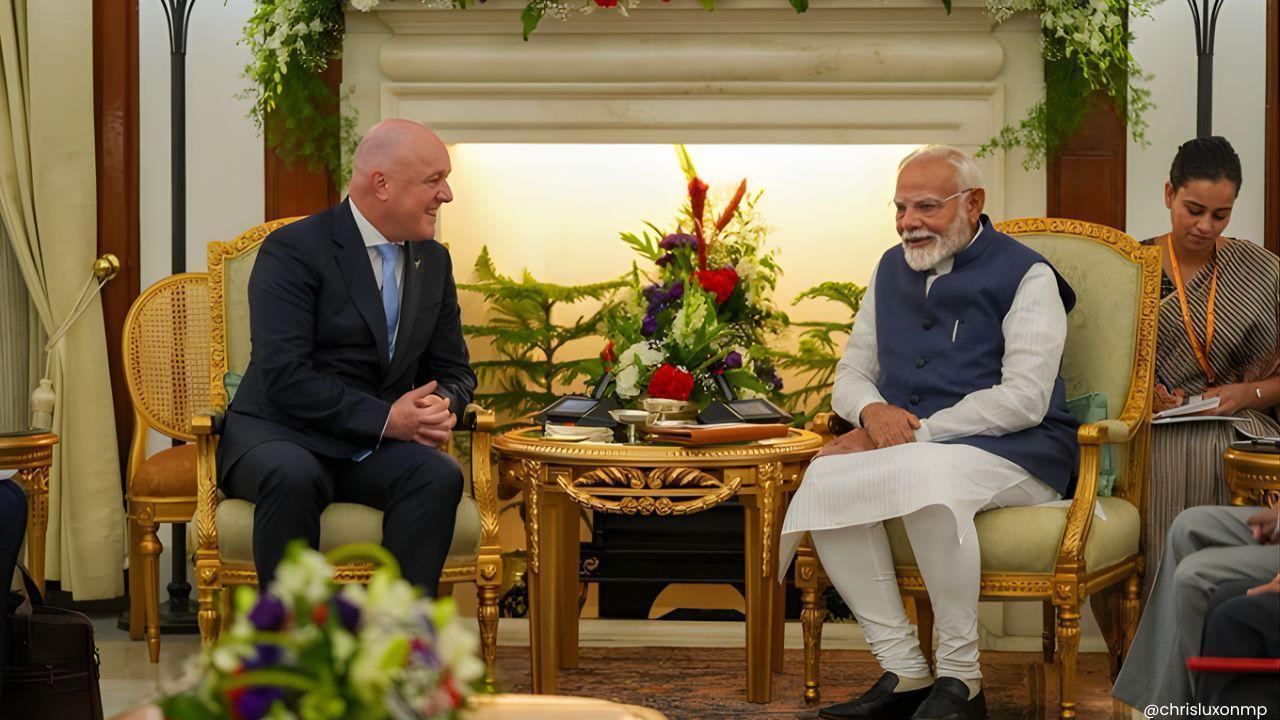
In a decisive move that could reshape global trade dynamics, India and New Zealand have officially signed a long-awaited Free Trade Agreement (FTA), unlocking a new era of economic cooperation between two strategically positioned Indo-Pacific economies. This agreement is more than a diplomatic milestone; it represents a structural shift in how goods, services, and investments will flow across continents. For a world increasingly focused on resilient supply chains and diversified trade routes, this FTA arrives at a crucial moment, offering businesses new pathways to expand, compete, and scale in international markets. The deal reflects years of negotiations, revived in 2025 and concluded in record time, signaling strong political will and a shared vision for long-term economic alignment.
At the heart of the agreement lies one of its most transformative features: complete duty-free access for all Indian exports entering the New Zealand market. This unprecedented move opens the door for over 8,000 product categories, spanning textiles, pharmaceuticals, engineering goods, and more, to compete without tariff barriers. For Indian exporters, this removes a critical cost disadvantage and positions them more competitively in a developed market that has historically been underpenetrated. At the same time, India will reduce or eliminate tariffs on around 95% of New Zealand’s exports, creating a balanced trade framework that encourages mutual growth while safeguarding sensitive domestic sectors such as dairy and agriculture.
Beyond tariffs and trade volumes, the real impact of the FTA lies in its ability to transform logistics and supply chain ecosystems. By simplifying trade procedures and reducing barriers, the agreement is expected to accelerate cargo movement between South Asia and Oceania, strengthening maritime routes and port connectivity. For logistics providers, freight operators, and warehousing networks, this means increased cargo volumes, improved route efficiency, and new opportunities to integrate cross-border supply chains. As India positions itself as a global manufacturing hub and New Zealand strengthens its export outreach, the FTA acts as a catalyst for building a more connected, agile, and future-ready logistics infrastructure across the Indo-Pacific corridor.
The agreement goes beyond goods trade by embedding strong provisions for investment and services, adding depth to the economic relationship. New Zealand is expected to channel significant long-term investments into India, with projections reaching up to $20 billion over the coming years, further strengthening industrial and infrastructure development. Additionally, the inclusion of professional mobility pathways allowing thousands of skilled Indian workers to access opportunities in New Zealand annually creates a dynamic exchange of talent that supports sectors like IT, engineering, and healthcare. This dual focus on capital and human resources positions the FTA as a comprehensive economic framework rather than a conventional trade deal.
The India–New Zealand FTA also carries significant geopolitical weight, reinforcing India’s broader strategy of expanding its trade footprint across the Indo-Pacific region. With New Zealand being part of major global trade networks, this bilateral agreement serves as a potential gateway for India to deepen engagement with wider regional blocs. At a time when global trade is shifting away from concentrated dependencies toward diversified partnerships, this deal strengthens both nations’ positions in the evolving economic order. It signals a move toward more resilient, multi-directional trade flows that can withstand global disruptions and geopolitical uncertainties.
As the ink dries on this landmark agreement, its real impact will unfold in the years ahead across ports, warehouses, factories, and digital trade networks. The India–New Zealand FTA is not just about increasing trade volumes; it is about redefining how nations collaborate in an interconnected world. For businesses, it offers new markets and reduced costs. For governments, it strengthens economic resilience. And for the global logistics ecosystem, it marks the beginning of a more integrated Indo-Pacific trade architecture. If executed effectively, this agreement could become a blueprint for future trade partnerships, one that balances growth, protection, and opportunity in equal measure.
#trending #latest #IndiaNZFTA #GlobalTrade #LogisticsGrowth #IndoPacificTrade #SupplyChainShift










Advances in Aerospace Technology and Commercial Aviation Recovery
Insights into breakthrough aerospace technologies and commercial aviation’s recovery amid 2025 chall

Defense Modernization and Strategic Spending Trends
Explore key trends in global defense modernization and strategic military spending shaping 2025 secu

Tens of Thousands Protest in Serbia on Anniversary of Deadly Roof Collapse
Tens of thousands in Novi Sad mark a year since a deadly station roof collapse that killed 16, prote

Canada PM Carney Apologizes to Trump Over Controversial Reagan Anti-Tariff Ad
Canadian PM Mark Carney apologized to President Trump over an Ontario anti-tariff ad quoting Reagan,

The ad that stirred a hornets nest, and made Canadian PM Carney say sorry to Trump
Canadian PM Mark Carney apologizes to US President Trump after a tariff-related ad causes diplomatic

Bengaluru-Mumbai Superfast Train Approved After 30-Year Wait
Railways approves new superfast train connecting Bengaluru and Mumbai, ending a 30-year demand, easi



