Post by : Saif
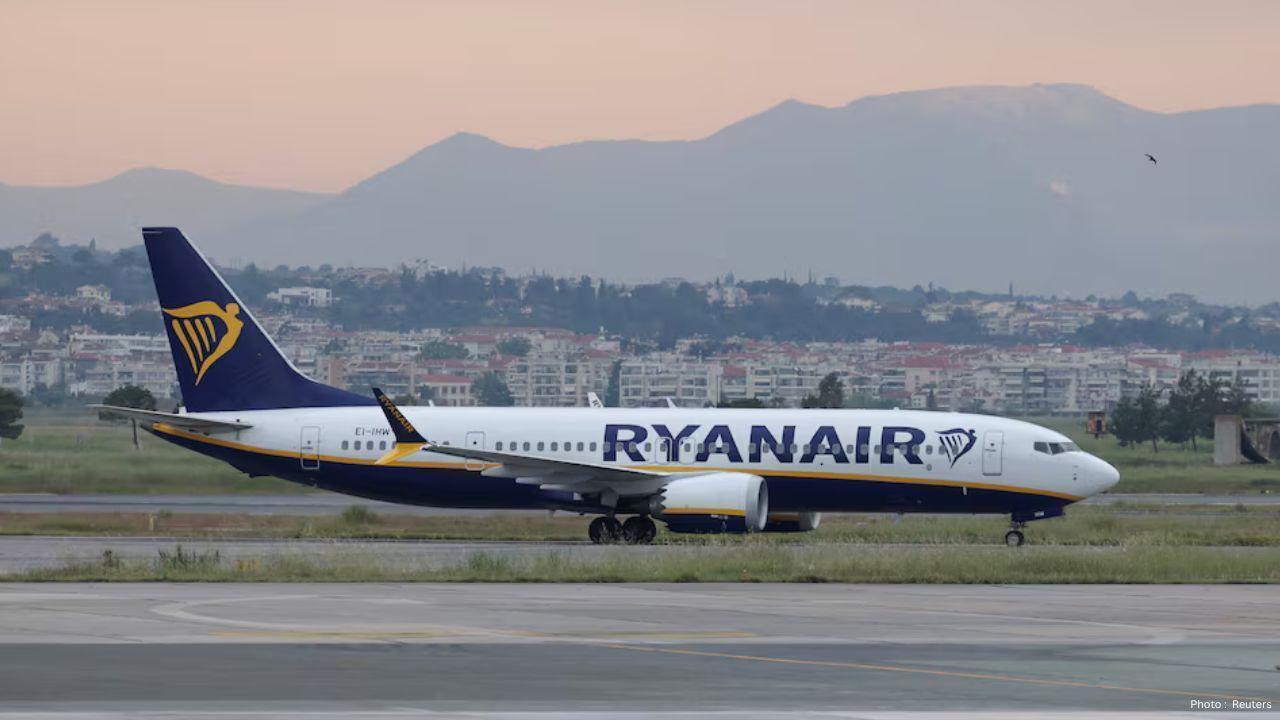
Ryanair is facing scrutiny from the United Kingdom's competition watchdog after concerns emerged over charges that parents may have to pay to sit next to their children on flights. The investigation has opened a wider debate about consumer rights, airline pricing practices, and whether families should face additional costs to ensure young children are seated with a parent or guardian.
The inquiry was launched by the UK's Competition and Markets Authority (CMA), which is examining the airline's "mandatory family seat" policy. Under the current arrangement, at least one adult travelling with children aged between two and eleven is required to reserve a specific seat. This reservation typically costs around £8 per flight segment. Regulators are investigating whether this requirement could be considered unfair under consumer protection laws.
At the heart of the issue is a simple question: should parents have to pay extra to meet a requirement that already exists for safety and welfare reasons? The watchdog is assessing whether families are effectively being charged for the airline to comply with obligations related to child safety and accessibility. Officials have emphasized that the investigation is still in its early stages and no conclusion has yet been reached regarding any legal violation.
The case has attracted attention because family travel is already becoming more expensive. Rising ticket prices, baggage fees, airport charges, and other travel-related expenses have increased the financial burden on households. For many parents planning holidays, additional seating costs can significantly raise the overall price of a trip. Consumer advocates argue that sitting with young children should be viewed as a basic necessity rather than an optional service.
Regulators are also examining whether the fee is presented clearly during the booking process. Under UK consumer rules, businesses are expected to display unavoidable costs upfront so customers understand the full price before making a purchase. Authorities will review whether travellers receive transparent information about family seating charges or whether the additional cost appears later in the booking journey.
The airline has strongly defended its policy. The company says children are not charged to sit next to an accompanying adult and argues that only one parent is required to purchase a reserved seat. According to the carrier, that reservation allows adjacent seats to be selected for up to four children without additional seating fees. The company maintains that its approach complies with all applicable laws and regulations while helping families travel at lower overall costs.
Supporters of the carrier's position argue that low-cost airlines operate on a business model that allows passengers to choose which services they want to pay for. They believe optional extras, including seat selection, help keep base fares affordable for travellers who prioritize lower ticket prices. From this perspective, charging separately for certain services is a standard industry practice rather than an unfair burden.
Critics, however, see the issue differently. They argue that family seating is not comparable to optional upgrades such as extra legroom or priority boarding. Young children often need supervision during flights, making it essential for them to remain close to a responsible adult. Opponents of the policy believe families should not be placed in a position where they feel compelled to pay extra to meet what many consider a basic safety expectation.
The outcome of the investigation could have implications beyond a single airline. A decision against the carrier might encourage broader changes across the aviation sector regarding how family seating arrangements are handled. Other airlines could review their own policies to ensure compliance with evolving consumer protection standards. At the same time, a ruling supporting the current approach could reinforce the industry's ability to charge separately for certain travel services.
This case also reflects a growing focus on transparency in consumer markets. Across various industries, regulators are paying closer attention to fees that may not be immediately visible during purchasing decisions. Travel companies, in particular, have faced increasing pressure to ensure customers understand the true cost of services before completing bookings.
Ryanair investigation is about more than seating arrangements. It touches on larger questions of fairness, transparency, and consumer expectations in modern air travel. Families want affordable flights, but they also expect policies that recognize the practical realities of travelling with children. As the UK's competition authority continues its review, the findings could influence future discussions about passenger rights and the responsibilities of airlines toward their customers. Whether changes are ultimately required or not, the case has already highlighted the delicate balance between low-cost travel and fair treatment for families.
#trending #latest #Ryanair #AirlineNews #FamilyTravel #ConsumerRights #UKNews #TravelIndustry #AviationNews #PassengerRights #AirTravel #CompetitionAuthority #TravelPolicy #FamilySeating #BudgetAirlines



Advances in Aerospace Technology and Commercial Aviation Recovery
Insights into breakthrough aerospace technologies and commercial aviation’s recovery amid 2025 chall

Defense Modernization and Strategic Spending Trends
Explore key trends in global defense modernization and strategic military spending shaping 2025 secu

Tens of Thousands Protest in Serbia on Anniversary of Deadly Roof Collapse
Tens of thousands in Novi Sad mark a year since a deadly station roof collapse that killed 16, prote

Canada PM Carney Apologizes to Trump Over Controversial Reagan Anti-Tariff Ad
Canadian PM Mark Carney apologized to President Trump over an Ontario anti-tariff ad quoting Reagan,

The ad that stirred a hornets nest, and made Canadian PM Carney say sorry to Trump
Canadian PM Mark Carney apologizes to US President Trump after a tariff-related ad causes diplomatic

Bengaluru-Mumbai Superfast Train Approved After 30-Year Wait
Railways approves new superfast train connecting Bengaluru and Mumbai, ending a 30-year demand, easi



