
Post by : Saif
The United States government has begun testing a powerful laser system designed to stop dangerous drones. The test is being carried out jointly by the Pentagon and the Federal Aviation Administration (FAA) in New Mexico. Officials say the goal is to study how this high-energy anti-drone technology works and make sure it can be used safely in American airspace.
The test comes at a time when drones are becoming a growing security concern around the world. Small unmanned aircraft are now widely available and can be used for many purposes. While most drones are used for photography, delivery, or recreation, some can also pose risks to airports, military bases, and important infrastructure. Because of this, governments are searching for new tools to defend against hostile drones.
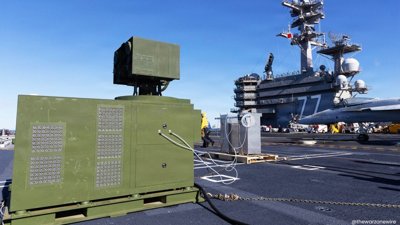
The system being tested uses a high-energy laser beam to disable or destroy drones in the sky. Unlike traditional weapons that rely on missiles or bullets, laser systems fire a concentrated beam of energy. When the beam hits a drone, it can heat and damage its structure or electronics, causing the aircraft to fall from the sky. Military experts say this technology can be very effective because it is fast, accurate, and cheaper to operate compared to many conventional weapons.
Officials say the testing in New Mexico will examine several safety issues. One important goal is to understand how the laser might affect aircraft materials if it were accidentally pointed toward an airplane. Engineers will also evaluate whether the system’s automatic safety shut-off features work properly. These features are designed to stop the laser immediately if a risk to other aircraft is detected. Another focus of the tests is studying possible risks to pilots’ eyesight if they were exposed to the beam from a distance.
The tests are being carried out after a recent incident raised concerns about the technology. In February, a U.S. military laser system mistakenly shot down a government-operated drone near the Texas border. The aircraft belonged to U.S. Customs and Border Protection. The accident led the FAA to temporarily restrict flights in the area while officials investigated what happened.
The event also caused confusion about coordination between government agencies responsible for air safety and military operations. Aviation officials were worried that the use of laser weapons could create risks for civilian aircraft if the systems were not properly controlled. Because of this, lawmakers and aviation regulators called for better communication and stronger safety procedures.
Deputy Transportation Secretary Steve Bradbury explained that the new testing program will help regulators understand the limits of the technology and how it should be controlled. According to him, the FAA wants to create a clear framework so the system can operate safely without requiring special approval each time it is used. If safety rules are not established, authorities may have to restrict or close certain areas of airspace whenever the laser system is deployed.
The tests are expected to take place at White Sands Missile Range in New Mexico, a large military testing area often used for advanced weapons research. During the exercise, engineers will use both stationary and flying targets to measure how accurately the laser can identify and strike drones. These tests will also demonstrate whether the system can engage only confirmed targets without affecting nearby aircraft or other objects.
The system involved in the test is believed to be part of the U.S. Army’s directed-energy program, sometimes referred to as a high-energy laser weapon. These weapons are part of a growing category of military technology that uses electricity and focused energy instead of traditional explosives.
Supporters of laser weapons say they offer several advantages. A laser system can fire many times without needing to reload ammunition, and the cost per shot can be extremely low compared to missiles or rockets. This makes lasers especially useful for defending against swarms of small drones, which could otherwise overwhelm traditional defense systems.
However, critics say the technology still needs careful regulation. Because laser beams travel at the speed of light and can cover long distances, there are concerns about accidental exposure to aircraft, satellites, or people. That is why aviation regulators are closely involved in the current testing program.
The growing use of drones in conflicts around the world has increased interest in anti-drone systems. Military forces have seen how drones are used for surveillance, attacks, and electronic warfare in several recent conflicts. Some drones are small and inexpensive, yet they can still cause serious damage if they reach sensitive locations.
As a result, many countries are investing heavily in counter-drone technologies. These systems include electronic jammers, interceptor drones, missiles, and now laser weapons. Each method has advantages and limitations, and governments are working to combine different technologies to create effective defense networks.
For the United States, protecting its airspace is a major priority. Airports, military installations, power plants, and government buildings are all potential targets for unauthorized drones. Officials believe that advanced technologies like directed-energy weapons could play a key role in defending these locations in the future.
The collaboration between the Pentagon and the FAA highlights the importance of balancing national security with aviation safety. While the military wants effective tools to stop hostile drones, aviation authorities must ensure that civilian aircraft and passengers remain safe.
The results of the New Mexico tests are expected to help both agencies develop clearer guidelines for using laser-based defense systems within U.S. airspace. If the tests are successful, similar technologies could eventually become part of standard defense systems protecting American skies.
For now, the experiments mark another step in the rapid development of modern defense technology. As drones become more common and more capable, governments around the world will likely continue searching for new ways to detect and neutralize them quickly and safely.
#trending #latest #Pentagon #USDefense #DroneDefense #LaserWeapon #AntiDroneTechnology #AerospaceDefense #MilitaryTechnology #USAirspace #DefenseNews #armustnews








Advances in Aerospace Technology and Commercial Aviation Recovery
Insights into breakthrough aerospace technologies and commercial aviation’s recovery amid 2025 chall

Defense Modernization and Strategic Spending Trends
Explore key trends in global defense modernization and strategic military spending shaping 2025 secu

Tens of Thousands Protest in Serbia on Anniversary of Deadly Roof Collapse
Tens of thousands in Novi Sad mark a year since a deadly station roof collapse that killed 16, prote

Canada PM Carney Apologizes to Trump Over Controversial Reagan Anti-Tariff Ad
Canadian PM Mark Carney apologized to President Trump over an Ontario anti-tariff ad quoting Reagan,

The ad that stirred a hornets nest, and made Canadian PM Carney say sorry to Trump
Canadian PM Mark Carney apologizes to US President Trump after a tariff-related ad causes diplomatic

Bengaluru-Mumbai Superfast Train Approved After 30-Year Wait
Railways approves new superfast train connecting Bengaluru and Mumbai, ending a 30-year demand, easi



