Post by : Avinab Raana
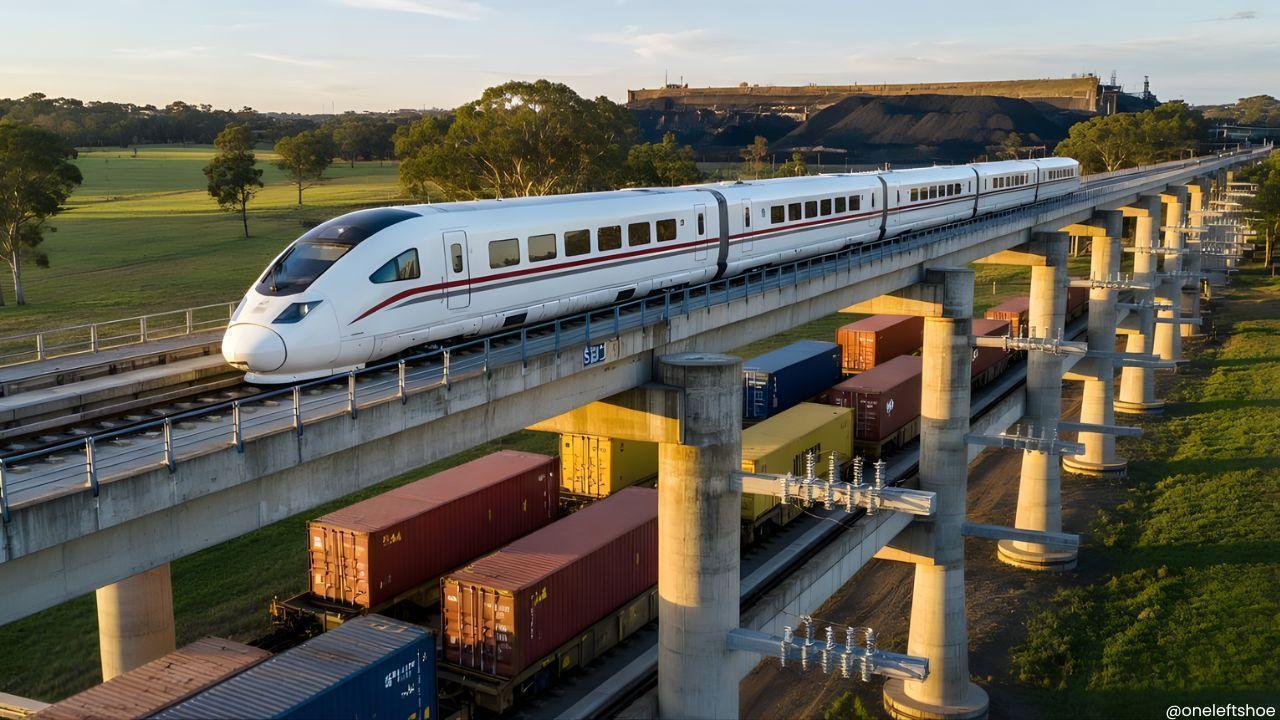
Australia is standing at the threshold of a rail transformation that could redefine how an entire continent moves, connects, and grows economically. Once seen as a fragmented system shaped by state-based development and inconsistent standards, the country’s rail network is now undergoing a sweeping evolution driven by massive investments, technological upgrades, and a unified national vision. From ambitious high-speed rail corridors linking major cities to metro expansions reshaping urban mobility and freight corridors unlocking economic efficiency, Australia’s rail future is no longer theoretical, it is actively taking shape. As population growth accelerates and sustainability becomes central to infrastructure planning, rail is emerging as the backbone of a smarter, faster, and greener transportation ecosystem.
A key challenge historically faced by Australia’s rail network has been fragmentation, with multiple systems operating under different standards, gauges, and regulations. This complexity has often slowed innovation and increased operational inefficiencies. However, a new wave of reforms under a national rail strategy is aiming to change that by creating a more interoperable and harmonized system across the country. Efforts are underway to establish standardized frameworks, improve safety, and enable smoother operations between states, signaling a major shift toward a truly national rail network.This transformation is not just about technical alignment, it is about unlocking productivity, reducing costs, and enabling the rail system to compete more effectively with road and air transport.
Australia’s rail future is being powered by a series of mega infrastructure projects that are reshaping both passenger and freight movement. One of the most significant is the Inland Rail project, a 1,600-kilometer freight corridor connecting Melbourne and Brisbane, designed to streamline logistics, reduce transit times, and strengthen supply chains across the eastern seaboard. At the same time, urban rail systems are expanding rapidly, with projects like Sydney Metro, Melbourne’s Suburban Rail Loop, and Brisbane’s Cross River Rail enhancing city connectivity and reducing congestion. These developments reflect a broader strategy to integrate urban and regional transport systems, ensuring seamless mobility across different layers of the network.
Perhaps the most ambitious element of Australia’s rail future is the development of high-speed rail along the eastern seaboard. Plans are underway to connect major cities such as Brisbane, Sydney, Canberra, and Melbourne, drastically reducing travel times and opening up new economic corridors. The establishment of the High Speed Rail Authority further underscores the government’s commitment to turning this vision into reality, with early stages focusing on key routes like Sydney to Newcastle.If successfully implemented, high-speed rail could fundamentally change travel behavior in Australia, offering a fast, sustainable alternative to domestic flights and long-distance road journeys.
As the global transport sector faces increasing pressure to reduce emissions, rail is emerging as a critical solution for sustainable mobility in Australia. Compared to road transport, rail offers significantly lower carbon emissions, making it a preferred option for both passenger and freight movement. However, challenges remain, particularly in the electrification of freight networks, where diesel still dominates operations. Industry experts are calling for accelerated investment in green technologies, including electrified tracks, battery-powered trains, and hybrid systems, to ensure that Australia’s rail network aligns with its long-term climate goals.
The transformation of Australia’s rail network is expected to have far-reaching economic implications. Improved connectivity between cities, regions, and ports will enhance trade efficiency, reduce logistics costs, and open up new opportunities for businesses and communities. Rail already plays a critical role in the country’s freight sector, handling a significant share of bulk transport, particularly for resources like coal, iron ore, and grain. As infrastructure improves, the potential for rail to capture a larger share of non-bulk freight is also increasing, further strengthening its role in the national economy.
Despite the momentum, Australia’s rail transformation is not without challenges. Issues such as funding, project timelines, regulatory alignment, and technological integration must be carefully managed to ensure successful implementation.The complexity of building a unified national network in a geographically vast country adds another layer of difficulty, requiring sustained collaboration between federal and state governments, industry stakeholders, and private partners.
As Australia accelerates its journey toward a modern, integrated, and future-ready rail network, the next decade will be critical in determining how successfully these ambitions are realized. The convergence of high-speed rail, urban metro expansions, and freight corridor upgrades represents a once-in-a-generation opportunity to redefine the country’s transportation landscape. If executed effectively, this transformation could position Australia as a global leader in rail innovation, sustainability, and connectivity. More importantly, it could reshape everyday life making travel faster, cities more connected, and industries more competitive. In the race to build the transport systems of tomorrow, Australia’s rail network is no longer playing catch-up, it is setting the pace for the future.
#trending #latest#AustraliaRail #FutureRail #RailInfrastructure #HighSpeedRail #TransportInnovation








Advances in Aerospace Technology and Commercial Aviation Recovery
Insights into breakthrough aerospace technologies and commercial aviation’s recovery amid 2025 chall

Defense Modernization and Strategic Spending Trends
Explore key trends in global defense modernization and strategic military spending shaping 2025 secu

Tens of Thousands Protest in Serbia on Anniversary of Deadly Roof Collapse
Tens of thousands in Novi Sad mark a year since a deadly station roof collapse that killed 16, prote

Canada PM Carney Apologizes to Trump Over Controversial Reagan Anti-Tariff Ad
Canadian PM Mark Carney apologized to President Trump over an Ontario anti-tariff ad quoting Reagan,

The ad that stirred a hornets nest, and made Canadian PM Carney say sorry to Trump
Canadian PM Mark Carney apologizes to US President Trump after a tariff-related ad causes diplomatic

Bengaluru-Mumbai Superfast Train Approved After 30-Year Wait
Railways approves new superfast train connecting Bengaluru and Mumbai, ending a 30-year demand, easi



