Post by : Saif
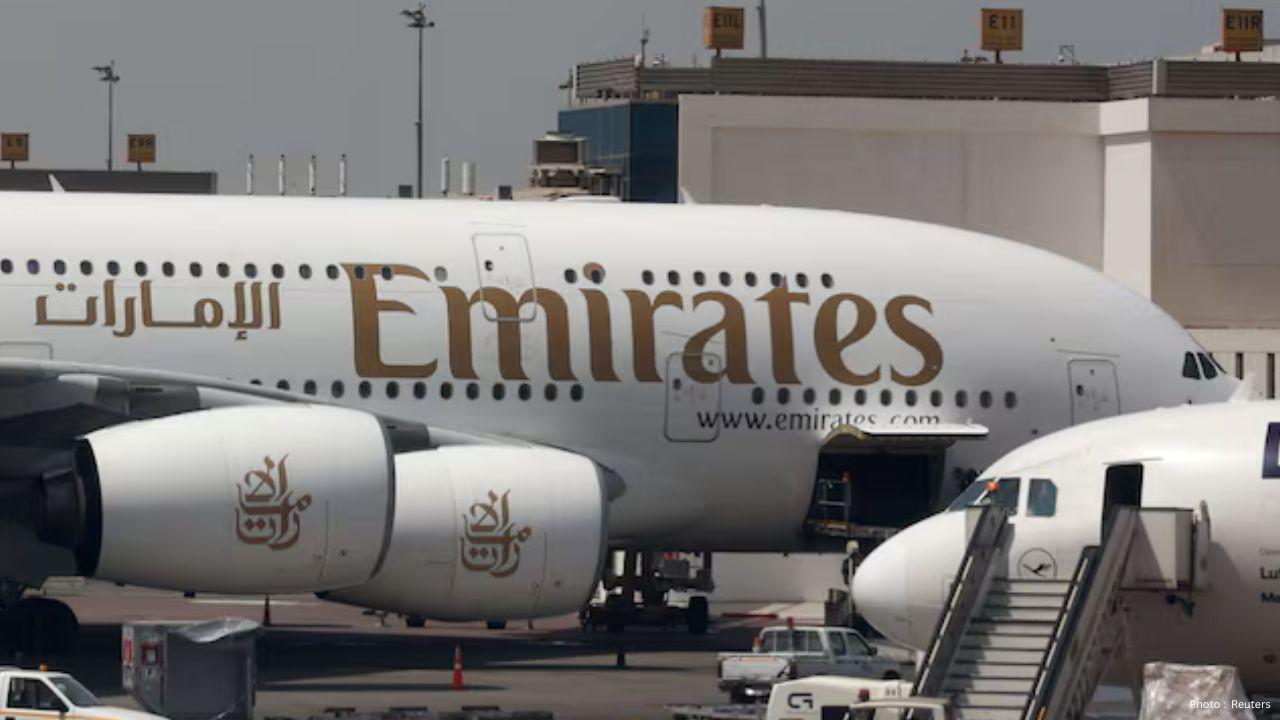
The Emirates Group has once again proven its strength in the global aviation industry by reporting record financial results for the 2025-26 fiscal year. Despite growing tensions in the Middle East, rising operational costs, and major disruptions in regional air traffic, the Dubai-based airline giant achieved strong growth in revenue and profits.
The company announced that its total group revenue rose by 3 percent to reach nearly $41 billion during the financial year ending March 2026. Profit before tax increased by 7 percent, reaching around $6.6 billion. These numbers have made Emirates the world’s most profitable airline group once again.
The results are important not only for the airline industry but also for the wider economy of the Gulf region. Emirates is one of the biggest global symbols of Dubai’s economic success and international connectivity. Strong performance by the airline sends a message that Dubai remains an important center for travel, trade, tourism, and business even during difficult times.
The airline’s success becomes even more remarkable when viewed against the backdrop of regional instability. In February 2026, military tensions involving the United States, Israel, and Iran caused major disruptions across Gulf airspace. Flights were delayed, routes were changed, and fuel prices became highly unstable. Many airlines around the world struggled to manage these sudden challenges.
Yet Emirates managed to remain profitable.
One of the key reasons behind this success was careful financial planning. Emirates built large cash reserves over many years and secured fuel hedging agreements that protected the airline from sudden spikes in fuel prices. Reports showed the airline has fuel protection plans extending through 2028 and 2029, helping reduce the impact of market shocks.
This strategy highlights an important lesson in modern business. Large companies that prepare for future risks are often better able to survive unexpected crises. Emirates did not rely only on strong passenger demand. It also focused on long-term financial stability and crisis management.
The airline carried more than 53 million passengers during the financial year. While passenger numbers slightly declined compared to earlier expectations because of regional tensions, higher ticket prices and strong international demand helped balance the losses. Emirates also expanded cargo operations to support trade and supply chains across the Gulf region.
The company’s aviation services arm, dnata, also performed strongly. Revenue and profits increased as travel demand continued recovering across international markets. Together, Emirates and dnata showed how diversified business operations can help large companies stay stable even during uncertain times.
Another major reason for Emirates’ strong position is Dubai itself.
Over the past two decades, Dubai has invested heavily in airports, tourism, infrastructure, logistics, and international business services. The city has turned itself into one of the world’s biggest travel hubs connecting Europe, Asia, Africa, and the Middle East. Emirates has benefited greatly from this strategic location and government support.
During the recent regional conflict, Dubai authorities worked quickly to reopen safe air corridors and maintain airport operations. This rapid response helped Emirates restore nearly all of its global flight network within a short period.
The airline is also continuing to invest in future growth. Emirates spent billions of dollars on aircraft upgrades, new technologies, and infrastructure improvements during the year. The company continues expanding its Airbus A350 fleet while modernizing older aircraft through a large retrofit program.
This investment shows that Emirates is thinking beyond immediate profits. The airline understands that global aviation remains highly competitive. Passengers today expect better comfort, technology, safety, and service quality. Airlines that fail to modernize often lose their market position quickly.
At the same time, challenges still remain.
Global aviation continues facing pressure from rising geopolitical tensions, fuel market uncertainty, climate concerns, and changing travel patterns. Conflicts in the Middle East can affect international air travel within hours. Oil prices remain unpredictable, and economic slowdowns in major countries could reduce travel demand in the future.
Competition is also increasing. Airlines in Asia, Europe, and the Gulf region are all fighting for international passengers and long-distance travel markets. Emirates must continue improving services while controlling costs to maintain its leadership position.
Still, the company’s latest financial performance has strengthened confidence in Dubai’s aviation sector. Investors and business leaders see Emirates as a symbol of resilience and smart management during difficult global conditions.
The results also carry political importance. Gulf countries are working hard to diversify their economies beyond oil. Aviation, tourism, logistics, and international trade are becoming major parts of future economic plans. Emirates’ continued success supports this long-term vision for the United Arab Emirates and the wider Gulf region.
For ordinary travelers, the results may also bring positive signs. Strong profits could allow Emirates to continue expanding routes, improving customer service, and investing in newer aircraft. This may improve travel experiences for millions of passengers around the world.
In many ways, Emirates’ latest success story is not just about profits. It is about preparation, stability, and long-term planning in a world filled with uncertainty. The airline faced regional conflict, market pressure, and global instability, yet still managed to grow.
That achievement explains why Emirates continues to stand among the strongest and most respected airlines in the world today.
#trending #latest #Emirates #Dubai #UAE #AirlineIndustry #MiddleEast #AviationNews #BusinessNews #GlobalTravel #EmiratesAirline #DubaiEconomy #TravelIndustry #MiddleEastNews #dnata #AirTravel #EconomicGrowth






Advances in Aerospace Technology and Commercial Aviation Recovery
Insights into breakthrough aerospace technologies and commercial aviation’s recovery amid 2025 chall

Defense Modernization and Strategic Spending Trends
Explore key trends in global defense modernization and strategic military spending shaping 2025 secu

Tens of Thousands Protest in Serbia on Anniversary of Deadly Roof Collapse
Tens of thousands in Novi Sad mark a year since a deadly station roof collapse that killed 16, prote

Canada PM Carney Apologizes to Trump Over Controversial Reagan Anti-Tariff Ad
Canadian PM Mark Carney apologized to President Trump over an Ontario anti-tariff ad quoting Reagan,

The ad that stirred a hornets nest, and made Canadian PM Carney say sorry to Trump
Canadian PM Mark Carney apologizes to US President Trump after a tariff-related ad causes diplomatic

Bengaluru-Mumbai Superfast Train Approved After 30-Year Wait
Railways approves new superfast train connecting Bengaluru and Mumbai, ending a 30-year demand, easi



