Post by : Saif
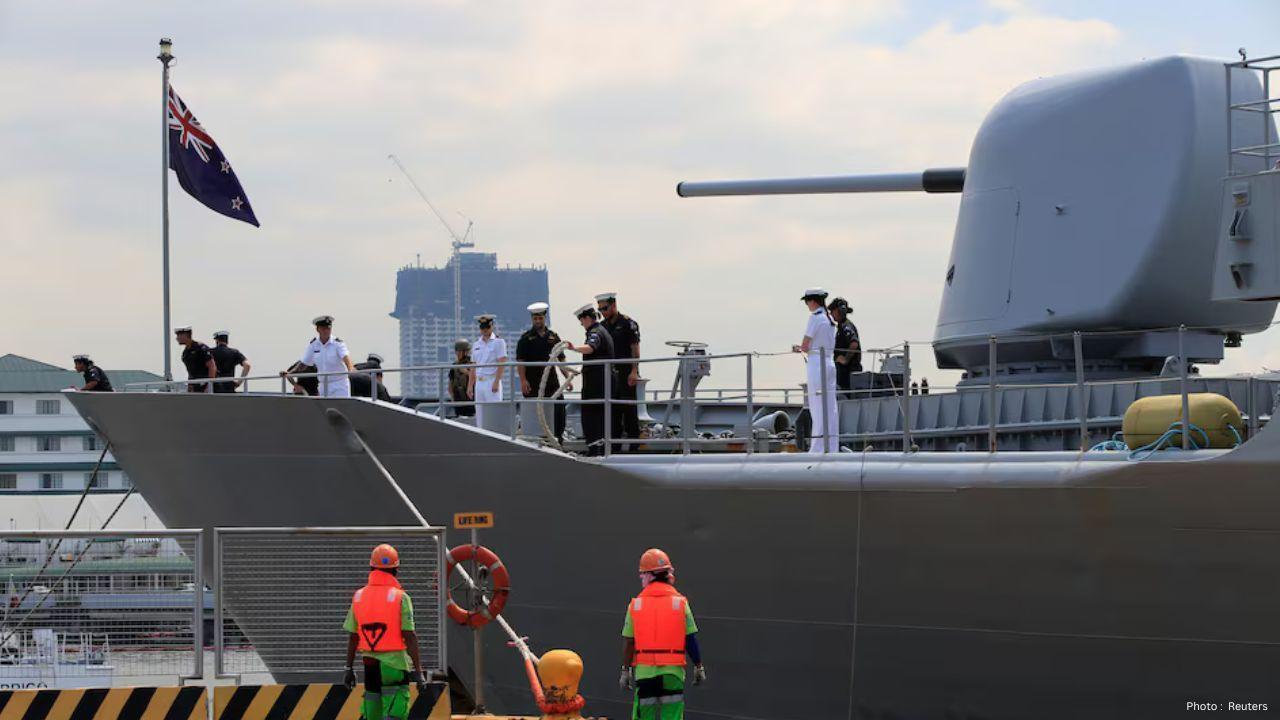
New Zealand has officially started discussions with Australia and Britain to replace its aging naval frigates as part of a major defence modernization plan. The move reflects growing security concerns in the Indo-Pacific region and highlights New Zealand’s efforts to strengthen its military capabilities after years of limited defence spending.
The New Zealand government confirmed that it is exploring different options for replacing its two Anzac-class frigates, HMNZS Te Kaha and HMNZS Te Mana. Both warships entered service in the late 1990s and are expected to reach the end of their operational life by the mid-2030s.
Defence Minister Chris Penk said the government is working closely with international partners to identify the best replacement option for the Royal New Zealand Navy. Officials expect a recommendation on the preferred path to be delivered to the government by the end of 2027.
The discussions are mainly focused on two possible frigate designs. One is Japan’s Mogami-class frigate, which Australia has already selected for its own naval modernization program. The second option is Britain’s Type 31 frigate, a modern warship designed for flexible military operations and maritime security missions.
New Zealand’s decision to work with Australia and Britain is not surprising. The country has long maintained close defence ties with both nations through regional partnerships and military cooperation agreements. Defence experts say choosing a similar platform to Australia’s future fleet could improve joint operations, reduce training costs, and increase military coordination in the Pacific region.
The frigate replacement project is part of New Zealand’s wider 2025 Defence Capability Plan. Under this plan, the government has promised to significantly increase defence spending after years of what officials described as “systemic underspending.” The plan includes upgrading military equipment, renewing the navy fleet, and improving the country’s ability to respond to security threats and natural disasters.
For New Zealand, maritime security is becoming increasingly important. The country depends heavily on safe sea routes for trade, food supplies, energy transport, and economic stability. As tensions rise in parts of the Indo-Pacific region, many governments are now investing more heavily in naval defence and regional security partnerships.
The Pacific region has become an area of growing strategic competition between major global powers, especially the United States and China. Countries like Australia, Japan, Britain, and New Zealand are increasing defence cooperation as concerns grow about military influence, territorial disputes, and regional stability.
New Zealand has traditionally maintained a smaller military compared to larger allies like Australia or the United States. However, changing global security conditions are pushing Wellington to reconsider its long-term defence strategy. The government now appears more willing to invest in modern military technology and stronger regional defence partnerships.
The Anzac-class frigates have played an important role in New Zealand’s naval operations for decades. The warships have participated in international peacekeeping missions, anti-piracy patrols, humanitarian operations, and maritime security missions across different parts of the world. However, maintaining older ships has become increasingly expensive and technically difficult.
Military experts say replacing the frigates is necessary not only for defence readiness but also for ensuring the navy can continue operating effectively in the future. Modern warships are designed with advanced radar systems, missile defence technology, cyber protection, electronic warfare systems, and unmanned capabilities that older ships often struggle to support.
The Mogami-class frigate from Japan is considered one of the most advanced modern frigates in Asia. It includes stealth features, advanced automation systems, and lower crew requirements. Australia’s decision to select the same platform has increased interest in regional defence cooperation around the vessel.
Britain’s Type 31 frigate is also attracting international attention because of its flexible design and lower operational costs compared to larger destroyers. The vessel is designed for patrol, escort, humanitarian, and combat missions, making it attractive for medium-sized navies like New Zealand’s.
At the same time, the project raises important questions about government spending priorities. Defence modernization programs are extremely expensive, and critics argue that countries must balance military investment with healthcare, education, housing, and economic development needs.
Supporters of the naval upgrade argue that national security cannot be ignored in an increasingly unstable world. They believe stronger naval capabilities are necessary to protect trade routes, support allies, respond to disasters, and defend national interests in the Pacific region.
The frigate discussions also reflect a broader trend across the Indo-Pacific, where countries are increasing defence cooperation and military spending because of rising geopolitical uncertainty. Japan, Australia, the Philippines, Britain, and the United States have all announced major defence plans in recent years aimed at strengthening regional security partnerships.
For New Zealand, the frigate replacement project is more than simply buying new warships. It represents a major strategic decision about the country’s future defence policy, international partnerships, and role in regional security.
As negotiations continue over the coming months, the government will face difficult choices involving cost, military capability, political priorities, and long-term national security planning. Whatever final decision is made, the project marks an important turning point for the future of New Zealand’s navy and defence strategy.
#trending #latest #NewZealand #RoyalNewZealandNavy #Frigates #Australia #Britain #DefenseNews #PacificSecurity #IndoPacific #MilitaryNews #NavalDefense #Geopolitics #MiddleeastNews









Advances in Aerospace Technology and Commercial Aviation Recovery
Insights into breakthrough aerospace technologies and commercial aviation’s recovery amid 2025 chall

Defense Modernization and Strategic Spending Trends
Explore key trends in global defense modernization and strategic military spending shaping 2025 secu

Tens of Thousands Protest in Serbia on Anniversary of Deadly Roof Collapse
Tens of thousands in Novi Sad mark a year since a deadly station roof collapse that killed 16, prote

Canada PM Carney Apologizes to Trump Over Controversial Reagan Anti-Tariff Ad
Canadian PM Mark Carney apologized to President Trump over an Ontario anti-tariff ad quoting Reagan,

The ad that stirred a hornets nest, and made Canadian PM Carney say sorry to Trump
Canadian PM Mark Carney apologizes to US President Trump after a tariff-related ad causes diplomatic

Bengaluru-Mumbai Superfast Train Approved After 30-Year Wait
Railways approves new superfast train connecting Bengaluru and Mumbai, ending a 30-year demand, easi



