Post by : Saif
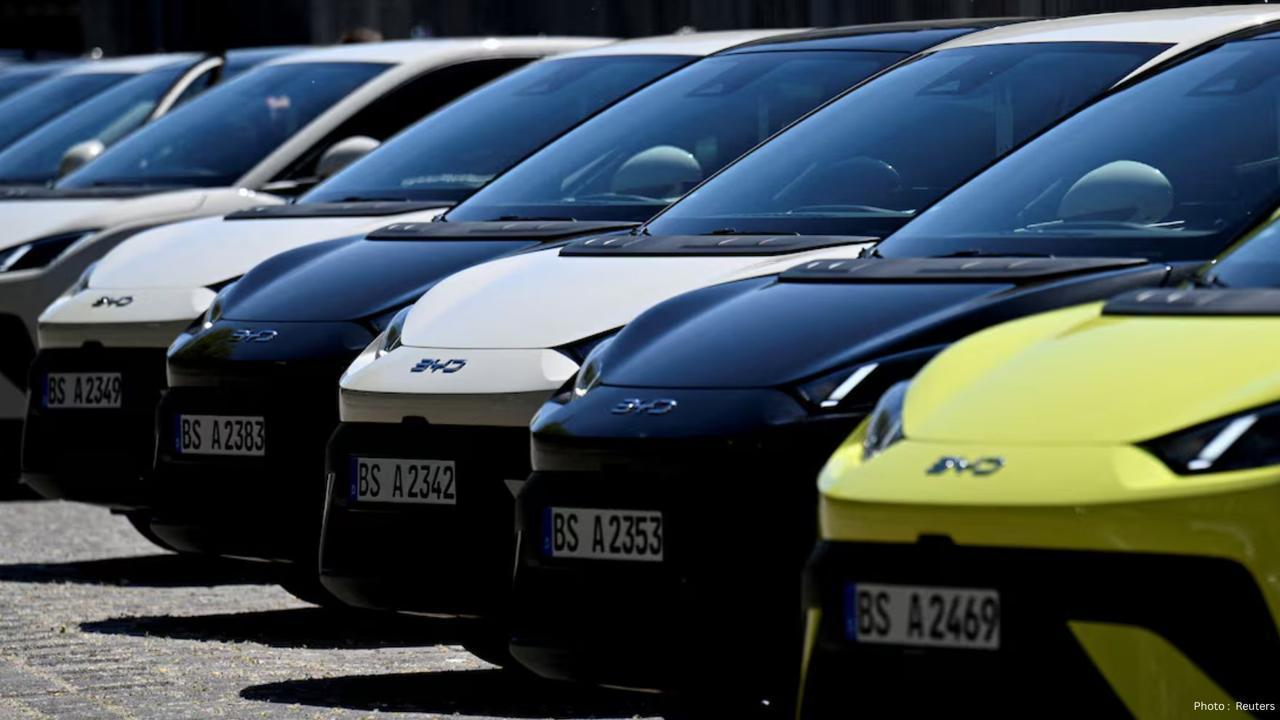
Global automobile industry is entering a new phase of competition as BYD has announced an ambitious target to become the largest carmaker in the world within the next five years. This statement has drawn wide attention across financial markets and the electric vehicle sector, especially because it signals a direct challenge to long-established leaders in the industry.
At the same time, the company’s share price moved downward after the announcement, showing that investors are reacting with caution. While the long-term vision appears strong, short-term market sentiment suggests uncertainty about how quickly such a goal can be achieved.
The Chinese electric vehicle producer has grown rapidly in recent years by focusing on affordable electric cars, battery technology, and large-scale production capacity. It has already become one of the strongest competitors in the global EV space, competing closely with major international brands. However, moving from a strong regional leader to the top position worldwide is a much bigger challenge.
Currently, the global automobile market is led by established manufacturers such as Toyota Motor Corporation and Tesla Inc, both of which have strong brand recognition, wide distribution networks, and long experience in international markets. These companies continue to invest heavily in electric mobility, hybrid systems, and advanced vehicle technology, making the competition even more intense.
The announcement from the Chinese automaker reflects growing confidence in its production scale and technological development. The company has expanded its factories, increased exports, and improved battery innovation, which are key factors in the electric vehicle race. It also benefits from strong domestic demand in China, one of the largest car markets in the world.
However, despite this growth, financial markets responded with caution. The drop in share value indicates that investors are questioning whether the target timeline is realistic. Achieving global leadership in five years would require not only strong sales growth but also expansion into highly competitive markets such as Europe and North America, where consumer preferences and regulations are different.
Industry analysts also point out that global leadership in the automobile sector is not only about selling more cars. It also depends on brand trust, supply chain strength, service networks, and long-term customer satisfaction. Building these factors takes time and consistent performance across different regions.
Another important challenge is increasing competition in the electric vehicle industry itself. Many traditional automakers are now shifting aggressively toward electric models, while new startups continue to enter the market. This creates pressure on pricing, innovation, and profit margins. In such an environment, maintaining rapid growth is not easy, even for companies with strong production capabilities.
The broader impact of this announcement goes beyond one company. It highlights how the global auto industry is shifting from traditional fuel-based vehicles to electric and hybrid systems. Governments in many countries are also supporting cleaner transportation through policies and incentives, which is accelerating this transformation.
If the Chinese manufacturer succeeds in its long-term goal, it could reshape the balance of power in the global automotive sector. It may also push other major players to increase investment in research, reduce costs, and speed up innovation. However, failure to meet expectations could lead to market pressure and slower investor confidence.
For consumers, this competition could bring both benefits and challenges. On one hand, increased rivalry often leads to better technology and more affordable prices. On the other hand, rapid expansion may raise concerns about quality control, service availability, and long-term reliability.
The ambition to reach the top position in the global car market reflects strong confidence from the Chinese electric vehicle maker, but the reaction from financial markets shows that the road ahead is uncertain. The coming years will test whether rapid expansion, innovation, and global acceptance can come together to turn this vision into reality.
#trending #latest #BYD #ElectricVehicles #AutoIndustry #GlobalAutomakers #EVMarket #ChinaEV #Tesla #Toyota #StockMarket #BusinessNews #AutomotiveFuture #CleanEnergy





Advances in Aerospace Technology and Commercial Aviation Recovery
Insights into breakthrough aerospace technologies and commercial aviation’s recovery amid 2025 chall

Defense Modernization and Strategic Spending Trends
Explore key trends in global defense modernization and strategic military spending shaping 2025 secu

Tens of Thousands Protest in Serbia on Anniversary of Deadly Roof Collapse
Tens of thousands in Novi Sad mark a year since a deadly station roof collapse that killed 16, prote

Canada PM Carney Apologizes to Trump Over Controversial Reagan Anti-Tariff Ad
Canadian PM Mark Carney apologized to President Trump over an Ontario anti-tariff ad quoting Reagan,

The ad that stirred a hornets nest, and made Canadian PM Carney say sorry to Trump
Canadian PM Mark Carney apologizes to US President Trump after a tariff-related ad causes diplomatic

Bengaluru-Mumbai Superfast Train Approved After 30-Year Wait
Railways approves new superfast train connecting Bengaluru and Mumbai, ending a 30-year demand, easi



