Post by : Saif
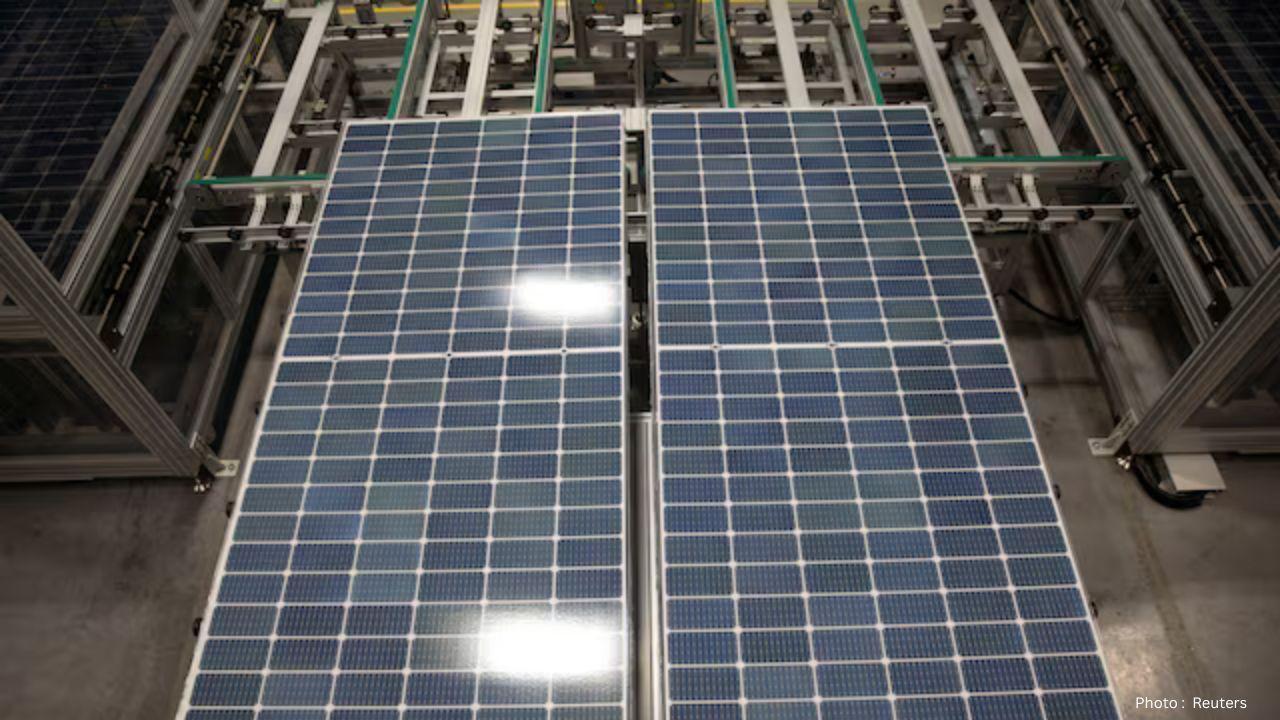
Trump administration is preparing to introduce a minimum price for imported polysilicon along with new tariffs on polysilicon and related products as part of a broader effort to reduce U.S. dependence on China's solar and semiconductor supply chains.
According to officials familiar with the proposal, the measures could be announced later this month following a national security investigation conducted under Section 232 of the Trade Expansion Act of 1962.
The proposed policy is designed to strengthen domestic production of a material that is essential for manufacturing both solar panels and semiconductor chips, two industries considered strategically important for artificial intelligence, clean energy, and national security.
Polysilicon is an ultra-pure form of silicon used to manufacture solar wafers, solar cells, and semiconductor chips.
It forms the foundation of the global solar manufacturing process and also supports the production of advanced electronic components used in AI servers, data centers, electric vehicles, smartphones, and consumer electronics.
China currently dominates global polysilicon production and controls around 80% of the world's solar manufacturing capacity, giving it a significant influence over global supply chains.
The proposed measures are expected to benefit American producers, including factories operated by Hemlock Semiconductor and Wacker Chemie, by protecting them from lower-priced imports.
Officials say the administration is considering a hybrid system that combines:
The goal is to encourage investment across the entire domestic solar manufacturing supply chain rather than relying heavily on imported components.
Read more: U.S. Trade Action Hits Indian Solar Exporters With Steep Duties
While the policy could strengthen U.S. manufacturing, industry groups warn that higher import costs may increase prices for:
Solar developers and semiconductor manufacturers have urged the government to ensure sufficient supplies remain available while domestic production expands.
Several companies have argued that imports from countries such as Malaysia, Germany, and South Korea will still be necessary until U.S. manufacturing capacity increases.
Following reports of the proposed policy, shares of several U.S.-listed solar manufacturers moved higher as investors anticipated stronger protection for domestic producers.
Analysts say the measures could improve the competitiveness of American manufacturers while accelerating investment in local production facilities.
The proposed polysilicon measures are part of a wider U.S. trade strategy focused on strengthening domestic manufacturing in sectors considered vital to national security.
The administration has already introduced tariffs on products including steel, aluminum, automobiles, copper, and lumber and continues investigations into semiconductors, pharmaceuticals, drones, critical minerals, wind turbines, and industrial robots.
Officials say these policies are intended to reduce dependence on foreign supply chains and improve long-term economic resilience.
#trending #latest #Polysilicon #SolarIndustry #Semiconductors #ChipManufacturing #ArtificialIntelligence #AITechnology #SolarEnergy #USChinaTrade #TradePolicy #Manufacturing #CleanEnergy #RenewableEnergy #SupplyChain









Advances in Aerospace Technology and Commercial Aviation Recovery
Insights into breakthrough aerospace technologies and commercial aviation’s recovery amid 2025 chall

Defense Modernization and Strategic Spending Trends
Explore key trends in global defense modernization and strategic military spending shaping 2025 secu

Tens of Thousands Protest in Serbia on Anniversary of Deadly Roof Collapse
Tens of thousands in Novi Sad mark a year since a deadly station roof collapse that killed 16, prote

Canada PM Carney Apologizes to Trump Over Controversial Reagan Anti-Tariff Ad
Canadian PM Mark Carney apologized to President Trump over an Ontario anti-tariff ad quoting Reagan,

The ad that stirred a hornets nest, and made Canadian PM Carney say sorry to Trump
Canadian PM Mark Carney apologizes to US President Trump after a tariff-related ad causes diplomatic

Bengaluru-Mumbai Superfast Train Approved After 30-Year Wait
Railways approves new superfast train connecting Bengaluru and Mumbai, ending a 30-year demand, easi



