Post by : Saif
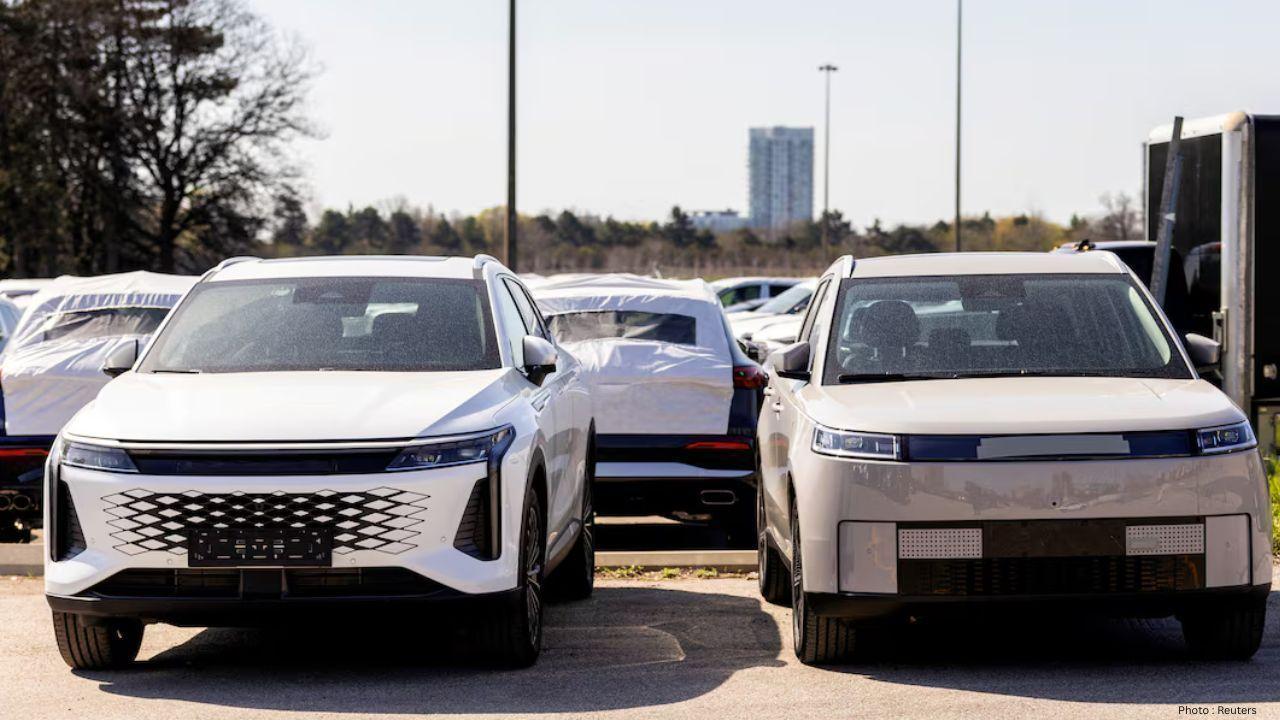
As United States President Donald Trump prepares for a major summit with Chinese President Xi Jinping in Beijing this week, American lawmakers and auto industry leaders are strongly urging him not to allow Chinese car companies into the U.S. market. The issue has quickly become one of the biggest economic and national security debates ahead of the important meeting between the world’s two largest economies.
Several major American auto groups, labor unions, steel companies, and lawmakers from both political parties have warned that opening the door to Chinese vehicles could seriously damage the U.S. automobile industry. They argue that Chinese companies already receive huge government support and produce electric vehicles at much lower prices than American companies can currently match.
The concern grew after Trump previously suggested he might support Chinese automakers building factories inside the United States. During remarks earlier this year, Trump said he would welcome Chinese companies if they invested in American plants and created jobs for U.S. workers. Those comments immediately alarmed many American industry leaders and lawmakers.
Opponents say the problem is not just about competition. They also believe Chinese vehicles may create national security risks because modern cars collect huge amounts of data through cameras, internet connections, GPS systems, and advanced software. Critics fear sensitive information about American drivers and infrastructure could be accessed by foreign governments through connected vehicle technology.
Because of these concerns, bipartisan lawmakers have introduced new legislation called the Connected Vehicle Security Act. The proposed law would block vehicles, software, and parts connected to China and other rival nations from entering the U.S. market. Supporters of the bill say America must protect both its manufacturing industry and national security interests.
American auto industry groups say Chinese automakers already have a strong global advantage because of heavy state subsidies, cheaper production costs, and aggressive pricing strategies. In Europe, South America, and parts of Asia, Chinese electric vehicle companies have rapidly increased their market share over the past few years. Some experts warn the same thing could happen in the United States if restrictions are weakened.
The debate also reflects a larger struggle between Washington and Beijing over technology, trade, and global economic influence. Relations between the United States and China have remained tense for years because of tariffs, export controls, Taiwan, artificial intelligence, and supply chain competition. The upcoming Trump-Xi summit is expected to discuss many of these issues.
China, however, strongly rejects accusations that its car companies are unfair or dangerous. Chinese officials say their electric vehicles have become popular worldwide because of innovation, quality, and competitive prices rather than unfair practices. Beijing has also accused the United States of using national security concerns as an excuse to block competition.
For American consumers, the debate creates a difficult question. Chinese electric vehicles are often much cheaper than American-made EVs. Some reports suggest that the average price of a new car in the United States has become so high that several Chinese EV models could be purchased for the same cost as one American vehicle. This has increased interest among some buyers who want affordable electric transportation.
Still, American industry leaders argue that short-term cheaper prices could create long-term economic damage. They fear that allowing Chinese automakers into the market could eventually weaken U.S. manufacturing, reduce jobs, and hurt domestic companies that employ millions of workers across America. Labor unions have also joined the campaign to keep restrictions in place.
Another major concern is that Chinese companies could bypass restrictions by building factories in neighboring countries such as Mexico or Canada and then exporting vehicles into the United States through existing trade agreements. Lawmakers are now pressuring the Trump administration to stop such possibilities before they grow larger.
The timing of the issue makes it even more politically sensitive. Trump’s upcoming visit to China is already expected to focus on trade disputes, rare earth minerals, technology restrictions, and tensions involving Taiwan and Iran. Any discussion involving Chinese automakers could therefore become part of wider negotiations between the two governments.
Political experts believe the White House faces a difficult balancing act. On one side, Trump wants to improve economic relations with China and possibly secure trade deals that benefit American businesses. On the other side, strong pressure from lawmakers, unions, and the auto industry makes any softening toward Chinese carmakers politically risky.
The issue also shows how the global auto industry is changing rapidly because of electric vehicles and advanced technology. China has become one of the world’s biggest EV producers, while American and European companies are still trying to compete in pricing and production speed. This competition is no longer only about cars. It is also about technology leadership, economic influence, and industrial power.
For now, the Trump administration has publicly said no policy changes are planned regarding Chinese cars. However, industry leaders remain worried that future negotiations with Beijing could create openings for Chinese companies. This is why pressure from lawmakers and manufacturers has become so intense before the summit begins.
The coming Trump-Xi meeting may not fully solve the dispute, but it will likely shape the future direction of U.S.-China economic relations. Whether America continues blocking Chinese vehicles or eventually allows limited entry could have long-term effects on jobs, trade, and global competition.
#trending #latest #Trump #XiJinping #ChineseCars #ElectricVehicles #USChinaRelations #AutoIndustry #TradeWar #USPolitics #ChinaNews #EVMarket #DonaldTrump #EconomicNews #GlobalTrade #AutomobileIndustry #WorldNews






Advances in Aerospace Technology and Commercial Aviation Recovery
Insights into breakthrough aerospace technologies and commercial aviation’s recovery amid 2025 chall

Defense Modernization and Strategic Spending Trends
Explore key trends in global defense modernization and strategic military spending shaping 2025 secu

Tens of Thousands Protest in Serbia on Anniversary of Deadly Roof Collapse
Tens of thousands in Novi Sad mark a year since a deadly station roof collapse that killed 16, prote

Canada PM Carney Apologizes to Trump Over Controversial Reagan Anti-Tariff Ad
Canadian PM Mark Carney apologized to President Trump over an Ontario anti-tariff ad quoting Reagan,

The ad that stirred a hornets nest, and made Canadian PM Carney say sorry to Trump
Canadian PM Mark Carney apologizes to US President Trump after a tariff-related ad causes diplomatic

Bengaluru-Mumbai Superfast Train Approved After 30-Year Wait
Railways approves new superfast train connecting Bengaluru and Mumbai, ending a 30-year demand, easi



