Post by : Avinab Raana
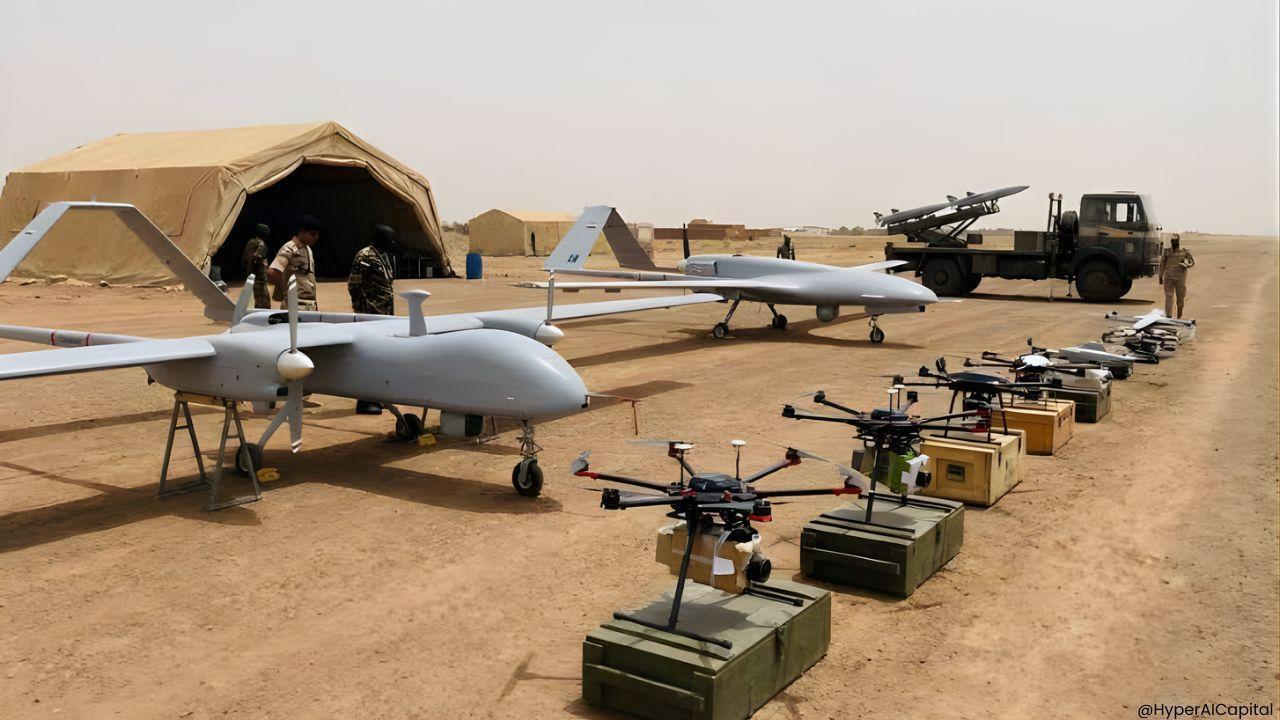
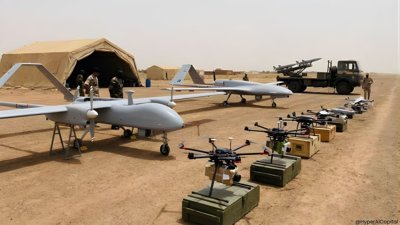
Photo : X / @HyperAICapital
The future of aerial warfare is being rewritten as the United States Air Force doubles down on drone technology and autonomous combat systems in its latest defense strategy. At the center of this transformation is a growing emphasis on Collaborative Combat Aircraft (CCA)—a new class of AI-powered drones designed to operate alongside manned fighter jets. This strategic pivot signals more than just technological advancement; it marks a fundamental shift in how air superiority will be achieved in the coming decades, where human pilots and intelligent machines will operate as a unified force in highly complex combat environments.
The US defense budget for fiscal year 2026 reflects a clear prioritization of unmanned systems, with billions allocated toward drone development, counter-drone technologies, and AI integration. Across the Department of Defense, investments in autonomous platforms are accelerating rapidly, with total unmanned program funding estimated to reach nearly $8.8 billion. Within this framework, the Air Force alone has requested approximately $804 million specifically for the CCA program, underscoring its importance as a cornerstone of future combat strategy. These investments are complemented by broader funding increases for counter-drone systems, missile defense, and autonomous technologies, highlighting a comprehensive approach to modern warfare where speed, precision, and adaptability are key.
The concept behind Collaborative Combat Aircraft is both simple and revolutionary deploy autonomous drones as “loyal wingmen” that can support, protect, and enhance the capabilities of human pilots. These drones are designed to perform a wide range of missions, from surveillance and electronic warfare to direct combat engagement. Unlike traditional unmanned systems, CCAs are built to operate in close coordination with advanced fighter jets, sharing data in real time and executing complex maneuvers as part of an integrated system. This human-machine teaming approach is expected to multiply combat effectiveness while reducing risks to human pilots. The long-term vision includes deploying large fleets of relatively low-cost, expendable drones that can overwhelm adversaries, providing both strategic advantage and operational flexibility in high-threat environments.
At the heart of the CCA program lies artificial intelligence, enabling drones to process vast amounts of data and make decisions at speeds far beyond human capability. This shift toward autonomy is redefining not just how missions are executed, but how they are planned and coordinated. The integration of AI into combat systems allows for dynamic mission adjustments, enhanced situational awareness, and improved response times. In scenarios where communication links may be disrupted, autonomous drones can continue to operate independently, maintaining mission integrity. This technological leap is part of a broader trend across the defense sector, where AI and machine learning are becoming central to achieving operational superiority in increasingly complex battlefields.
The implications of this shift extend beyond defense into the broader aerospace and transportation industries. Advances in drone technology, AI systems, and autonomous navigation are likely to influence commercial aviation, logistics, and urban air mobility solutions. As military programs push the boundaries of what autonomous systems can achieve, these innovations often trickle down into civilian applications, driving efficiency and safety improvements across industries. From cargo drones to smart air traffic management systems, the ripple effects of defense innovation are shaping the future of global mobility. For the aerospace sector, the rise of CCA programs signals a new era where collaboration between manned and unmanned platforms becomes the norm, redefining aircraft design, manufacturing, and operational strategies.
The United States is not alone in this pursuit. Countries around the world are investing heavily in drone technology and autonomous systems, recognizing their strategic importance in modern warfare. This has sparked a global race for technological dominance, where innovation speed and adaptability are critical. The emphasis on cost-effective, scalable drone solutions reflects a broader shift away from reliance on expensive, high-risk platforms toward more flexible and resilient systems. In this evolving landscape, the ability to deploy large numbers of intelligent, networked drones could become a crucial factor in future conflicts.
As the US Air Force continues to refine its CCA program and expand its investment in unmanned systems, the trajectory of aerial combat is becoming increasingly clear. The integration of AI, autonomy, and human expertise is set to create a new paradigm where machines augment human capabilities in unprecedented ways. For the transportation and aerospace industries, this transformation offers both opportunities and challenges. While innovation will drive growth and efficiency, it will also require new regulatory frameworks, ethical considerations, and technological safeguards. In the end, the rise of drone warfare is not just about military strategy, it is about redefining the relationship between humans and machines in one of the most complex and high-stakes environments imaginable. The question now is not whether this future will arrive, but how quickly the world is prepared to adapt to it.
#trending #latest#DroneWarfare #USAirForce #CCAProgram #AerospaceInnovation #DefenseTech




Advances in Aerospace Technology and Commercial Aviation Recovery
Insights into breakthrough aerospace technologies and commercial aviation’s recovery amid 2025 chall

Defense Modernization and Strategic Spending Trends
Explore key trends in global defense modernization and strategic military spending shaping 2025 secu

Tens of Thousands Protest in Serbia on Anniversary of Deadly Roof Collapse
Tens of thousands in Novi Sad mark a year since a deadly station roof collapse that killed 16, prote

Canada PM Carney Apologizes to Trump Over Controversial Reagan Anti-Tariff Ad
Canadian PM Mark Carney apologized to President Trump over an Ontario anti-tariff ad quoting Reagan,

The ad that stirred a hornets nest, and made Canadian PM Carney say sorry to Trump
Canadian PM Mark Carney apologizes to US President Trump after a tariff-related ad causes diplomatic

Bengaluru-Mumbai Superfast Train Approved After 30-Year Wait
Railways approves new superfast train connecting Bengaluru and Mumbai, ending a 30-year demand, easi



