Post by : Avinab Raana
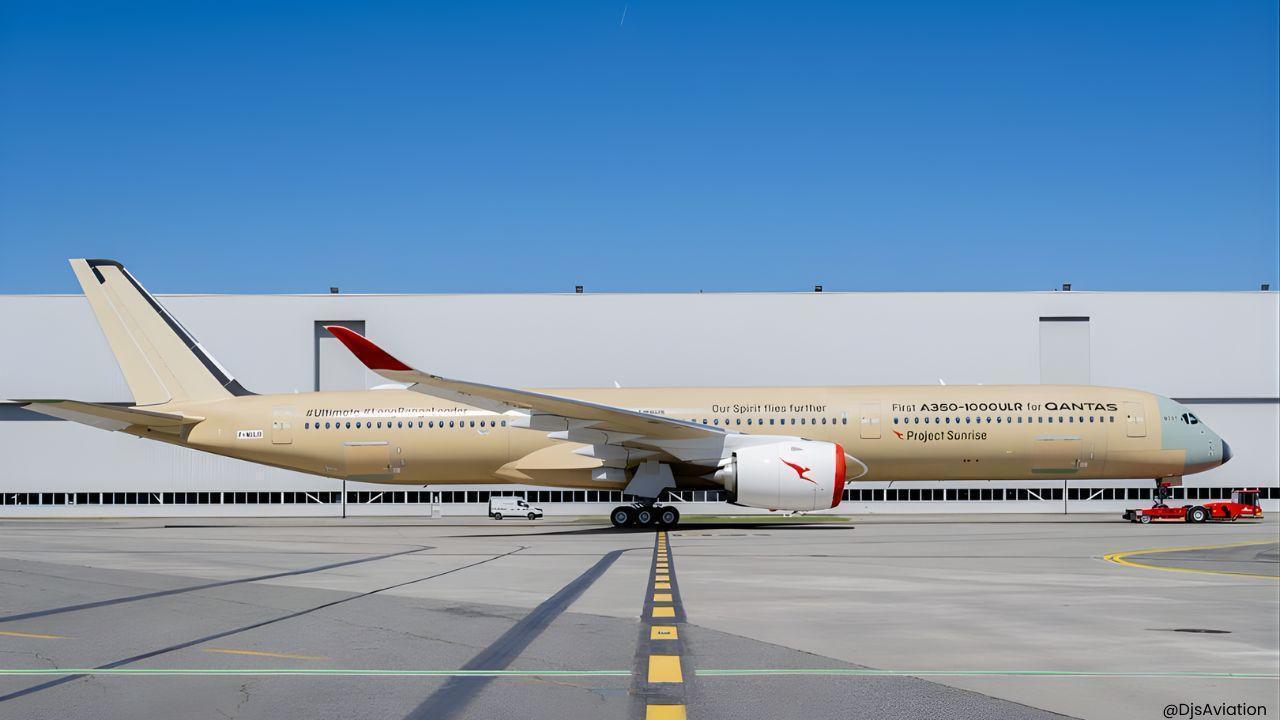
Photo : X / @DjsAviation
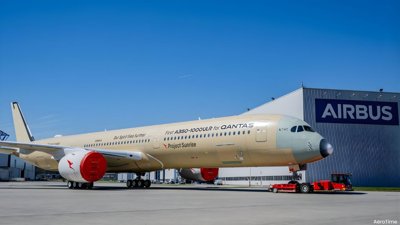
The future of global air travel is being reimagined as Qantas moves closer to launching its ambitious “Project Sunrise,” powered by the Airbus A350-1000, a program set to deliver the longest non-stop commercial flights in history. This bold initiative is not just about distance; it is about redefining how the world connects, eliminating traditional stopovers and compressing travel time between continents. As aviation evolves to meet the demands of a hyper-connected world, Project Sunrise stands as a landmark moment where technological innovation meets passenger experience at an entirely new scale.
At the heart of Project Sunrise is a simple yet transformative goal connecting cities like Sydney to London and New York through direct, non-stop flights. These routes, spanning up to 20 hours in the air, represent a significant leap beyond conventional long-haul operations, challenging the limits of both aircraft performance and human endurance. For passengers, this means a seamless journey without the disruptions of layovers, reduced total travel time, and a more direct connection between major global hubs. For airlines, it opens up new route possibilities, reshaping network strategies and expanding market reach in ways previously considered impractical.
The Airbus A350-1000 has been specifically chosen for this mission due to its advanced design, fuel efficiency, and extended range capabilities. Equipped with next-generation engines and lightweight composite materials, the aircraft is engineered to operate efficiently over extreme distances while maintaining high levels of comfort and safety. Qantas has further customized the aircraft to meet the unique demands of ultra-long-haul travel. Modifications include increased fuel capacity, specialized cabin layouts, and enhanced onboard systems designed to support extended flight durations. This level of customization highlights how aircraft are no longer one-size-fits-all solutions but tailored platforms optimized for specific operational goals.
One of the most critical aspects of Project Sunrise is ensuring passenger well-being during flights that can exceed 18 to 20 hours. Qantas is introducing innovative cabin features designed to combat fatigue, jet lag, and the physical challenges of long-duration travel. These include dedicated wellness zones, improved cabin lighting systems that simulate natural day-night cycles, and ergonomically designed seating across all classes. The focus is on creating an environment where passengers can move, rest, and adapt more comfortably to extended time in the air.This human-centric approach marks a significant evolution in aviation design, where passenger health and experience are becoming as important as operational efficiency.
Executing ultra-long-haul flights at this scale requires overcoming a range of operational challenges. From managing fuel efficiency and payload optimization to ensuring crew readiness and compliance with international aviation regulations, every aspect of the operation must be meticulously planned. Crew scheduling, in particular, becomes more complex, with additional pilots and rest facilities required to maintain safety standards. Weather patterns, air traffic coordination, and emergency planning also take on heightened importance when flights operate across multiple continents without intermediate stops.These challenges underscore the complexity of modern aviation, where technological capability must be matched by operational excellence.
The introduction of ultra-long-haul flights has far-reaching implications for the global transportation ecosystem. By eliminating stopovers, airlines can streamline routes, reduce congestion at major hub airports, and create more direct travel corridors. For the broader aviation industry, this shift could lead to a reconfiguration of global air traffic patterns, with increased emphasis on point-to-point connectivity rather than traditional hub-and-spoke models. This evolution aligns with changing passenger preferences, where convenience and time efficiency are becoming key decision factors. Additionally, the success of Project Sunrise could encourage other airlines to invest in similar capabilities, accelerating the adoption of ultra-long-haul operations worldwide.
While ultra-long-haul flights represent a technological breakthrough, they also raise important questions about environmental impact. Qantas and Airbus are addressing this by focusing on fuel efficiency, carbon reduction strategies, and the use of sustainable aviation fuels.The A350-1000’s advanced design allows for lower emissions per passenger compared to older aircraft, helping to mitigate the environmental footprint of extended flights. However, as the aviation industry continues to expand, balancing growth with sustainability will remain a critical challenge.
As Project Sunrise moves closer to reality, it is poised to redefine the boundaries of what is possible in commercial aviation. The ability to connect distant cities without interruption will not only transform travel experiences but also reshape economic, cultural, and business interactions across the globe.For the transportation and aviation sectors, this marks the beginning of a new era, one where distance becomes less of a barrier and connectivity becomes more seamless than ever before. In the end, Project Sunrise is more than just a flight program. It is a vision of a world where the farthest destinations feel closer, and where innovation continues to push the limits of human possibility in the skies.
#trending #latest#ProjectSunrise #QantasA350 #UltraLongHaul #AviationInnovation #AirbusA350





Advances in Aerospace Technology and Commercial Aviation Recovery
Insights into breakthrough aerospace technologies and commercial aviation’s recovery amid 2025 chall

Defense Modernization and Strategic Spending Trends
Explore key trends in global defense modernization and strategic military spending shaping 2025 secu

Tens of Thousands Protest in Serbia on Anniversary of Deadly Roof Collapse
Tens of thousands in Novi Sad mark a year since a deadly station roof collapse that killed 16, prote

Canada PM Carney Apologizes to Trump Over Controversial Reagan Anti-Tariff Ad
Canadian PM Mark Carney apologized to President Trump over an Ontario anti-tariff ad quoting Reagan,

The ad that stirred a hornets nest, and made Canadian PM Carney say sorry to Trump
Canadian PM Mark Carney apologizes to US President Trump after a tariff-related ad causes diplomatic

Bengaluru-Mumbai Superfast Train Approved After 30-Year Wait
Railways approves new superfast train connecting Bengaluru and Mumbai, ending a 30-year demand, easi



