Post by : Avinab Raana
Photo : X / AeroTime
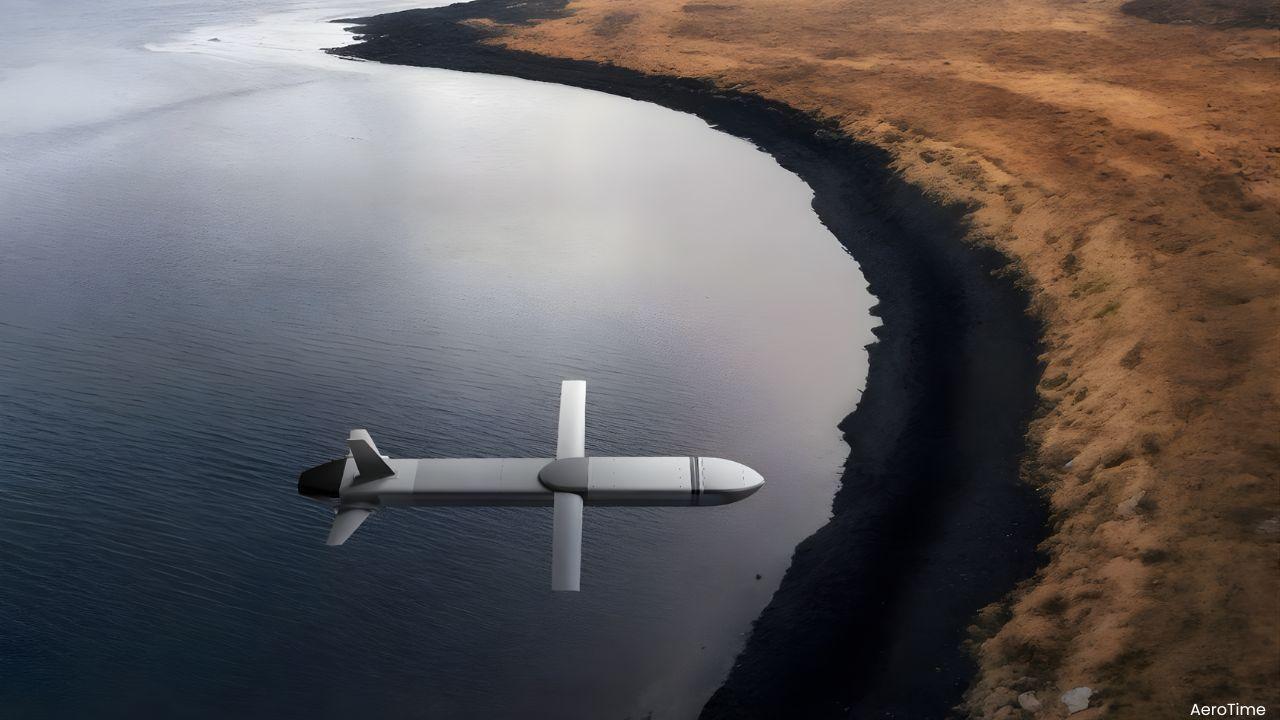
In a major development that reflects shifting priorities in global defence and aerospace strategy, Rheinmetall and Destinushave announced a joint venture aimed at producing advanced cruise missile systems at scale. The partnership comes at a time when Europe is witnessing unprecedented demand for defence equipment, driven by evolving geopolitical tensions and the urgent need to strengthen strategic autonomy. This collaboration is not just about production, it represents a structural shift in how Europe plans to secure its defence supply chains in the years ahead.
The new entity, to be named Rheinmetall Destinus Strike Systems, is scheduled to be established in the second half of 2026 and will be based in Germany. The ownership structure gives Rheinmetall a majority 51% stake, with Destinus holding the remaining 49%, reflecting a blend of industrial strength and technological innovation. The venture will focus on manufacturing, marketing, and delivering advanced cruise missiles and ballistic rocket artillery systems, targeting both European and NATO-aligned markets.
What makes this partnership particularly significant is the complementary strengths of the two companies. Destinus brings advanced missile design, system architecture, and scalable platform development capabilities, while Rheinmetall contributes large-scale industrial production expertise and extensive experience in managing complex defence programs. This combination is expected to accelerate the development and deployment of next-generation missile systems, enabling faster production cycles and improved operational readiness.
The joint venture is a direct response to the rapidly increasing demand for missile systems across Europe and allied nations. Recent conflicts have highlighted the need for high-volume, cost-effective strike capabilities, shifting the defence industry away from limited production runs toward large-scale manufacturing. Industry estimates suggest that demand could scale from thousands to tens of thousands of systems annually, creating a market opportunity worth billions over time.
One of the most critical insights driving this collaboration is the recognition that Europe’s primary constraint is no longer demand, but production capacity. While technological innovation has advanced rapidly, the ability to manufacture systems at scale has lagged behind. The Rheinmetall-Destinus partnership aims to bridge this gap by leveraging Germany’s industrial infrastructure alongside Destinus’s agile development capabilities, effectively creating a production ecosystem capable of meeting modern defence requirements.
The venture also carries significant geopolitical implications, as it aligns with broader efforts to strengthen NATO’s defence capabilities and reduce reliance on external suppliers. By building indigenous production capacity within Europe, the partnership supports a more resilient and self-sufficient defence ecosystem. It also reflects a growing trend of regional collaboration in response to global security challenges, where nations are prioritising domestic capabilities over external dependencies.
While the immediate focus is on missile systems, the technological advancements and manufacturing innovations emerging from this partnership are likely to have wider implications across the aerospace and advanced manufacturing sectors. From propulsion systems to materials engineering, the ripple effects of such collaborations often extend into civilian aviation, logistics, and high-performance engineering domains, reinforcing the interconnected nature of modern industrial ecosystems.
The Rheinmetall-Destinus joint venture marks a turning point in Europe’s defence and aerospace strategy, where scalability, speed, and industrial resilience are becoming as critical as technological superiority. As global tensions continue to reshape priorities, partnerships like this will play a defining role in determining how effectively nations can respond to evolving security challenges. In this new landscape, the ability to produce at scale is no longer an advantage, it is a necessity.
#trending #latest#Rheinmetall #Destinus #MissileSystems #DefenseIndustry #AerospaceTech








Advances in Aerospace Technology and Commercial Aviation Recovery
Insights into breakthrough aerospace technologies and commercial aviation’s recovery amid 2025 chall

Defense Modernization and Strategic Spending Trends
Explore key trends in global defense modernization and strategic military spending shaping 2025 secu

Tens of Thousands Protest in Serbia on Anniversary of Deadly Roof Collapse
Tens of thousands in Novi Sad mark a year since a deadly station roof collapse that killed 16, prote

Canada PM Carney Apologizes to Trump Over Controversial Reagan Anti-Tariff Ad
Canadian PM Mark Carney apologized to President Trump over an Ontario anti-tariff ad quoting Reagan,

The ad that stirred a hornets nest, and made Canadian PM Carney say sorry to Trump
Canadian PM Mark Carney apologizes to US President Trump after a tariff-related ad causes diplomatic

Bengaluru-Mumbai Superfast Train Approved After 30-Year Wait
Railways approves new superfast train connecting Bengaluru and Mumbai, ending a 30-year demand, easi



