Post by : Saif
The president of South Korea has said that his government cannot stop the United States from moving weapons and military systems from American bases located in the country. The statement came as reports emerged that the United States may send some of its missile defense equipment from South Korea to other regions where tensions are rising.
President Lee Jae Myung addressed the issue during a cabinet meeting in Seoul. He explained that U.S. forces stationed in South Korea operate under American command and therefore the South Korean government does not have the authority to block decisions about moving their military equipment.
The issue has drawn attention inside South Korea because many citizens see the presence of American defense systems as an important part of protection against threats from North Korea. News that some equipment might be relocated has raised questions about whether the country’s defenses could be weakened.
The discussion began after reports suggested that the United States was reviewing its military resources around the world. Washington is considering shifting some systems to areas where conflicts or security risks are growing. The Middle East, which has recently seen rising tensions and military activity, is one region where additional defensive equipment may be needed.
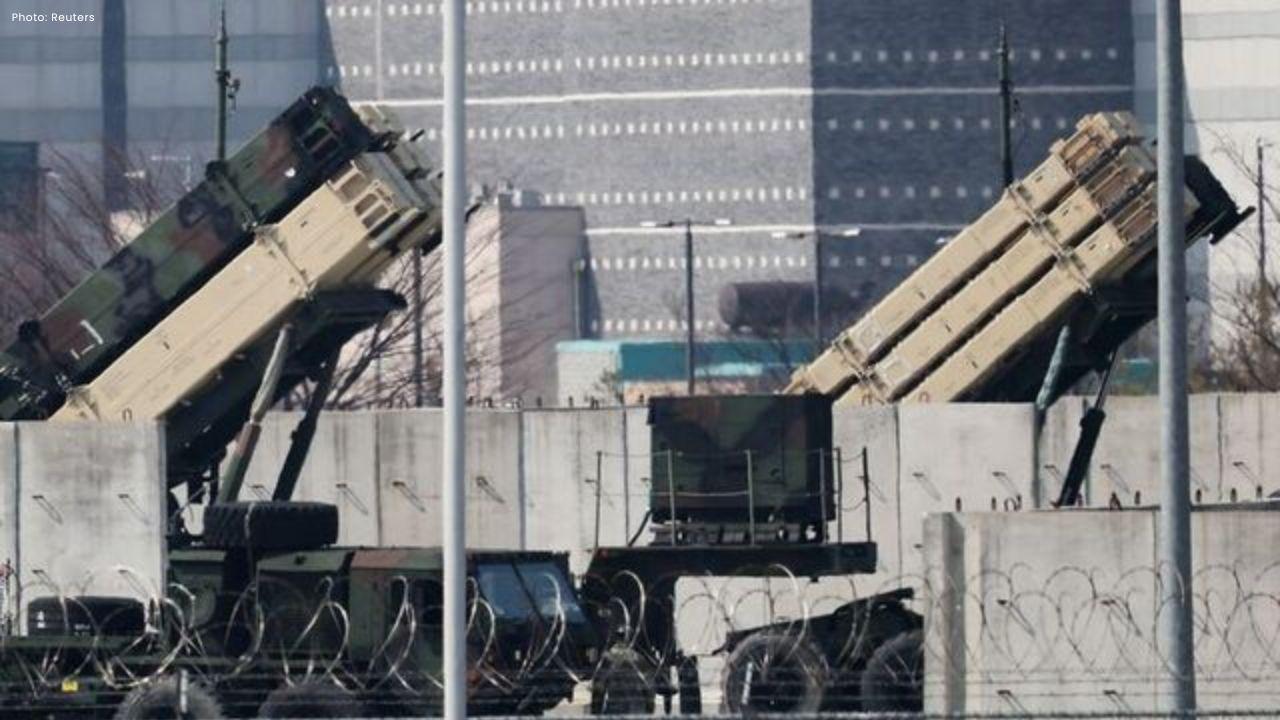
Among the systems reportedly under discussion are Patriot missile defense batteries. These systems are designed to detect, track, and destroy incoming missiles before they reach their targets. Patriot systems are considered one of the most advanced missile defense tools used by the United States and its allies.
Some South Korean media reports suggested that equipment might have been moved from American facilities such as Osan Air Base. This base is one of the most important U.S. military locations in the country and plays a major role in regional defense operations.
President Lee tried to reassure the public that South Korea’s overall security would not be weakened even if some equipment is temporarily relocated. He said the country’s own military capabilities are strong and that the alliance with the United States remains fully active.
He also explained that the South Korean government has shared its concerns with Washington, but ultimately the United States has the right to manage its own military forces. According to Lee, South Korea is not in a position to demand that the United States keep specific weapons in place.
The presence of American forces in South Korea has been a key part of the country’s defense strategy for many decades. The United States maintains around 28,500 troops in the country as part of a long-standing military alliance formed after the Korean War.
These forces operate several major bases and bring advanced technology and defense systems to the region. They also take part in regular joint training exercises with South Korean troops. The goal of these exercises is to strengthen coordination and prepare for possible threats, especially from North Korea.
North Korea remains one of the main security concerns in the region. The country has developed nuclear weapons and continues to test new missile technology. Because of this, missile defense systems such as Patriot batteries are seen as an important shield against potential attacks.
Many South Koreans therefore closely follow any news related to the movement of U.S. military equipment. Even small changes in defense arrangements can become a major political topic.
However, defense experts say that moving equipment between regions is common for a military that operates around the world. The United States maintains forces in many countries and often shifts resources depending on where they are needed most.
If tensions increase in one region, equipment may be moved there temporarily to strengthen defenses. When the situation stabilizes, those resources may be moved again.
This kind of global military management reflects how connected today’s security challenges have become. Conflicts in one part of the world can influence decisions in another region thousands of kilometers away.
The issue has also created political debate inside South Korea. Some lawmakers and commentators worry that the country could appear less important in U.S. defense planning if equipment is moved elsewhere.
Others argue that the alliance between the United States and South Korea remains strong and flexible. They say the ability to move military resources is a normal part of maintaining global security.
President Lee has taken a careful position on the issue. He has acknowledged the public’s concerns but also emphasized that South Korea’s own defense capabilities are powerful. The country has one of the most modern and well-equipped militaries in Asia.
South Korea has invested heavily in its defense systems, including advanced fighter jets, missile defenses, naval forces, and surveillance technology. These capabilities allow the country to respond quickly to threats even without relying entirely on foreign equipment.
At the same time, the partnership with the United States continues to play a major role in maintaining stability on the Korean Peninsula. The alliance includes intelligence sharing, joint planning, and military cooperation across many areas.
Leaders in both countries have repeatedly stated that the security relationship remains strong and that both sides remain committed to protecting the region.
The discussion about redeploying weapons highlights how complicated modern security planning has become. Governments must constantly balance different threats while maintaining alliances and public confidence.
For South Korea, the key challenge is ensuring that its defenses remain strong while continuing to work closely with its most important security partner.
As global tensions remain high in several regions, decisions about military resources will likely continue to evolve. For now, South Korean leaders say the country remains safe and that its defense partnership with the United States is still firmly in place.
#trending #latest #armustnews #SouthKorea #USMilitary #USForces #PatriotMissiles #DefenseAlliance #NorthKorea #AsiaPacificSecurity #GlobalMilitary #WorldNews








Advances in Aerospace Technology and Commercial Aviation Recovery
Insights into breakthrough aerospace technologies and commercial aviation’s recovery amid 2025 chall

Defense Modernization and Strategic Spending Trends
Explore key trends in global defense modernization and strategic military spending shaping 2025 secu

Tens of Thousands Protest in Serbia on Anniversary of Deadly Roof Collapse
Tens of thousands in Novi Sad mark a year since a deadly station roof collapse that killed 16, prote

Canada PM Carney Apologizes to Trump Over Controversial Reagan Anti-Tariff Ad
Canadian PM Mark Carney apologized to President Trump over an Ontario anti-tariff ad quoting Reagan,

The ad that stirred a hornets nest, and made Canadian PM Carney say sorry to Trump
Canadian PM Mark Carney apologizes to US President Trump after a tariff-related ad causes diplomatic

Bengaluru-Mumbai Superfast Train Approved After 30-Year Wait
Railways approves new superfast train connecting Bengaluru and Mumbai, ending a 30-year demand, easi



