Post by : Avinab Raana
Photo : X / Bloomberg
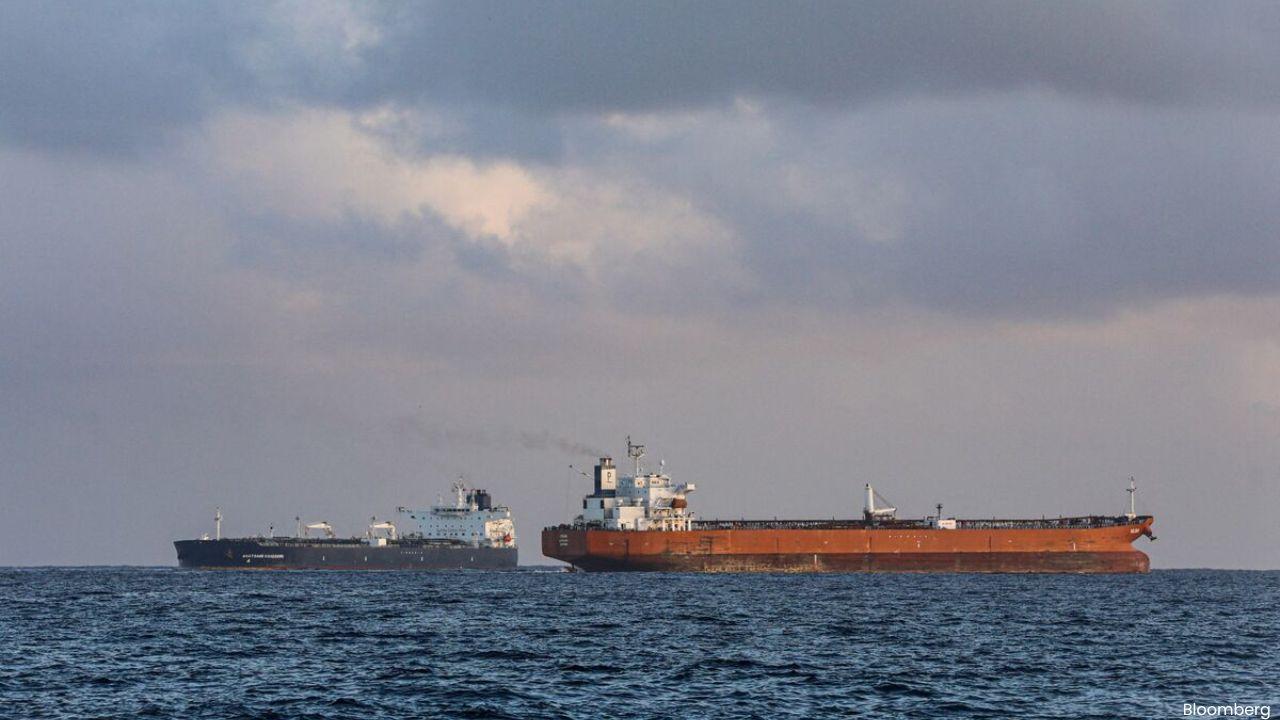
In a development that is sending ripples across global maritime trade, Russia’s crucial oil shipment to Cuba has emerged as a defining moment in the ongoing geopolitical standoff shaped by the United States’ strict fuel blockade. The delivery, carried by a Russian tanker to Cuba’s Matanzas port, marks the first major oil inflow to the island in months, highlighting both the severity of Cuba’s energy crisis and the growing complexity of global shipping routes under political pressure. As tensions rise, this shipment is no longer just about energy, it is a statement that is reshaping maritime logistics and international trade alignments.
Cuba’s reliance on imported oil has made it highly vulnerable to supply disruptions, and the US-led blockade has pushed the island into one of its most severe energy crises in recent years. With traditional suppliers like Venezuela and Mexico halting shipments under pressure, Cuba has faced prolonged blackouts, industrial slowdowns, and critical shortages affecting everyday life. The arrival of Russian crude estimated at hundreds of thousands of barrels offers temporary relief but also underscores how fragile the country’s energy security has become.
From a shipping and logistics perspective, this oil movement signals a new era of risk-laden maritime operations. Tankers navigating politically sensitive routes are now exposed to sanctions, rerouting risks, and potential interception scenarios. The fact that this shipment was allowed on a case-by-case basis reflects the unpredictability of enforcement, creating a volatile operating environment for shipping companies. In some instances, vessels carrying similar cargo have even been forced to reroute mid-journey, highlighting the growing instability in energy shipping corridors.
For Russia, the shipment represents more than humanitarian assistance, it is a strategic assertion of influence in the Western Hemisphere. By stepping in as a key energy supplier to Cuba, Moscow is reinforcing geopolitical alliances while challenging US dominance in regional trade dynamics. Plans for additional shipments further indicate that this is not a one-off event but part of a broader strategy to maintain a sustained presence in Cuba’s energy sector.
The implications of this development extend far beyond Cuba. Energy shipments are deeply interconnected with global freight markets, and disruptions in one region often lead to cascading effects worldwide. The uncertainty surrounding sanctions, insurance risks, and route viability is already contributing to higher shipping costs and tighter vessel availability. For global logistics players, this means recalibrating strategies to manage both cost volatility and geopolitical exposure, especially in energy-intensive trade routes.
The situation has drawn comparisons to Cold War-era tensions, where Cuba once stood at the center of global geopolitical rivalry. While today’s scenario is rooted in economic and energy dynamics rather than military confrontation, the underlying strategic competition remains strikingly similar. The presence of a Russian tanker near US-influenced waters revives historical parallels, reinforcing the idea that maritime trade is increasingly becoming a theater for geopolitical signaling.
For the marine and shipping industry, this development signals a shift toward a more fragmented and politically influenced trade environment. Operators must now account for not just operational efficiency but also diplomatic risk, regulatory uncertainty, and route diversification. The ability to navigate such complexities will determine competitive advantage in a landscape where trade routes are no longer purely economic decisions but geopolitical calculations.
Russia’s oil shipment to Cuba is more than a logistical event, it is a turning point that highlights the growing intersection of energy, politics, and maritime trade. As global supply chains become increasingly exposed to geopolitical forces, the rules of shipping are being rewritten in real time. For industry stakeholders, the message is clear: adaptability, strategic foresight, and risk management will define success in a world where every shipment carries not just cargo, but consequences.
#trending #latest,#RussiaCubaOil #USBlockade #MaritimeTrade #EnergyLogistics #GeopoliticsShipping








Advances in Aerospace Technology and Commercial Aviation Recovery
Insights into breakthrough aerospace technologies and commercial aviation’s recovery amid 2025 chall

Defense Modernization and Strategic Spending Trends
Explore key trends in global defense modernization and strategic military spending shaping 2025 secu

Tens of Thousands Protest in Serbia on Anniversary of Deadly Roof Collapse
Tens of thousands in Novi Sad mark a year since a deadly station roof collapse that killed 16, prote

Canada PM Carney Apologizes to Trump Over Controversial Reagan Anti-Tariff Ad
Canadian PM Mark Carney apologized to President Trump over an Ontario anti-tariff ad quoting Reagan,

The ad that stirred a hornets nest, and made Canadian PM Carney say sorry to Trump
Canadian PM Mark Carney apologizes to US President Trump after a tariff-related ad causes diplomatic

Bengaluru-Mumbai Superfast Train Approved After 30-Year Wait
Railways approves new superfast train connecting Bengaluru and Mumbai, ending a 30-year demand, easi



