Post by : Avinab Raana
Photo : X / @smencimer
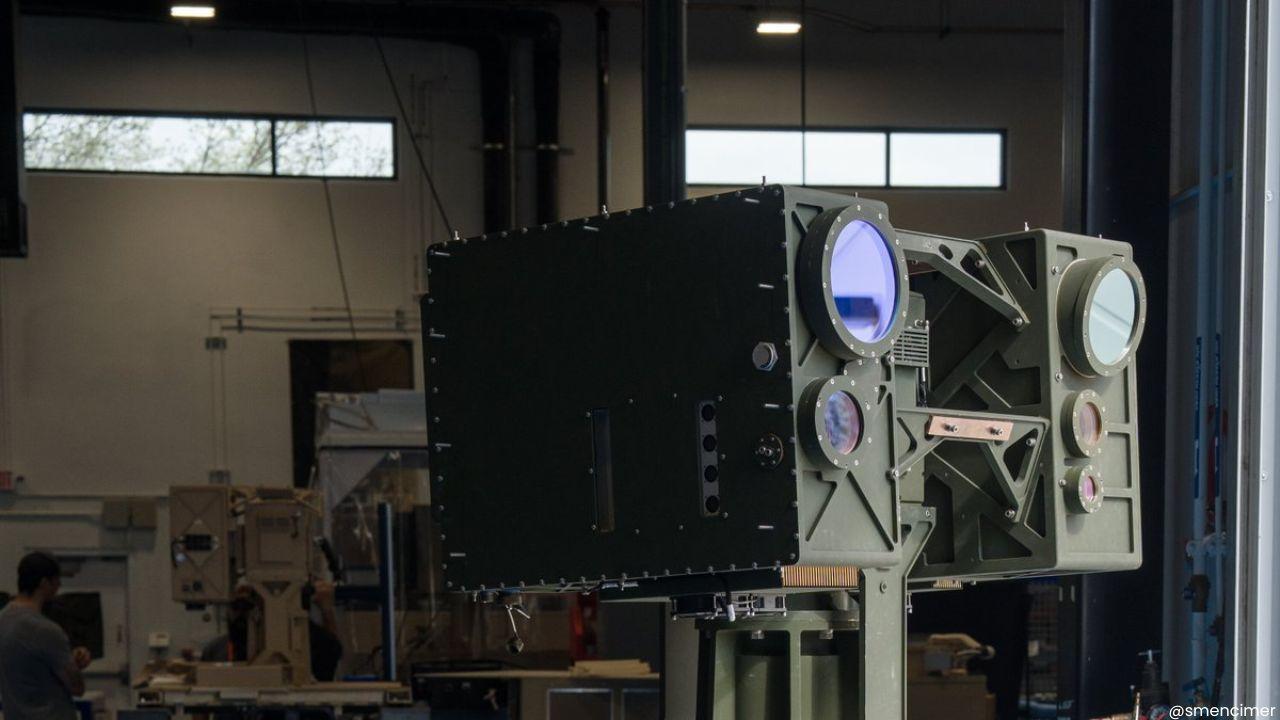
A growing wave of unidentified drone activity near sensitive US military and government locations is pushing the Pentagon toward a bold technological response deploying anti-drone laser systems at key strategic sites. Recent incidents involving coordinated drone movements over military bases have heightened concerns about surveillance, espionage, and potential attacks, forcing defense authorities to rethink how airspace security is managed in an era of rapidly evolving aerial threats. What was once considered a niche security issue has now escalated into a national priority, with direct implications for both military operations and civilian aviation safety.
At the center of this strategy is the use of directed-energy weapons high-powered lasers capable of disabling or destroying drones mid-air with precision and minimal collateral damage. Unlike traditional missile-based systems, laser defenses offer a faster, more cost-effective solution to counter small, agile drone threats. The Pentagon’s increasing focus on such systems reflects a broader shift in defense strategy, where speed, scalability, and cost efficiency are becoming critical in dealing with high-frequency, low-cost drone incursions.
One of the most sensitive areas under consideration is the region surrounding Fort Lesley J. McNair in Washington, D.C., a high-security zone located near critical government infrastructure and key leadership residences. A series of recent drone sightings in this area has triggered a comprehensive security review, with authorities exploring the feasibility of installing laser-based counter-drone systems to enhance protection. The challenge, however, lies in balancing security needs with the complexities of operating in one of the most tightly controlled and congested airspaces in the world.
The potential deployment of anti-drone lasers has sparked a significant debate within the aviation ecosystem, particularly involving the Federal Aviation Administration. The FAA has expressed concerns about the risks such systems could pose to civilian aircraft, especially in densely trafficked air corridors near major airports. Previous incidents involving laser use have already led to temporary airspace closures, highlighting the delicate balance between national security and aviation safety.
Integrating laser-based defense systems into active airspace is far from straightforward. Military officials must ensure that these systems can operate without interfering with commercial flights, navigation systems, or pilot visibility. The debate has also exposed coordination gaps between defense and aviation authorities, with both sides working to establish protocols that allow for rapid threat response while maintaining strict safety standards. This intersection of defense technology and civil aviation is becoming one of the most complex challenges in modern airspace management.
Beyond security, the Pentagon’s interest in laser systems is also driven by economics. Traditional missile interceptors are expensive and often impractical for countering low-cost drones. Laser systems, by contrast, offer a significantly lower cost per engagement, making them a scalable solution for continuous threat environments. This shift could redefine how countries worldwide approach air defense, particularly as drone technology becomes more accessible and widespread.
The urgency behind these developments is closely tied to the rapid evolution of drone warfare across global conflict zones. From surveillance missions to direct attacks, drones have become a central feature of modern warfare, forcing governments to adopt new countermeasures. The US move toward laser-based defenses is part of a broader global trend, where advanced technologies are being deployed to counter increasingly sophisticated aerial threats.
The Pentagon’s consideration of anti-drone lasers marks a turning point in how airspace security is conceptualized and enforced. As drones continue to challenge traditional defense systems, technologies like directed-energy weapons are emerging as critical tools in maintaining control over the skies. However, the path forward is not without challenges balancing innovation with safety will be key. In this evolving landscape, the future of aviation will not just be defined by how aircraft fly, but by how airspace itself is protected in an age of invisible, fast-moving threats.
#trending #latest,#AntiDroneSystems #LaserDefense #USAirspace #DroneThreats #AviationSafety









Advances in Aerospace Technology and Commercial Aviation Recovery
Insights into breakthrough aerospace technologies and commercial aviation’s recovery amid 2025 chall

Defense Modernization and Strategic Spending Trends
Explore key trends in global defense modernization and strategic military spending shaping 2025 secu

Tens of Thousands Protest in Serbia on Anniversary of Deadly Roof Collapse
Tens of thousands in Novi Sad mark a year since a deadly station roof collapse that killed 16, prote

Canada PM Carney Apologizes to Trump Over Controversial Reagan Anti-Tariff Ad
Canadian PM Mark Carney apologized to President Trump over an Ontario anti-tariff ad quoting Reagan,

The ad that stirred a hornets nest, and made Canadian PM Carney say sorry to Trump
Canadian PM Mark Carney apologizes to US President Trump after a tariff-related ad causes diplomatic

Bengaluru-Mumbai Superfast Train Approved After 30-Year Wait
Railways approves new superfast train connecting Bengaluru and Mumbai, ending a 30-year demand, easi



