Post by : Avinab Raana
Photo : X / Clash Report
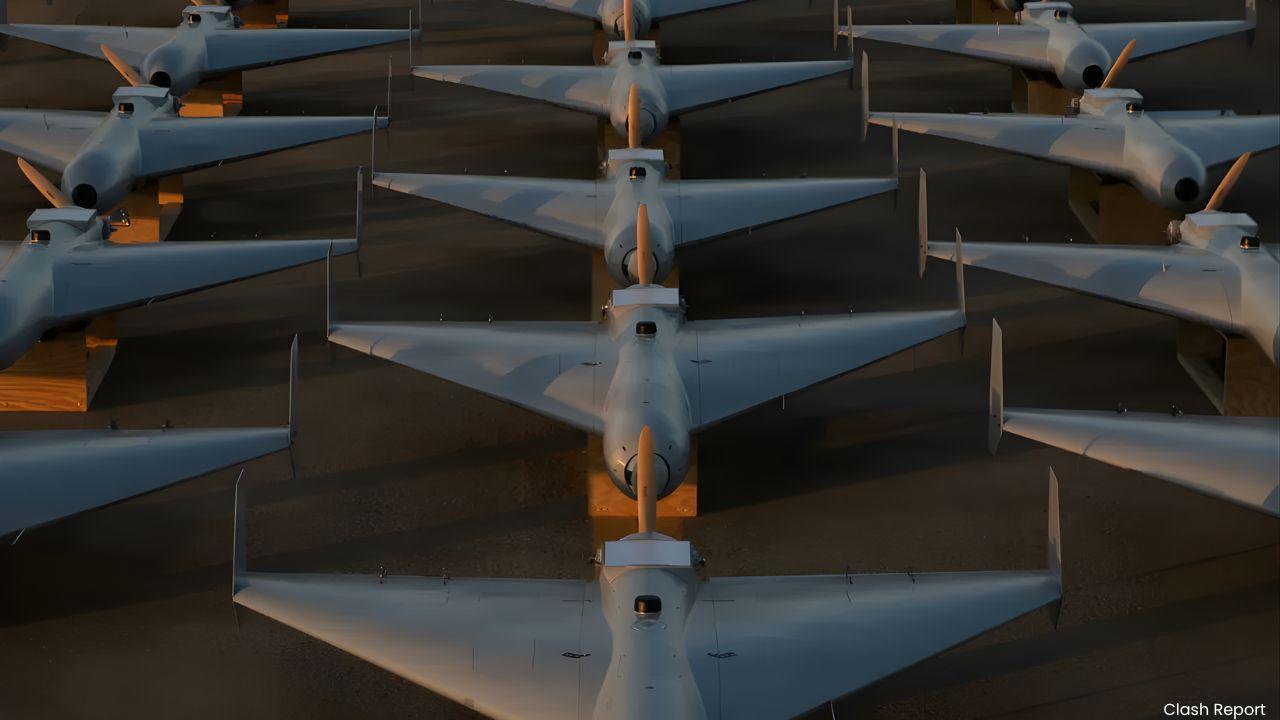
In a defining moment for modern combat strategy, the United States has deployed its LUCAS kamikaze drones in active operations against Iran, signaling a major shift in how wars are fought. These low-cost, high-impact drones are not just another addition to the arsenal, they represent a fundamental transformation in aerial warfare.
The LUCAS drone is a striking example of strategic adaptation. Inspired by Iran’s own Shahed-style drones, the US has effectively turned the concept back on its originator. Designed as a one-way attack system, the drone flies directly into its target, delivering precision strikes without the need for pilot involvement.
This approach flips traditional military logic, where high-cost weapons once dominated the battlefield. Instead, the focus is now on affordability, scalability, and relentless pressure through numbers.
What makes the LUCAS drone particularly disruptive is its cost-effectiveness. Compared to expensive missiles and advanced fighter operations, these drones can be produced and deployed at scale, enabling the US to sustain prolonged operations without exhausting resources. This shift toward “affordable mass” is rapidly becoming the backbone of modern warfare, where quantity and persistence can overpower even the most advanced defenses.
Following its initial combat deployment, the performance of the LUCAS drone has reportedly exceeded expectations, prompting the Pentagon to push for large-scale production. The ability to strike deep into hostile territory with minimal risk to personnel has made it a highly attractive tool for military planners. Its long-range capability and autonomous targeting system allow it to operate in contested environments where traditional aircraft may face higher risks.
The growing reliance on kamikaze drones highlights a broader transformation in global conflict. From Ukraine to the Middle East, unmanned systems are increasingly replacing conventional platforms as the primary tools of engagement. For adversaries, this presents a new challenge defending against swarms of low-cost drones is far more complex than intercepting a limited number of high-value assets.
As tensions between the US and Iran continue to escalate, the deployment of LUCAS drones marks more than just a tactical evolution, it signals the arrival of a new doctrine in warfare. One where speed, scale, and cost-efficiency outweigh traditional military superiority.
The question now is no longer whether drones will dominate the battlefield, but how quickly nations can adapt to a future where wars are fought not just with power, but with precision and persistence at scale.
LUCAS drone, US kamikaze drones, Iran conflict 2026, low-cost drone warfare, Shahed drone clone, US air force drones, autonomous strike systems, military drone strategy









Advances in Aerospace Technology and Commercial Aviation Recovery
Insights into breakthrough aerospace technologies and commercial aviation’s recovery amid 2025 chall

Defense Modernization and Strategic Spending Trends
Explore key trends in global defense modernization and strategic military spending shaping 2025 secu

Tens of Thousands Protest in Serbia on Anniversary of Deadly Roof Collapse
Tens of thousands in Novi Sad mark a year since a deadly station roof collapse that killed 16, prote

Canada PM Carney Apologizes to Trump Over Controversial Reagan Anti-Tariff Ad
Canadian PM Mark Carney apologized to President Trump over an Ontario anti-tariff ad quoting Reagan,

The ad that stirred a hornets nest, and made Canadian PM Carney say sorry to Trump
Canadian PM Mark Carney apologizes to US President Trump after a tariff-related ad causes diplomatic

Bengaluru-Mumbai Superfast Train Approved After 30-Year Wait
Railways approves new superfast train connecting Bengaluru and Mumbai, ending a 30-year demand, easi



