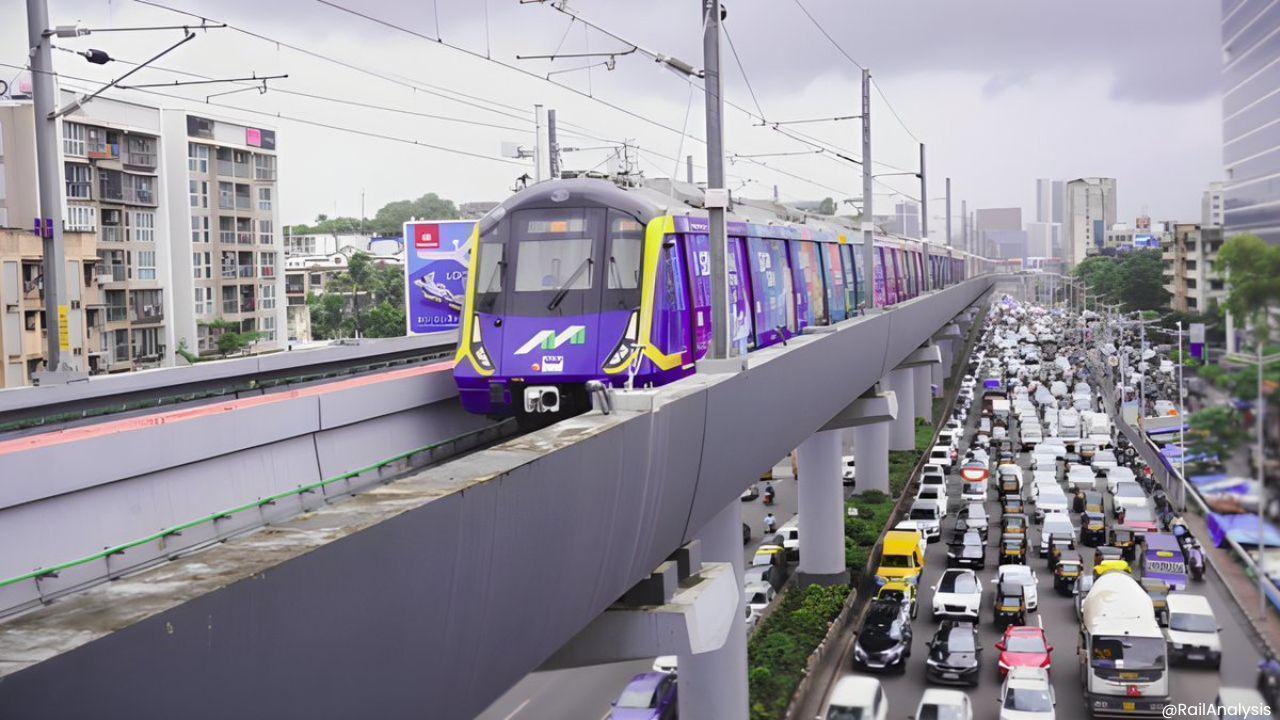
Post by : Avinab Raana
Photo : X / @RailAnalysis
Mumbai’s underground Metro Line 3 is facing a major connectivity crisis after a telecom infrastructure contract was scrapped, leaving commuters without mobile network access across key sections. The disruption highlights a critical gap in modern transit systems where digital connectivity has become as essential as physical infrastructure.
The sudden termination of the telecom infrastructure agreement has resulted in a complete shutdown of mobile services inside tunnels and stations. With no alternative system in place, passengers are now experiencing a total blackout while traveling through underground sections. Authorities are working to identify a new provider, but restoring connectivity is expected to take time, leaving a prolonged gap in service.
For thousands of daily commuters, the absence of mobile connectivity is more than just an inconvenience. Essential services such as digital ticketing, mobile payments, and real-time travel updates have been disrupted, affecting the overall efficiency of travel. In a city like Mumbai, where commuters rely heavily on smartphones for navigation and transactions, the impact is immediate and widespread.
The situation has exposed underlying challenges in integrating telecom infrastructure with large-scale metro systems. While physical infrastructure has advanced rapidly, digital support systems have not always kept pace. The disruption underscores the importance of seamless coordination between transport authorities and telecom providers in building truly smart mobility ecosystems.
Unlike surface-level transport, underground metro networks depend entirely on specialized telecom infrastructure to maintain connectivity. Without it, communication gaps can emerge, affecting both passenger convenience and emergency responsiveness. This makes telecom systems a core component of metro design rather than an optional enhancement.
The Metro 3 blackout serves as a wake-up call for urban infrastructure planning in India. As cities move toward smarter, tech-enabled transport systems, connectivity must be treated as a fundamental requirement. The incident highlights that the success of modern transit is no longer measured only by speed and capacity, but also by how seamlessly it integrates with the digital lives of commuters.
Mumbai Metro 3 blackout, metro mobile network issue, telecom contract scrapped India, underground metro connectivity, metro digital payments issue, urban transit disruption, Mumbai metro infrastructure, telecom dispute metro








Advances in Aerospace Technology and Commercial Aviation Recovery
Insights into breakthrough aerospace technologies and commercial aviation’s recovery amid 2025 chall

Defense Modernization and Strategic Spending Trends
Explore key trends in global defense modernization and strategic military spending shaping 2025 secu

Tens of Thousands Protest in Serbia on Anniversary of Deadly Roof Collapse
Tens of thousands in Novi Sad mark a year since a deadly station roof collapse that killed 16, prote

Canada PM Carney Apologizes to Trump Over Controversial Reagan Anti-Tariff Ad
Canadian PM Mark Carney apologized to President Trump over an Ontario anti-tariff ad quoting Reagan,

The ad that stirred a hornets nest, and made Canadian PM Carney say sorry to Trump
Canadian PM Mark Carney apologizes to US President Trump after a tariff-related ad causes diplomatic

Bengaluru-Mumbai Superfast Train Approved After 30-Year Wait
Railways approves new superfast train connecting Bengaluru and Mumbai, ending a 30-year demand, easi



