Post by : Avinab Raana
Photo : X / Miami Herald
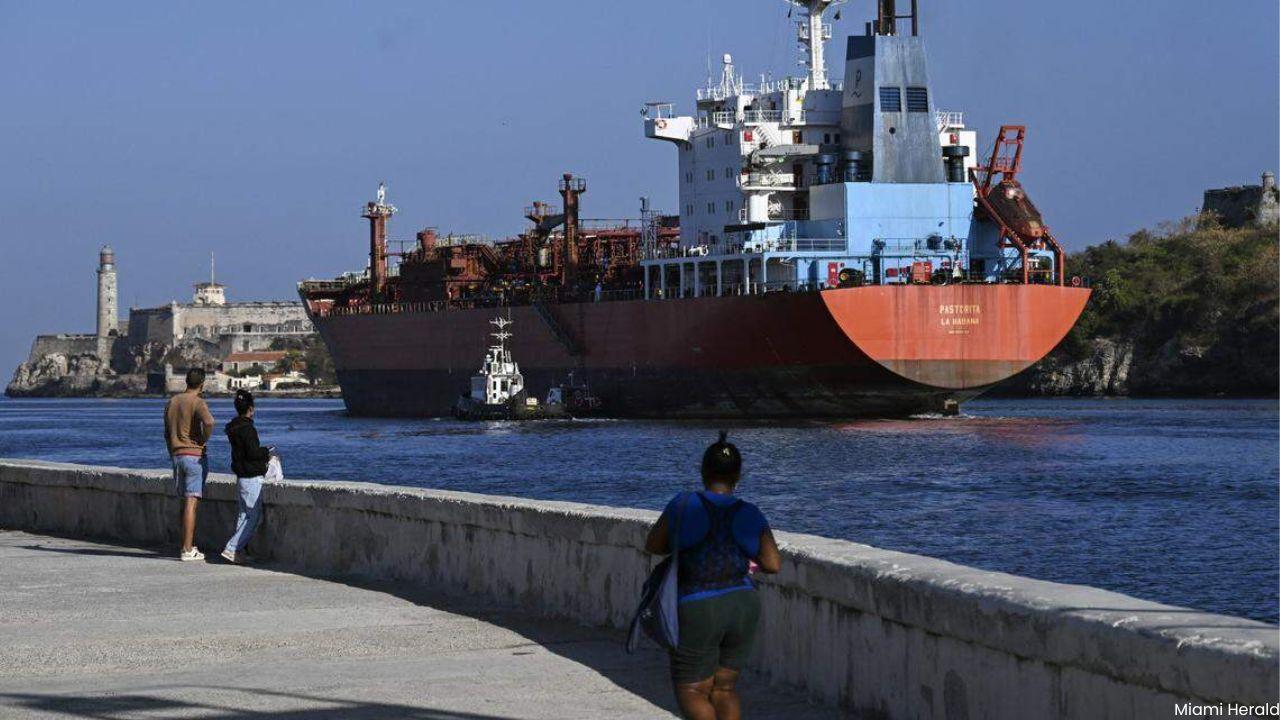
In a development that is sending ripples across global maritime and energy markets, a Russian oil tanker has arrived off the coast of Cuba despite strict US-imposed restrictions on fuel shipments to the island. The move is being viewed as a direct challenge to Washington’s broader strategy of limiting Cuba’s access to energy resources, while simultaneously highlighting the growing complexity of geopolitical alignments in global shipping. For the maritime industry, this is more than just a single voyage. It is a moment that underscores how trade routes are increasingly shaped by political tensions.
Cuba has been grappling with one of its most severe energy crises in recent years, marked by prolonged blackouts, fuel shortages, and disruptions to essential services. The arrival of a Russian tanker carrying hundreds of thousands of barrels of crude oil offers a temporary but critical lifeline to the island nation. Reports suggest that this shipment could provide short-term relief to Cuba’s strained power grid and transportation systems, which have been under immense pressure due to restricted fuel supplies.However, experts warn that while the shipment may ease immediate shortages, it does little to resolve the underlying structural challenges facing Cuba’s energy infrastructure.
The tanker’s arrival comes against the backdrop of a tightening US sanctions regime aimed at isolating Cuba economically by cutting off key energy supplies. In recent months, Washington has taken steps to discourage or block oil shipments from traditional suppliers, significantly reducing the island’s access to fuel. Yet, the decision not to intercept or block this particular shipment signals a nuanced shift in strategy. While maintaining pressure on the Cuban government, there appears to be an increasing recognition of the humanitarian implications of a complete energy cutoff particularly as the crisis begins to affect everyday life for millions of civilians.
The journey of the Russian tanker itself highlights the evolving nature of maritime geopolitics. Moving across international waters under the watchful eye of multiple naval forces, the vessel’s passage demonstrates how global shipping lanes are becoming arenas for strategic signaling.For shipping companies and port operators, such developments introduce new layers of risk, from regulatory uncertainty to potential security concerns. The intersection of sanctions enforcement and freedom of navigation is creating a complex environment that demands careful navigation both politically and operationally.
The implications of this development extend far beyond Cuba. As sanctioned oil continues to find pathways into restricted markets, it raises broader questions about the effectiveness of global sanctions frameworks. For energy markets, the situation introduces an element of unpredictability, as supply flows become increasingly influenced by geopolitical decisions rather than purely economic factors.Shipping companies, traders, and insurers are now closely monitoring how similar situations may unfold in the future, particularly in regions where political tensions intersect with critical trade routes.
Russia’s role in delivering oil to Cuba also reflects its broader geopolitical strategy of strengthening ties with nations facing Western sanctions. By stepping in as an alternative supplier, Moscow is not only supporting an ally but also reinforcing its presence in global energy diplomacy.This move sends a clear signal that energy exports remain a powerful tool of influence, especially in regions experiencing economic and political isolation.
The arrival of the Russian oil tanker off Cuba represents more than just a single transaction. It is a defining moment that captures the intersection of energy security, geopolitical strategy, and maritime logistics. As global tensions continue to reshape trade patterns, such incidents are likely to become more frequent, challenging traditional norms of international commerce.For the maritime industry, this serves as a stark reminder that the future of global shipping will be shaped not only by demand and supply but also by the shifting dynamics of global power.
#trending #latest,#RussianOilTanker #CubaEnergyCrisis #USSanctions #GlobalOilTrade #MaritimeGeopolitics









Advances in Aerospace Technology and Commercial Aviation Recovery
Insights into breakthrough aerospace technologies and commercial aviation’s recovery amid 2025 chall

Defense Modernization and Strategic Spending Trends
Explore key trends in global defense modernization and strategic military spending shaping 2025 secu

Tens of Thousands Protest in Serbia on Anniversary of Deadly Roof Collapse
Tens of thousands in Novi Sad mark a year since a deadly station roof collapse that killed 16, prote

Canada PM Carney Apologizes to Trump Over Controversial Reagan Anti-Tariff Ad
Canadian PM Mark Carney apologized to President Trump over an Ontario anti-tariff ad quoting Reagan,

The ad that stirred a hornets nest, and made Canadian PM Carney say sorry to Trump
Canadian PM Mark Carney apologizes to US President Trump after a tariff-related ad causes diplomatic

Bengaluru-Mumbai Superfast Train Approved After 30-Year Wait
Railways approves new superfast train connecting Bengaluru and Mumbai, ending a 30-year demand, easi



