Post by : Avinab Raana
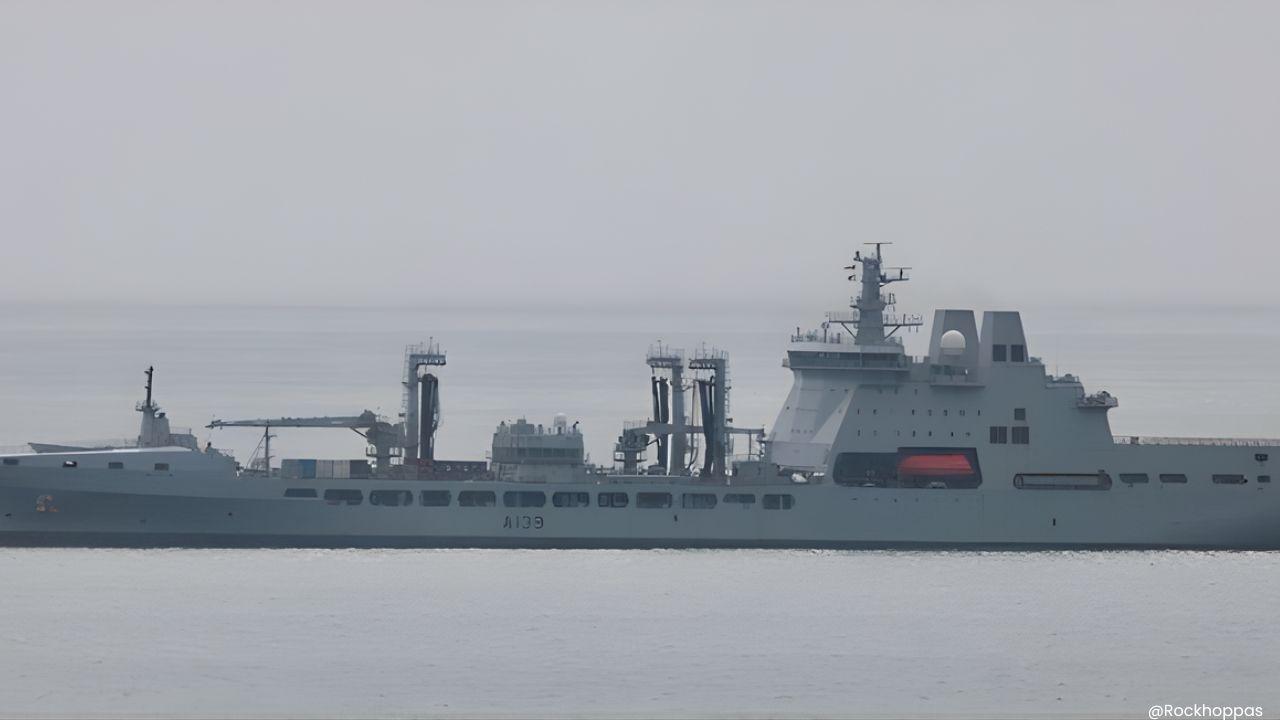
Photo : X / @Rockhoppas
In a clear signal of rising geopolitical tension in European waters, the Royal Navy has completed an intense ten-day operation tracking multiple Russian warships and a submarine as they transited through UK waters. The mission, carried out in coordination with NATO allies, underscores the growing frequency and seriousness of Russian naval movements near critical Western maritime zones.
The operation reflects a broader strategic environment where maritime security is no longer just about territorial defense, but about safeguarding critical infrastructure, monitoring adversarial movements, and maintaining deterrence in contested waters.
The Royal Navy deployed a multi-asset response, including advanced warships, patrol vessels, and naval helicopters, to shadow the Russian naval group across the English Channel and into the North Sea. The fleet tracked included a mix of high-value assets such as a frigate, a destroyer, a landing ship, and a Kilo-class submarine—highlighting the scale and seriousness of the operation.
British naval units maintained near-constant monitoring, ensuring that every movement of the Russian vessels was observed, documented, and assessed. This level of surveillance required precise coordination between ships, airborne assets, and allied forces, reflecting the complexity of modern naval operations.
The operation was not a one-off response but part of a sustained increase in Russian naval presence around UK waters, indicating a shift in maritime activity patterns in the region.
What makes this operation particularly significant is the level of international cooperation involved. The Royal Navy worked closely with NATO partners, including European naval and air units, to maintain continuous tracking of the Russian fleet as it moved through shared maritime zones.
This collaborative approach ensures that surveillance coverage remains uninterrupted, even as vessels move across different jurisdictions. It also demonstrates the strength of NATO’s integrated defense framework, where multiple nations contribute to a unified maritime security strategy.
Such coordination is critical in today’s security environment, where threats are not confined to national borders but extend across international waters and shared infrastructure networks.
Beyond the immediate tracking operation, the mission highlights a deeper strategic concern—the protection of undersea infrastructure, including communication cables and energy pipelines. These assets are vital to global connectivity and economic stability, making them potential targets in hybrid warfare scenarios.
Recent intelligence assessments suggest that Russian naval activity increasingly focuses on areas near such infrastructure, raising alarms among Western defense agencies.
By maintaining a visible and proactive naval presence, the UK and its allies aim to deter any potential threats while reinforcing their ability to respond swiftly to emerging risks.
This ten-day operation is part of a larger pattern of increased Russian naval deployments across European waters. From submarine missions to surface fleet movements, these activities are being closely monitored as part of a wider geopolitical contest involving NATO and Russia.
The growing frequency of such encounters raises concerns about miscalculation, especially in congested and strategically sensitive regions like the English Channel. It also places additional pressure on naval forces to maintain high readiness levels and advanced surveillance capabilities.
The Royal Navy’s ten-day tracking operation is more than a routine mission—it is a reflection of a rapidly evolving security landscape where maritime dominance, surveillance, and deterrence are more critical than ever.
As global tensions continue to shape naval strategies, operations like this highlight a clear reality: the seas surrounding Europe are becoming increasingly contested, and constant vigilance will be key to maintaining stability.
#trending #latest#RoyalNavy #RussiaUKTensions #MaritimeSecurity #NavalOperations #NATO







Advances in Aerospace Technology and Commercial Aviation Recovery
Insights into breakthrough aerospace technologies and commercial aviation’s recovery amid 2025 chall

Defense Modernization and Strategic Spending Trends
Explore key trends in global defense modernization and strategic military spending shaping 2025 secu

Tens of Thousands Protest in Serbia on Anniversary of Deadly Roof Collapse
Tens of thousands in Novi Sad mark a year since a deadly station roof collapse that killed 16, prote

Canada PM Carney Apologizes to Trump Over Controversial Reagan Anti-Tariff Ad
Canadian PM Mark Carney apologized to President Trump over an Ontario anti-tariff ad quoting Reagan,

The ad that stirred a hornets nest, and made Canadian PM Carney say sorry to Trump
Canadian PM Mark Carney apologizes to US President Trump after a tariff-related ad causes diplomatic

Bengaluru-Mumbai Superfast Train Approved After 30-Year Wait
Railways approves new superfast train connecting Bengaluru and Mumbai, ending a 30-year demand, easi



