Post by : Saif
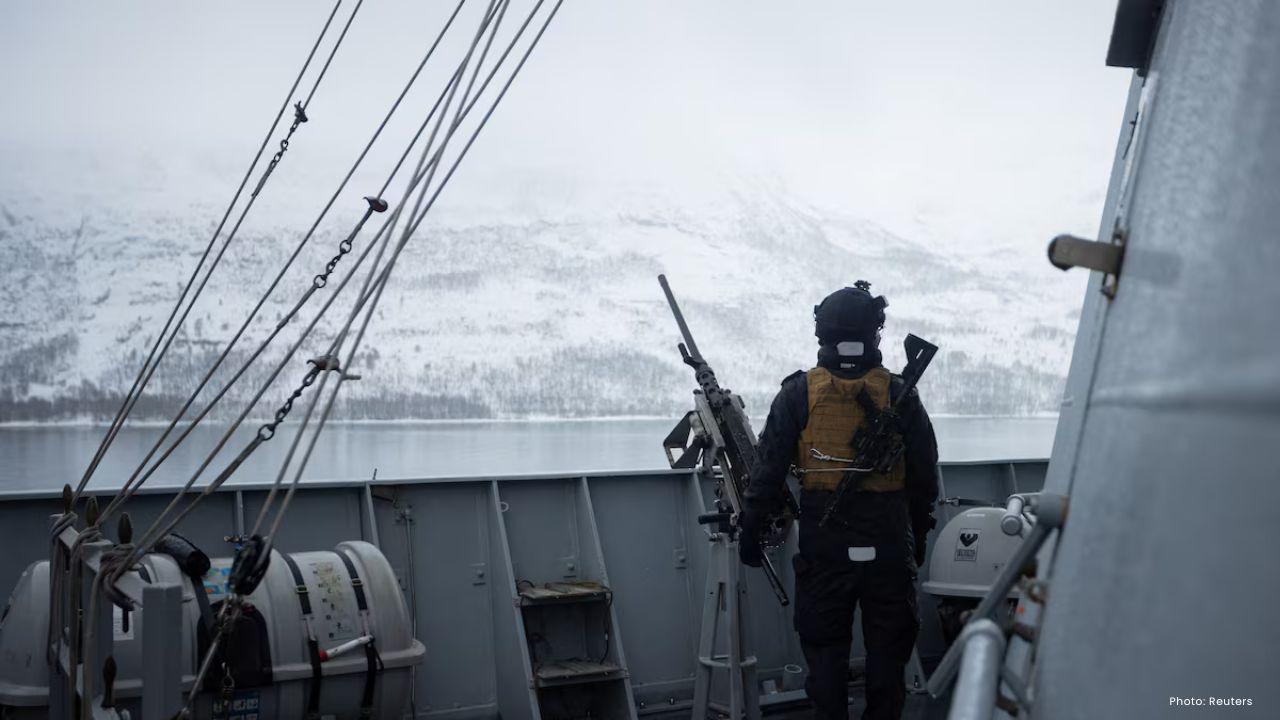
NATO has started large military exercises in the Arctic region, bringing together thousands of troops from several countries. The drills are not only about testing soldiers and military equipment. This time, the focus also includes preparing civilians and public institutions to handle the challenges that could arise during a conflict.
The exercise, known as Cold Response, began on March 9 and will run until March 19. Around 25,000 troops from 14 countries are taking part in the training across northern Norway and Finland. The United States is also involved and has sent about 4,000 troops to participate in the drills.
The Arctic region has become increasingly important in global politics. Countries around the world are paying more attention to the region because of its strategic location, natural resources, and shipping routes. As a result, NATO wants to make sure it is ready to respond quickly if security threats arise in the area.
One of the most important changes in this year’s drills is the focus on civilian readiness. NATO and local governments are testing how ordinary services such as hospitals, transport systems, and public institutions would function during wartime.
For example, one scenario in the exercise involves Norwegian hospitals preparing to treat a large number of injured soldiers arriving from a simulated frontline in Finland. This type of training helps health services understand how they would manage large emergencies during a conflict.
Officials say the idea behind the exercise is “total defence.” This concept means that not only the military but also the entire society must be ready to respond in a crisis. Governments believe that strong cooperation between soldiers and civilians is necessary to protect a country during modern conflicts.
Norway has even described 2026 as the “year of total defence.” The goal is to make sure that important services such as healthcare, transportation, communication, and emergency response can continue working even during a serious crisis.
The drills are also part of a larger NATO mission called Arctic Sentry, which aims to strengthen the alliance’s presence in the Arctic region. NATO leaders believe the Arctic is becoming more important because of rising geopolitical competition and increased military activity by major powers.
Another reason for increased attention to the Arctic is the changing environment. As ice in the region slowly melts, new sea routes are opening. These routes could become important for global trade, and many countries want to protect their interests there.
Security concerns are also linked to the growing military presence of Russia in the Arctic. Russia has reopened several old military bases and expanded its operations in the region. NATO countries see the exercises as a way to ensure they are prepared to respond if tensions increase.
The Arctic drills are taking place at a time of political tension related to Greenland. Discussions about security and control of the region have created debates among Western allies. NATO leaders hope that stronger cooperation and military readiness will help prevent conflicts rather than encourage them.
Military exercises like Cold Response are common for NATO. They allow soldiers from different countries to train together and improve coordination. In real conflicts, armies from several nations often work side by side, so joint training helps them operate more effectively.
However, the focus on civilian readiness shows how modern defence strategies are changing. Governments now understand that wars and crises do not only affect soldiers on the battlefield. They can also disrupt hospitals, transportation, communication networks, and everyday life.
By involving civilians in the training process, NATO wants to ensure that societies can remain stable even during difficult situations. This approach aims to strengthen national resilience and reduce the impact of potential crises.
For many experts, the Arctic exercises highlight how the region is becoming a key part of global security discussions. While the drills are meant to improve preparedness, they also reflect the growing strategic importance of the Arctic in international politics.
As climate change, economic interests, and geopolitical competition continue to shape the region, countries are likely to keep increasing their presence there. NATO’s latest drills show that preparation now goes beyond military strength and includes the readiness of entire societies.
#trending #latest #NATO #ArcticSecurity #MilitaryDrills #GlobalSecurity #DefenseNews #WorldPolitics #ArcticRegion #Geopolitics #InternationalRelations #armustnews







Advances in Aerospace Technology and Commercial Aviation Recovery
Insights into breakthrough aerospace technologies and commercial aviation’s recovery amid 2025 chall

Defense Modernization and Strategic Spending Trends
Explore key trends in global defense modernization and strategic military spending shaping 2025 secu

Tens of Thousands Protest in Serbia on Anniversary of Deadly Roof Collapse
Tens of thousands in Novi Sad mark a year since a deadly station roof collapse that killed 16, prote

Canada PM Carney Apologizes to Trump Over Controversial Reagan Anti-Tariff Ad
Canadian PM Mark Carney apologized to President Trump over an Ontario anti-tariff ad quoting Reagan,

The ad that stirred a hornets nest, and made Canadian PM Carney say sorry to Trump
Canadian PM Mark Carney apologizes to US President Trump after a tariff-related ad causes diplomatic

Bengaluru-Mumbai Superfast Train Approved After 30-Year Wait
Railways approves new superfast train connecting Bengaluru and Mumbai, ending a 30-year demand, easi



