Post by : Avinab Raana
Photo : X / @ITLNLive
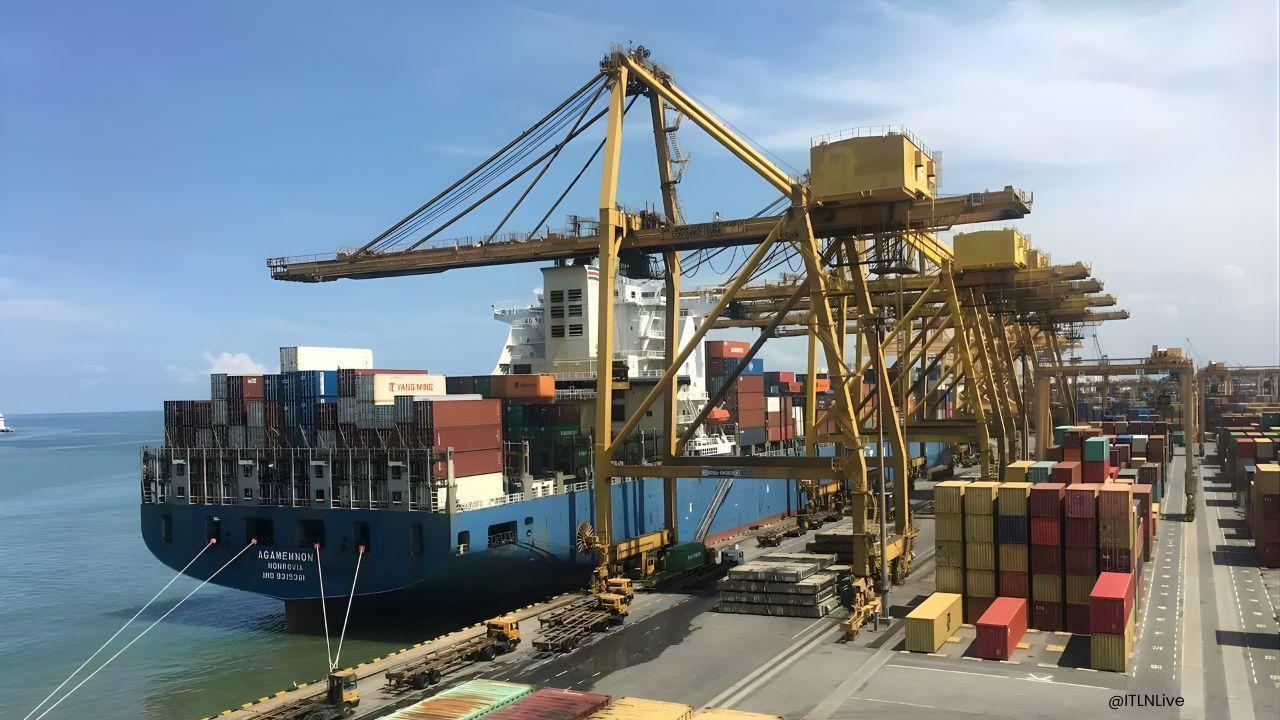
India has temporarily eased India export cargo customs rules following the recent Strait of Hormuz shipping disruption that forced several vessels carrying Indian export goods to turn back toward domestic ports. The sudden closure and security concerns around the critical maritime corridor created uncertainty for exporters whose shipments were already en route to international markets.
In response, authorities have introduced regulatory flexibility aimed at preventing additional logistical complications. By simplifying customs procedures, the government hopes to help exporters manage returning cargo more efficiently while maintaining the flow of India maritime export logistics during an unexpected trade disruption.
The revised India export cargo return policy allows cargo that could not proceed through the Strait of Hormuz to be processed more easily upon arrival at Indian ports. Normally, export consignments that return after departure can face complex customs procedures before they can be re-entered into domestic supply chains.
Under the temporary relief framework, authorities have simplified documentation requirements and inspection processes. This ensures that containers returning due to the Hormuz trade route disruption can be unloaded and handled without unnecessary administrative delays.
The streamlined approach is designed to reduce congestion at ports and allow exporters to decide whether to reroute shipments, store cargo temporarily, or redirect goods to alternative markets.
The introduction of Indian customs cargo relaxation measures reflects the urgency of the situation faced by exporters and shipping operators. Cargo shipments that departed Indian ports but were forced to return mid-voyage due to maritime security concerns now fall under simplified regulatory procedures.
Customs authorities are allowing these shipments to be reprocessed through quicker verification systems. This means exporters will face fewer bureaucratic hurdles while dealing with containers that could not complete their international journey. Such measures are especially important for industries that rely heavily on time-sensitive export schedules, including pharmaceuticals, textiles, and engineering goods.
The Hormuz trade route disruption has created ripple effects across global maritime trade. The Strait of Hormuz is one of the world’s most important shipping passages, connecting Gulf producers and Asian exporters to markets across Europe, Africa, and beyond.
When access to this corridor becomes restricted, shipping companies are forced to alter routes, delay voyages, or return cargo to origin ports. This can create significant challenges for exporters who depend on reliable maritime schedules. For India, the impact has been particularly notable because a large share of the country’s trade flows through shipping routes linked to West Asia.
The current situation highlights how vulnerable India maritime export logistics can be to geopolitical tensions affecting global sea routes. When disruptions occur in strategic maritime chokepoints, exporters often face delays, higher freight costs, and logistical uncertainty.
Containers returning from disrupted routes may also create temporary congestion at ports, placing additional pressure on cargo terminals and logistics operators. Simplifying export cargo handling India procedures helps ensure that these unexpected cargo flows can be managed without overwhelming port operations.
Efficient coordination between customs authorities, shipping companies, and port operators becomes critical during such disruptions.
The decision to ease India export cargo customs rules demonstrates how governments can adapt quickly to protect exporters during global trade disruptions. By introducing temporary flexibility, authorities aim to reduce the operational burden on businesses affected by the Strait of Hormuz shipping disruption.
The policy adjustment ensures that returning cargo can be processed efficiently, allowing exporters to adjust their logistics strategies without facing additional regulatory complications.
While the disruption may be temporary, it highlights the importance of resilient supply chains and flexible customs systems in an increasingly interconnected global trade environment. Measures such as these help ensure that India maritime export logistics continues to operate smoothly even during unexpected international shipping challenges.
#trending #latest, India export cargo customs rules, Strait of Hormuz shipping disruption, India export cargo return policy, Indian customs cargo relaxation, Hormuz trade route disruption, India maritime export logistics, export cargo handling India







Advances in Aerospace Technology and Commercial Aviation Recovery
Insights into breakthrough aerospace technologies and commercial aviation’s recovery amid 2025 chall

Defense Modernization and Strategic Spending Trends
Explore key trends in global defense modernization and strategic military spending shaping 2025 secu

Tens of Thousands Protest in Serbia on Anniversary of Deadly Roof Collapse
Tens of thousands in Novi Sad mark a year since a deadly station roof collapse that killed 16, prote

Canada PM Carney Apologizes to Trump Over Controversial Reagan Anti-Tariff Ad
Canadian PM Mark Carney apologized to President Trump over an Ontario anti-tariff ad quoting Reagan,

The ad that stirred a hornets nest, and made Canadian PM Carney say sorry to Trump
Canadian PM Mark Carney apologizes to US President Trump after a tariff-related ad causes diplomatic

Bengaluru-Mumbai Superfast Train Approved After 30-Year Wait
Railways approves new superfast train connecting Bengaluru and Mumbai, ending a 30-year demand, easi



