Post by : Saif
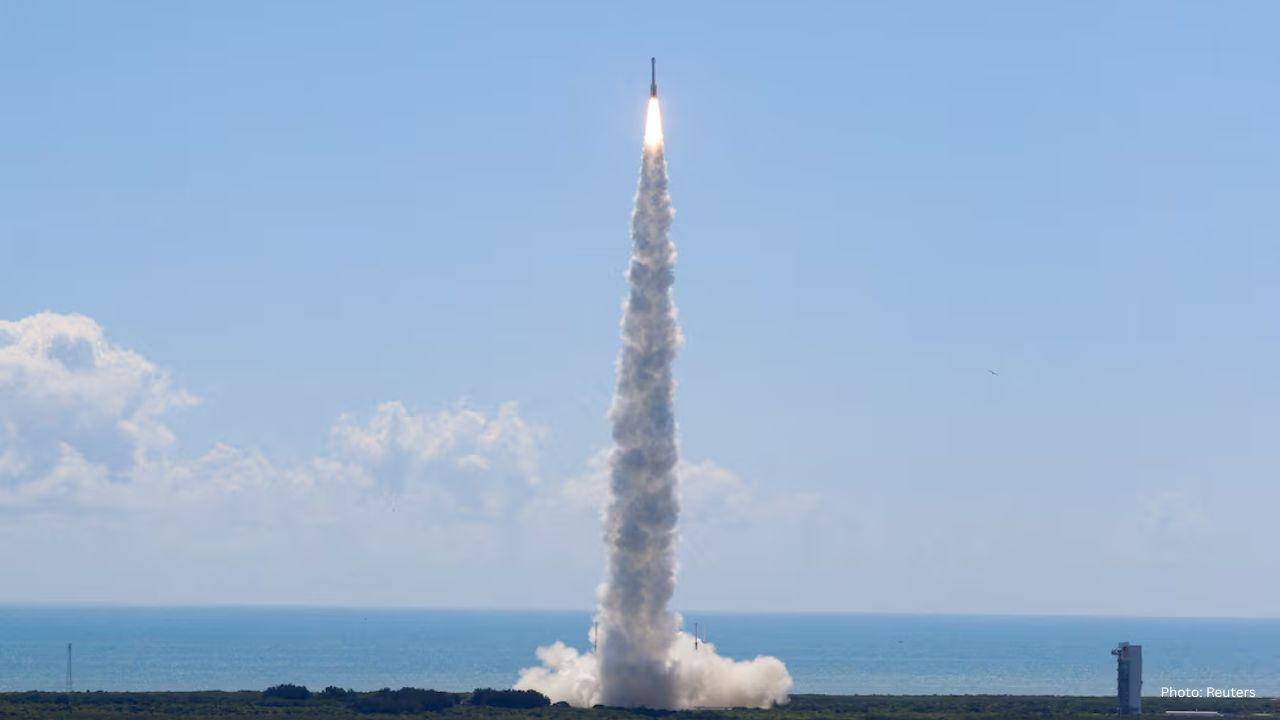
NASA has decided to cut the number of astronaut missions planned for Boeing’s Starliner spacecraft after a series of delays and technical problems slowed the program’s progress. The agency announced that the next Starliner mission to the International Space Station (ISS) will go ahead without astronauts on board, reflecting a major reduction in the original plan for the spacecraft.
Originally, Boeing’s contract under NASA’s Commercial Crew Program included six operational flights with astronauts. Now, NASA has reduced that number to four, including only up to three astronaut flights and an uncrewed flight scheduled for April next year. NASA also confirmed that the value of the contract has been reduced by $768 million, bringing it down from $4.5 billion to about $3.7 billion. NASA has already paid more than half of that.
This decision comes after Starliner’s first crewed test flight in 2024 faced serious issues. During the mission, astronauts Butch Wilmore and Suni Williams were travelling to the ISS when several thrusters on Starliner’s propulsion system suddenly stopped working. This serious problem forced NASA and Boeing to keep the astronauts in space for nine months while engineers worked on solutions and assessed the spacecraft’s condition.
Boeing has faced years of delays and cost increases with Starliner, especially as SpaceX, its main competitor, has moved ahead rapidly. SpaceX’s Dragon capsule has been NASA’s primary spacecraft for transporting astronauts since 2020 and continues to perform regular missions without major problems. This gap in performance has put pressure on Boeing to improve Starliner and prove that it can serve as a reliable second option.
NASA still wants at least two American spacecraft capable of carrying astronauts to the ISS. This is important because depending on only one spacecraft could leave NASA vulnerable in case of technical failures. In the past, NASA relied on Russian spacecraft when American programs faced delays. With the ISS expected to stay in operation until 2030, NASA hopes Starliner can still become a dependable part of its space mission schedule.
Boeing has spent more than $2 billion of its own money trying to complete Starliner under a fixed-price contract, which means the company must pay for cost overruns itself. The company has stated that it remains committed to the program and is fully focused on improving the spacecraft. Boeing says it is putting safety first, learning from earlier mistakes, and upgrading systems to meet NASA standards.
NASA officials also stressed that Starliner is going through rigorous testing to ensure that future missions are safe and reliable. The agency hopes that the spacecraft will be fully certified in 2026 and capable of flying regular crew rotation missions later on. However, the future of Starliner depends on successful flights and meeting expectations in an increasingly competitive space market.
Despite current setbacks, Boeing believes Starliner could have a long-term role in commercial spaceflight even after the ISS is retired. The company hopes the spacecraft will be used for future private space stations being developed by commercial companies. For now, though, the priority remains fixing the problems on Starliner and proving it can fly safely again.
NASA's latest decisions show that while the program has faced difficulties, the agency still sees value in continuing the partnership as long as Starliner can meet performance and safety requirements. The next uncrewed flight will play a major role in determining the spacecraft’s future.
#trending #latest #NASA #Boeing #Starliner #SpaceX #SpaceNews #ISS #Astronauts #Technology




Advances in Aerospace Technology and Commercial Aviation Recovery
Insights into breakthrough aerospace technologies and commercial aviation’s recovery amid 2025 chall

Defense Modernization and Strategic Spending Trends
Explore key trends in global defense modernization and strategic military spending shaping 2025 secu

Tens of Thousands Protest in Serbia on Anniversary of Deadly Roof Collapse
Tens of thousands in Novi Sad mark a year since a deadly station roof collapse that killed 16, prote

Canada PM Carney Apologizes to Trump Over Controversial Reagan Anti-Tariff Ad
Canadian PM Mark Carney apologized to President Trump over an Ontario anti-tariff ad quoting Reagan,

The ad that stirred a hornets nest, and made Canadian PM Carney say sorry to Trump
Canadian PM Mark Carney apologizes to US President Trump after a tariff-related ad causes diplomatic

Bengaluru-Mumbai Superfast Train Approved After 30-Year Wait
Railways approves new superfast train connecting Bengaluru and Mumbai, ending a 30-year demand, easi



