Post by : Avinab Raana
Photo : X / @BabakTaghvaee1
The aviation world witnessed the end of an era as the last operational Boeing 747-100 was reportedly destroyed in Iran during a recent military strike. For decades, this aircraft represented the earliest generation of the legendary jumbo jet that transformed global aviation. Its destruction not only signals a strategic military loss but also closes the final chapter for a historic aircraft variant that once revolutionized international air travel.
The aircraft had been operated by the Iranian Air Force, where it served in a specialized military role after decades of civilian service. Aviation enthusiasts and historians had long tracked the aircraft’s survival, recognizing it as the last active example of the original 747-100 model. With its reported destruction, the first generation of Boeing’s iconic wide-body jet has effectively disappeared from active service worldwide.
When Boeing introduced the Boeing 747-100 in the early 1970s, it transformed the aviation industry almost overnight. Known as the world’s first true jumbo jet, the aircraft offered unprecedented passenger capacity and range, making long-distance travel more accessible than ever before. Its distinctive upper-deck “hump” became one of the most recognizable aircraft designs in aviation history.
Airlines around the world quickly adopted the aircraft, using it to open new long-haul routes and carry hundreds of passengers in a single flight. The model played a key role in expanding global tourism and international business travel during the latter half of the twentieth century. Over time, however, newer and more efficient variants replaced the original design, leading to the gradual retirement of the Boeing 747-100 from airline fleets.
While most countries phased out the aircraft decades ago, Iran continued operating several aging wide-body jets due to restrictions on acquiring newer aircraft. This unusual situation allowed the historic jumbo jet to remain operational far longer than anyone expected.
The aircraft’s long life included a remarkable transformation. After its commercial airline career ended, the jet was converted into a KC-747 tanker, a rare aerial refueling platform derived from the jumbo jet design. Such conversions are uncommon because the original aircraft was never designed as a military tanker.
In its tanker role, the aircraft supported the operational reach of the Iranian Air Force by enabling mid-air refueling missions. Tanker aircraft are critical in modern military strategy because they extend the range and endurance of fighter jets and other military aircraft.
Despite its age, the converted KC-747 tanker remained a valuable asset. Its large fuel capacity made it capable of supporting extended aerial operations. However, the aircraft’s rarity and strategic importance also made it a highly visible target in times of conflict.
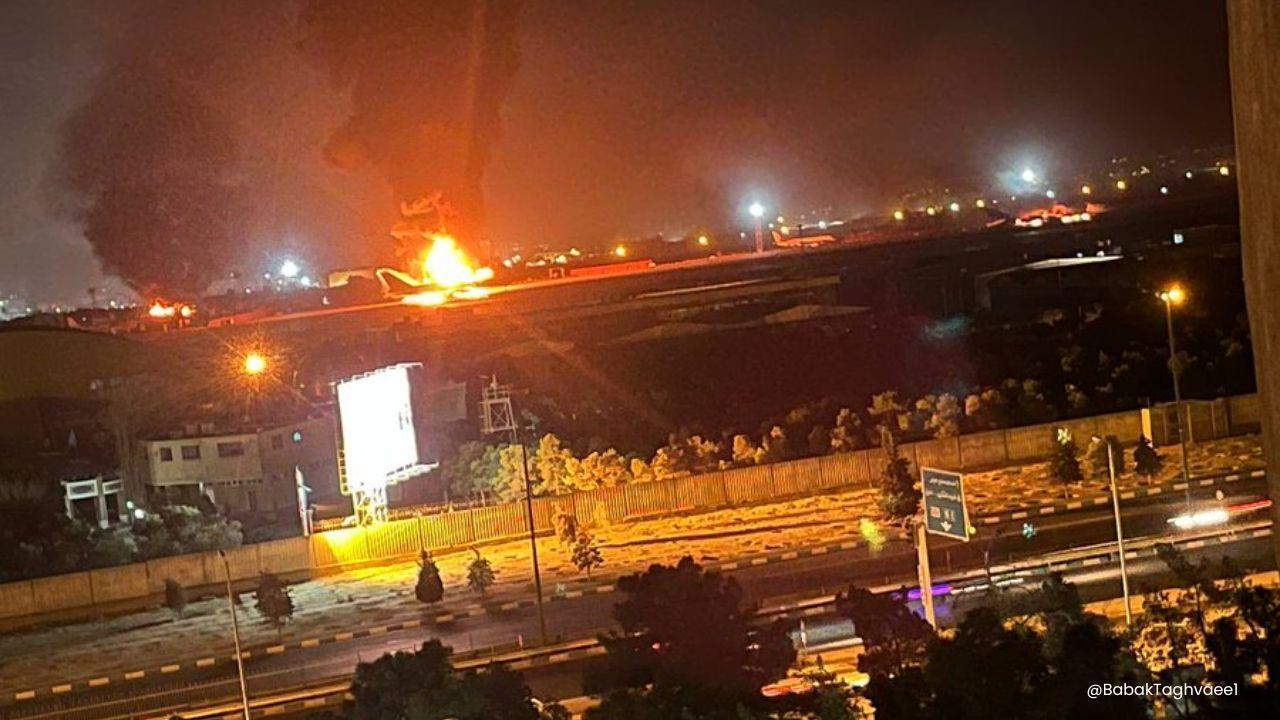
Reports indicate that the aircraft was destroyed during a strike at Tehran’s Mehrabad Airport. Images circulating online showed flames and heavy smoke near the location where the aircraft had been parked. While details surrounding the strike remain limited, analysts believe the attack targeted multiple aircraft and infrastructure at the airport.
For aviation historians, the destruction carries symbolic weight. The aircraft had survived more than five decades of technological change, shifting ownership, and operational roles. Few aircraft in history remain active for such an extended period, making the survival of the Boeing 747-100 into the modern era a rare achievement.
Its loss therefore represents more than just the destruction of a military asset. It marks the final disappearance of the first generation of jumbo jets that once dominated global aviation.
Iran’s aviation sector has long been known for operating older aircraft that have disappeared from most global fleets. Economic sanctions and limited access to new aircraft forced airlines and military operators in the country to maintain aging jets far beyond their typical retirement dates.
This unusual situation unintentionally preserved several historically significant aircraft. Among them, the surviving Boeing 747-100 became an object of fascination for aviation enthusiasts worldwide. Aircraft tracking communities frequently monitored its movements, recognizing that it represented a rare surviving piece of aviation history.
While many hoped the aircraft might eventually find its way into a museum or aviation heritage collection, its operational role in the Iranian Air Force meant it remained part of active military infrastructure instead.
The destruction of the final operational Boeing 747-100 marks the end of the aircraft generation that began the jumbo jet revolution. When Boeing launched the 747 program, it fundamentally reshaped global aviation by making high-capacity long-distance travel possible.
Although newer versions of the 747 continued flying for decades, the earliest variant carried a special historical significance. It represented the first step toward modern wide-body aviation and laid the foundation for the aircraft that would dominate long-haul travel for more than fifty years.
Today, aviation technology has moved toward more fuel-efficient twin-engine aircraft and advanced composite designs. Yet the legacy of the jumbo jet remains deeply embedded in aviation history.
With the last operational Boeing 747-100 now reportedly destroyed, the aircraft survives only in museums, archives, and the collective memory of aviation enthusiasts. What was once the symbol of the jet age has now quietly passed into history, leaving behind a legacy that forever changed how the world travels.
#trending #latest,Boeing 747-100, KC-747 tanker, Iranian Air Force,Boeing 747 early variants, aerial, refueling tanker aircraft, Boeing military aircraft conversions, strategic tanker aircraft role, aviation heritage aircraft







Advances in Aerospace Technology and Commercial Aviation Recovery
Insights into breakthrough aerospace technologies and commercial aviation’s recovery amid 2025 chall

Defense Modernization and Strategic Spending Trends
Explore key trends in global defense modernization and strategic military spending shaping 2025 secu

Tens of Thousands Protest in Serbia on Anniversary of Deadly Roof Collapse
Tens of thousands in Novi Sad mark a year since a deadly station roof collapse that killed 16, prote

Canada PM Carney Apologizes to Trump Over Controversial Reagan Anti-Tariff Ad
Canadian PM Mark Carney apologized to President Trump over an Ontario anti-tariff ad quoting Reagan,

The ad that stirred a hornets nest, and made Canadian PM Carney say sorry to Trump
Canadian PM Mark Carney apologizes to US President Trump after a tariff-related ad causes diplomatic

Bengaluru-Mumbai Superfast Train Approved After 30-Year Wait
Railways approves new superfast train connecting Bengaluru and Mumbai, ending a 30-year demand, easi



