Post by : Avinab Raana
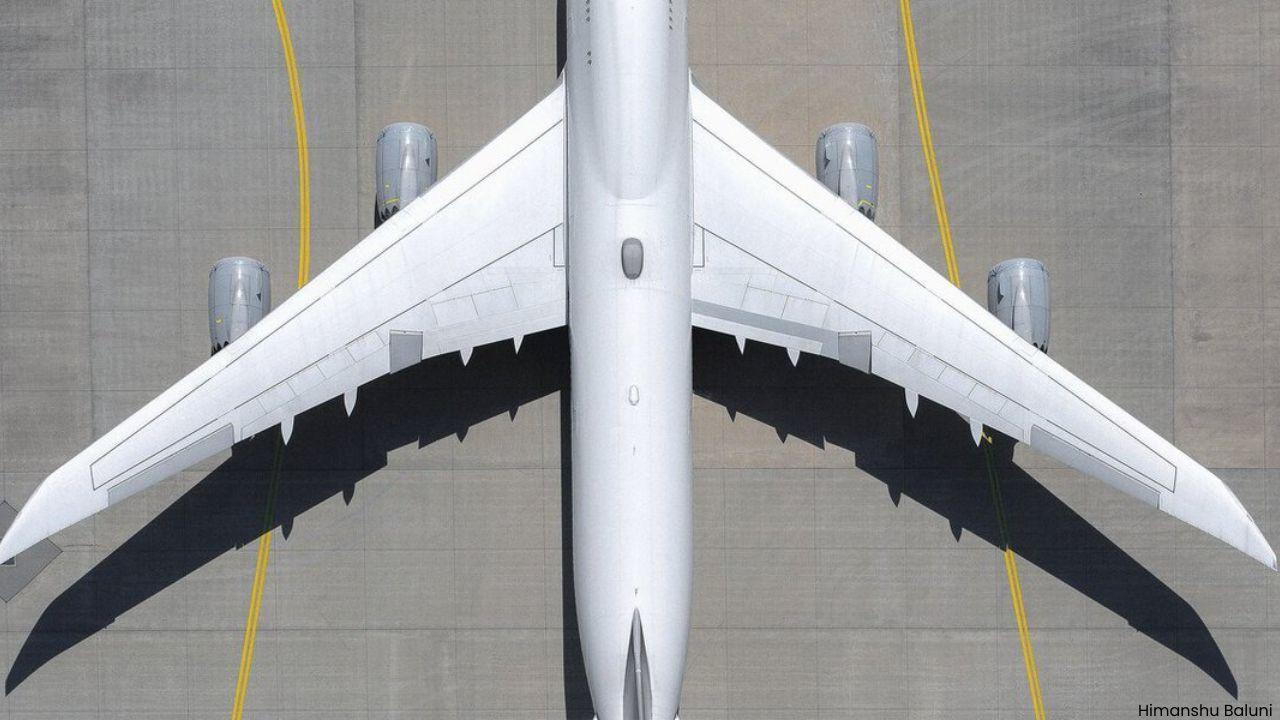
Photo : X / Himanshu Baluni
India’s aviation sector is navigating one of its most challenging phases in recent years, with airlines staring at an estimated ₹2,500 crore revenue loss triggered by escalating tensions in West Asia and widespread airspace restrictions. What began as a regional geopolitical conflict has rapidly evolved into a full-scale operational and financial crisis for Indian carriers. As key air corridors close and routes become increasingly complex, the aviation industry is witnessing a disruption that extends far beyond flight cancellations, it is reshaping the economics of international air travel.
The closure of critical airspace over regions like Iran and Pakistan has severely impacted some of the busiest and most profitable routes for Indian airlines, particularly those connecting India with Europe and the Gulf. These routes form the backbone of international operations, contributing significantly to airline revenues.
With restricted access to these corridors, airlines are being forced to reroute flights along longer paths, increasing flight durations and reducing operational efficiency. The impact is immediate reduced flight frequency, grounded aircraft, and underutilized capacity are becoming the new reality for carriers that once operated at full scale.
The scale of disruption is evident in the sharp reduction of flight operations. Major airlines have cut a significant number of flights to Gulf and CIS destinations, with some operating at just 60% of their planned international capacity.
For instance, services to key Middle Eastern markets traditionally India’s largest international aviation segment have been drastically scaled down. This has created a ripple effect across airline networks, as carriers struggle to redeploy aircraft and maintain profitability. The inability to quickly shift capacity to alternative routes has further compounded financial losses.
While revenues are declining, operational costs are simultaneously rising, creating a double-edged challenge for airlines. Longer flight routes have led to significantly higher fuel consumption, with some flights experiencing up to 30–40% increase in fuel burn.
In addition to fuel costs, airlines are also facing increased expenses due to higher insurance premiums and operational complexities associated with flying in or around conflict zones. The result is a sharp erosion of profit margins, forcing airlines to reconsider pricing strategies and operational planning.
One of the most critical consequences of the crisis is the competitive disadvantage faced by Indian airlines compared to international carriers. While Indian airlines are forced to take longer routes due to airspace restrictions, many foreign airlines continue to operate shorter, more efficient paths.
This disparity has allowed global carriers to increase frequencies and capture market share on key international routes. As a result, India’s ambition to position itself as a global aviation hub is facing a significant setback, with transit traffic increasingly shifting to foreign airlines.
The effects of this crisis are not limited to airlines, they are being felt directly by passengers. Longer routes and higher operational costs are translating into increased airfares, reduced seat availability, and extended travel times.
Flights that once operated efficiently are now taking several hours longer, while ticket prices are rising due to fuel surcharges and reduced capacity. This combination is making international travel more expensive and less convenient, impacting both business and leisure travelers.
The current crisis underscores the vulnerability of the aviation sector to geopolitical developments. It highlights the need for more resilient operational strategies, diversified route planning, and stronger policy support to navigate such disruptions.
As the situation in West Asia continues to evolve, the long-term impact on Indian aviation will depend on how quickly airlines can adapt to changing conditions and restore operational stability. What is clear, however, is that this is more than a temporary setback, it is a turning point that could redefine how Indian airlines approach international expansion and risk management in the years ahead.In an industry where margins are already thin and competition is intense, the ability to adapt to such shocks will determine which airlines emerge stronger and which struggle to stay airborne.
#trending #latest,#IndianAirlines #AviationCrisis #AirspaceRestrictions #WestAsiaConflict #AirlineLosses









Advances in Aerospace Technology and Commercial Aviation Recovery
Insights into breakthrough aerospace technologies and commercial aviation’s recovery amid 2025 chall

Defense Modernization and Strategic Spending Trends
Explore key trends in global defense modernization and strategic military spending shaping 2025 secu

Tens of Thousands Protest in Serbia on Anniversary of Deadly Roof Collapse
Tens of thousands in Novi Sad mark a year since a deadly station roof collapse that killed 16, prote

Canada PM Carney Apologizes to Trump Over Controversial Reagan Anti-Tariff Ad
Canadian PM Mark Carney apologized to President Trump over an Ontario anti-tariff ad quoting Reagan,

The ad that stirred a hornets nest, and made Canadian PM Carney say sorry to Trump
Canadian PM Mark Carney apologizes to US President Trump after a tariff-related ad causes diplomatic

Bengaluru-Mumbai Superfast Train Approved After 30-Year Wait
Railways approves new superfast train connecting Bengaluru and Mumbai, ending a 30-year demand, easi



