Post by : Avinab Raana
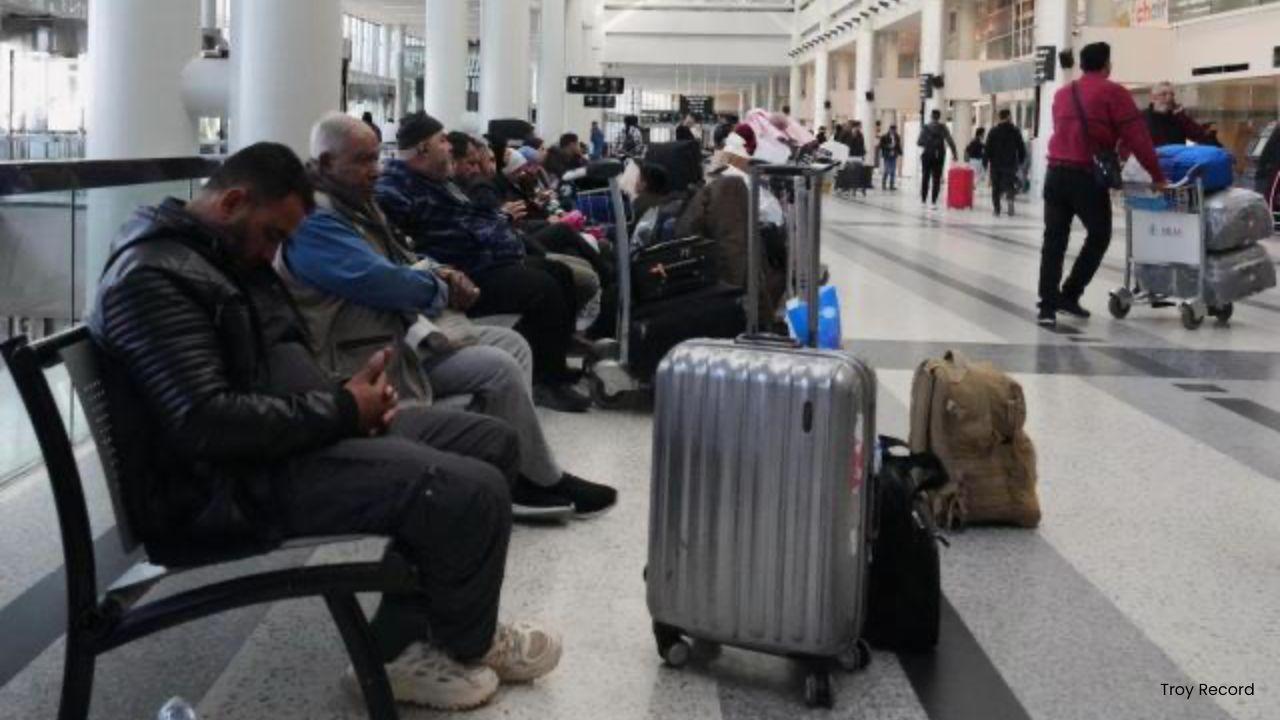
Photo : X / Troy Record
The sudden wave of West Asia airspace closures has sent shockwaves through global aviation, but the turbulence is being felt just as sharply inside insurance boardrooms. As conflict-driven restrictions force airlines to reroute long-haul flights and suspend operations, the resulting aviation insurance strain is quickly becoming one of the most significant financial aftershocks of the crisis.
Air corridors over parts of Iran, Iraq and surrounding regions serve as critical arteries for flights connecting Europe with South and Southeast Asia. When those routes are disrupted, airlines must take longer detours, burning more fuel and stretching crew hours, a shift that immediately alters risk exposure and cost structures. For insurers, this means recalculating liabilities in real time.
The impact of these closures goes far beyond delayed departures. Every rerouted flight increases fuel burn, extends flight time and raises operational complexity. These cascading changes heighten aviation insurance strain, as insurers assess whether additional operational costs, crew-related claims or indirect financial impacts fall within policy parameters.
Underwriters now face heightened exposure to claims tied to route deviations and operational disruption. While standard hull and liability coverage may not directly insure geopolitical conflict, the ripple effects including extended aircraft utilisation and schedule instability create indirect financial pressures that insurers must carefully monitor.
The situation has forced insurers to closely evaluate how regional instability reshapes the airline risk landscape, especially for carriers heavily reliant on Middle Eastern corridors.
As airline risk premiums come under scrutiny, insurance markets are re-evaluating pricing models. War-risk and geopolitical coverage, traditionally structured as separate or supplemental policies, are drawing renewed attention. Insurers are factoring in the unpredictability of sudden airspace closures and the financial exposure linked to volatile regions.
Premium repricing discussions are reportedly intensifying across global insurance hubs. Carriers operating frequent long-haul services across West Asia could face higher renewal rates or revised policy terms if instability persists. For airlines already contending with fluctuating fuel prices and competitive fare environments, any upward shift in insurance costs compounds financial stress.
Insurers, meanwhile, are balancing the need to maintain profitability with the imperative to remain competitive in a market where airline clients demand flexibility and cost control.
The unfolding crisis is accelerating a shift in underwriting philosophy. Traditional aviation risk models largely focused on accident probabilities and mechanical failure are now being expanded to incorporate geopolitical forecasting and dynamic scenario analysis. The rise in West Asia airspace closures demonstrates how political volatility can directly influence operational risk profiles.
Insurance analysts argue that advanced predictive tools and real-time intelligence integration will become increasingly central to underwriting decisions. As conflict-driven airspace restrictions grow more frequent, insurers must adapt to a world where geopolitical instability is not an exception but an embedded variable in risk modelling.
The current wave of West Asia airspace closures underscores a broader reality: aviation is no longer insulated from geopolitical turbulence. The resulting aviation insurance strain and potential rise in airline risk premiums highlight how interconnected global transport and financial systems have become.
As insurers recalibrate their exposure and airlines redesign route strategies, the industry is confronting a future where resilience, flexibility and smarter risk assessment will define competitive advantage. What happens next will not just shape insurance contracts, it may redefine how the aviation sector prepares for uncertainty in an increasingly unpredictable world.
West Asia airspace closures, aviation insurance strain, airline risk premiums, airspace conflict impact








Advances in Aerospace Technology and Commercial Aviation Recovery
Insights into breakthrough aerospace technologies and commercial aviation’s recovery amid 2025 chall

Defense Modernization and Strategic Spending Trends
Explore key trends in global defense modernization and strategic military spending shaping 2025 secu

Tens of Thousands Protest in Serbia on Anniversary of Deadly Roof Collapse
Tens of thousands in Novi Sad mark a year since a deadly station roof collapse that killed 16, prote

Canada PM Carney Apologizes to Trump Over Controversial Reagan Anti-Tariff Ad
Canadian PM Mark Carney apologized to President Trump over an Ontario anti-tariff ad quoting Reagan,

The ad that stirred a hornets nest, and made Canadian PM Carney say sorry to Trump
Canadian PM Mark Carney apologizes to US President Trump after a tariff-related ad causes diplomatic

Bengaluru-Mumbai Superfast Train Approved After 30-Year Wait
Railways approves new superfast train connecting Bengaluru and Mumbai, ending a 30-year demand, easi



