Post by : Avinab Raana
Photo : X / Electrek.co
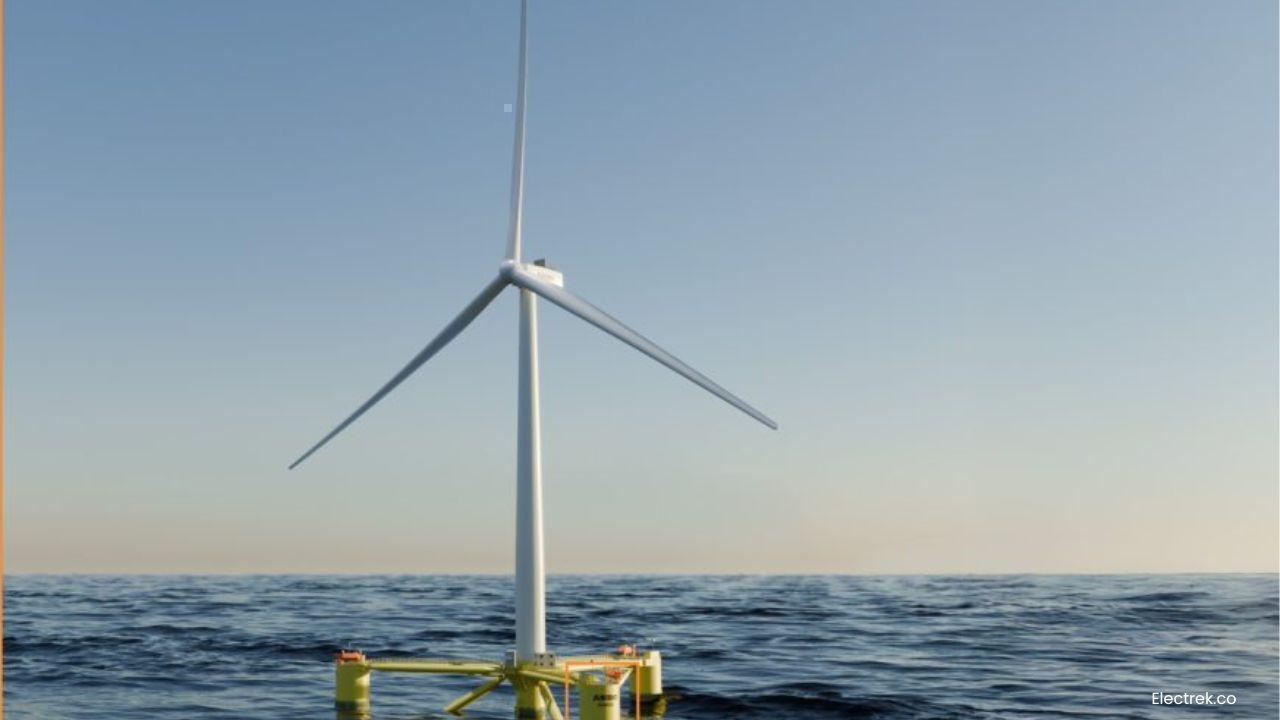
The race to power the world’s rapidly expanding AI Data Centers is pushing engineers toward bold and unconventional solutions. One of the most intriguing ideas now gaining attention is the use of Floating Wind Turbines to generate renewable Offshore Energy for data centers built directly at sea.
As artificial intelligence continues to transform industries, the demand for computing power has surged dramatically. Training large AI models and running complex data systems require enormous amounts of electricity, forcing technology companies to search for new ways to meet rising energy needs without overwhelming traditional power grids. This is where offshore wind technology could change the equation.
The concept is surprisingly straightforward yet technologically ambitious. Platforms positioned in deep waters could combine large Floating Wind Turbines with specialized modules that host AI Data Centers. These floating hubs would generate renewable electricity directly from ocean winds and immediately use that energy to power high-performance computing systems.
Such an approach would create a self-sufficient digital infrastructure powered entirely by Offshore Energy. Instead of transmitting electricity across long distances from land-based wind farms, power would be produced and consumed in the same location. For the rapidly expanding AI industry, this model could offer a more sustainable path forward.
Running large AI Data Centers requires not only electricity but also effective cooling systems. The ocean environment naturally provides both advantages. Cooler air temperatures and surrounding seawater can help regulate heat generated by high-performance servers.
This natural cooling effect could dramatically reduce the amount of energy required to keep data center hardware operating safely. At the same time, Floating Wind Turbines positioned offshore benefit from stronger and more consistent winds than turbines installed on land. The result is a powerful synergy between renewable Offshore Energy production and energy-intensive computing infrastructure.
Despite its promise, building offshore computing platforms is not a simple task. Engineers must design structures capable of supporting heavy equipment while withstanding powerful ocean conditions. Stable platforms, advanced energy storage systems, and high-speed underwater data cables will all be required to keep these facilities connected to global digital networks.
However, technological progress in floating wind infrastructure has already demonstrated that large energy platforms can operate reliably at sea. Integrating AI Data Centers into these systems could be the next major step.
The idea of powering AI Data Centers with Floating Wind Turbines may still sound futuristic, but it reflects the growing urgency to develop sustainable digital infrastructure. Artificial intelligence is expanding at a pace few predicted, and the energy required to support it is rising just as quickly.
Harnessing Offshore Energy could provide a scalable solution that protects land resources while supporting the world’s computing needs. If this vision becomes reality, the next generation of artificial intelligence may not be running in massive buildings on land but on powerful floating platforms far out at sea.
Floating Wind Turbines, AI Data Centers, Offshore Energy








Advances in Aerospace Technology and Commercial Aviation Recovery
Insights into breakthrough aerospace technologies and commercial aviation’s recovery amid 2025 chall

Defense Modernization and Strategic Spending Trends
Explore key trends in global defense modernization and strategic military spending shaping 2025 secu

Tens of Thousands Protest in Serbia on Anniversary of Deadly Roof Collapse
Tens of thousands in Novi Sad mark a year since a deadly station roof collapse that killed 16, prote

Canada PM Carney Apologizes to Trump Over Controversial Reagan Anti-Tariff Ad
Canadian PM Mark Carney apologized to President Trump over an Ontario anti-tariff ad quoting Reagan,

The ad that stirred a hornets nest, and made Canadian PM Carney say sorry to Trump
Canadian PM Mark Carney apologizes to US President Trump after a tariff-related ad causes diplomatic

Bengaluru-Mumbai Superfast Train Approved After 30-Year Wait
Railways approves new superfast train connecting Bengaluru and Mumbai, ending a 30-year demand, easi



