Post by : Saif
Air travel in the United States faced sudden disruption after authorities halted flights at major airports serving Washington, D.C., due to a strong chemical odor at a critical air traffic control facility. The incident caused delays, confusion among passengers, and renewed concerns about aviation safety systems.
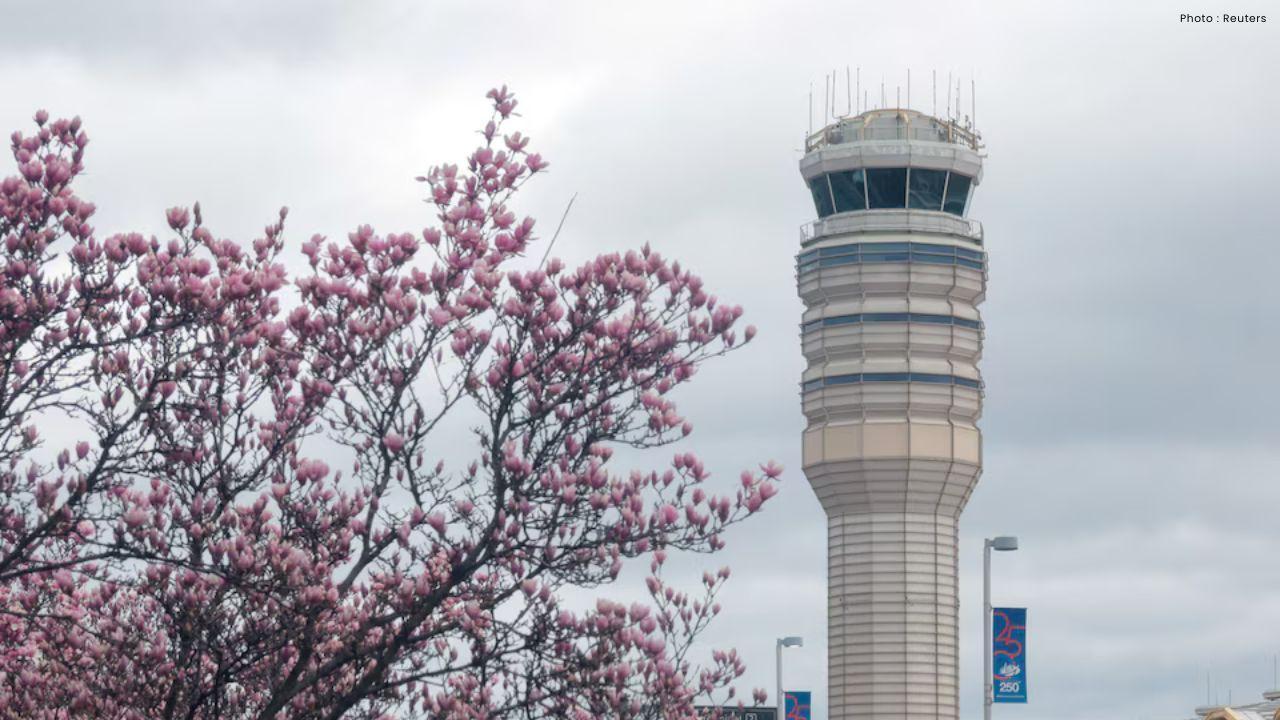
The disruption began when the Federal Aviation Administration detected a strong smell inside the Potomac Consolidated Terminal Radar Approach Control facility, also known as TRACON, located in Virginia. This facility plays a key role in managing aircraft movement in the busy Washington region. As a safety measure, air traffic controllers were evacuated from the building, and flight operations were temporarily stopped.
Because of this, flights were halted at several major airports, including Ronald Reagan Washington National Airport, Washington Dulles International Airport, and Baltimore/Washington International Airport. Smaller airports in nearby cities like Richmond and Charlottesville were also affected.
The FAA quickly issued a “ground stop,” which means that no planes were allowed to take off or land at the affected airports. This action was taken to ensure safety, as controllers could not manage air traffic without being inside the facility. Flights already in the air were either delayed, diverted, or asked to wait until operations could safely resume.
The halt lasted for about 90 minutes before operations slowly resumed. Controllers returned to their positions after safety checks were completed, and authorities confirmed that there was no immediate danger. However, even after flights restarted, delays continued as airlines worked to clear the backlog of aircraft. Reports showed that around 30% of flights at some airports were delayed, highlighting the scale of the disruption.
This incident is not an isolated case. It is the second time in just a few weeks that a chemical odor has disrupted operations at the same facility. Earlier in March, a similar situation was traced to an overheated circuit board, which forced another temporary shutdown of air traffic.
The repeated nature of these incidents raises serious questions. How can such a critical system be affected by something as basic as an odor or equipment failure? Air traffic control centers are designed to be highly secure and reliable, as they manage thousands of flights every day. Even a short disruption can affect thousands of passengers and cause major economic losses.
From an editorial perspective, this event highlights the importance of strong infrastructure and regular maintenance in aviation systems. While the FAA acted quickly and safely, the fact that similar problems have happened more than once suggests that deeper issues may need to be addressed.
Air travel depends heavily on trust. Passengers expect that the systems guiding their flights are safe and reliable at all times. Incidents like this, even if handled well, can shake that confidence. They also show how a single technical problem can quickly spread across multiple airports and affect an entire region.
At the same time, the response by authorities shows that safety remains the top priority. By stopping flights immediately, the FAA prevented any risk to passengers and crew. This decision, though inconvenient, was necessary and reflects the strict safety rules followed in aviation.
Looking ahead, aviation officials may need to review their systems more closely. Better monitoring, faster detection of technical problems, and stronger backup systems could help prevent similar disruptions in the future. Ensuring that such facilities are protected from even minor faults is essential in maintaining smooth operations.
In conclusion, the temporary shutdown of flights in the Washington area serves as a reminder of how sensitive and interconnected modern air travel systems are. While the situation was brought under control quickly, it has raised important questions about reliability and preparedness. As air travel continues to grow, maintaining strong and safe systems will remain a top priority for authorities and the industry alike.
#trending #latest #armustnews #FAA #WashingtonAirports #FlightDelay #AviationNews #AirTrafficControl #BreakingNews #USNews







Advances in Aerospace Technology and Commercial Aviation Recovery
Insights into breakthrough aerospace technologies and commercial aviation’s recovery amid 2025 chall

Defense Modernization and Strategic Spending Trends
Explore key trends in global defense modernization and strategic military spending shaping 2025 secu

Tens of Thousands Protest in Serbia on Anniversary of Deadly Roof Collapse
Tens of thousands in Novi Sad mark a year since a deadly station roof collapse that killed 16, prote

Canada PM Carney Apologizes to Trump Over Controversial Reagan Anti-Tariff Ad
Canadian PM Mark Carney apologized to President Trump over an Ontario anti-tariff ad quoting Reagan,

The ad that stirred a hornets nest, and made Canadian PM Carney say sorry to Trump
Canadian PM Mark Carney apologizes to US President Trump after a tariff-related ad causes diplomatic

Bengaluru-Mumbai Superfast Train Approved After 30-Year Wait
Railways approves new superfast train connecting Bengaluru and Mumbai, ending a 30-year demand, easi



