Post by : Saif
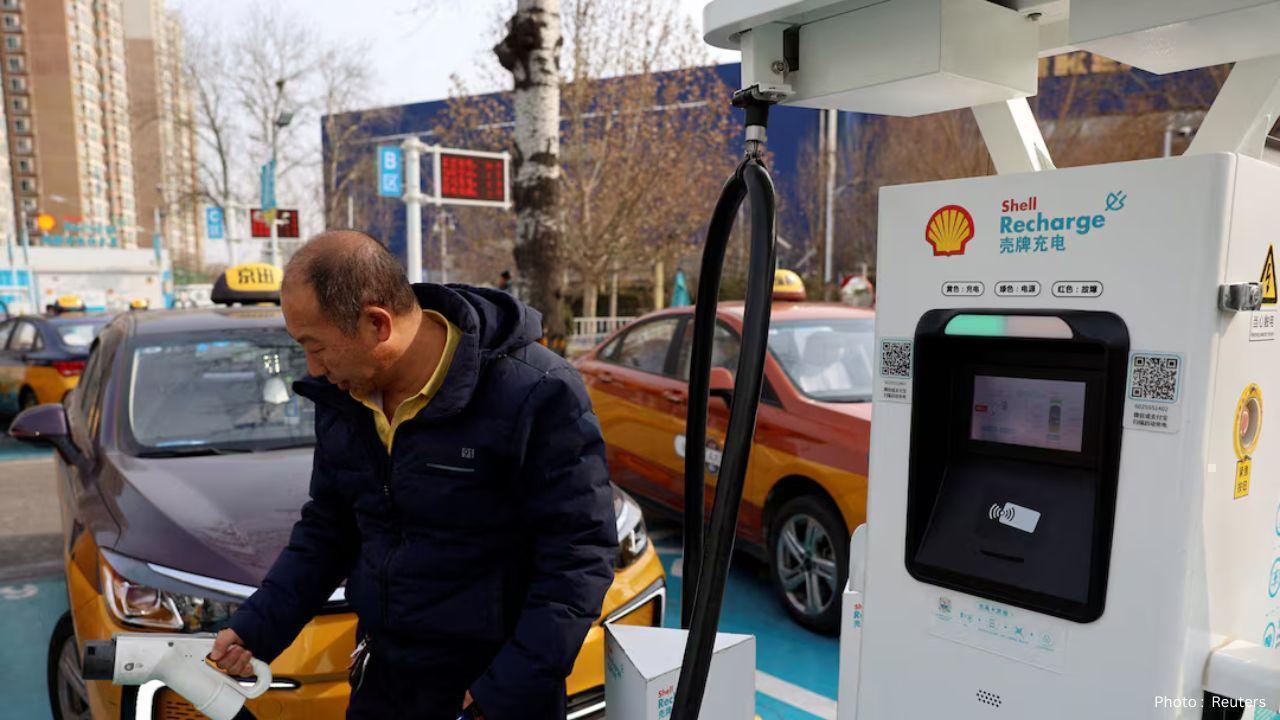
China is increasingly relying on electric taxis and ride-hailing vehicles to reduce the impact of rising oil prices caused by tensions around the Strait of Hormuz.
As geopolitical uncertainty continues to affect global energy markets, China's growing electric vehicle (EV) fleet is helping reduce fuel consumption while offering commuters a more affordable transport option.
Taxi Demand Rises as Fuel Prices Increase
Government data shows that Chinese residents made 3.05 billion taxi and ride-hailing trips in May, with demand increasing by 6% compared with the same period last year following the outbreak of the Iran conflict.
The rise comes as higher petrol prices encourage more people to choose taxis and ride-sharing services instead of driving their own fuel-powered vehicles.
At the same time, increased competition among ride-hailing drivers has pushed fares lower, making taxi travel more attractive for consumers.
Electric Vehicles Transform China's Taxi Industry
China's transport sector has undergone rapid electrification in recent years.
According to the Ministry of Transport, around half of the country's 1.3 million taxis are now electric, while in many major cities nearly the entire taxi fleet has transitioned to electric vehicles.
Ride-hailing platform Didi said it added another 2 million electric and hybrid vehicles last year, increasing its non-fossil-fuel fleet to 8 million vehicles. Electric vehicles now account for around 75% of total mileage on the platform.
Fuel Consumption Continues to Decline
The widespread adoption of electric taxis is helping China reduce its dependence on imported oil.
Official data shows that in May, the country consumed 10% less gasoline and 14% less diesel compared with the previous year, despite continued growth in road freight and record travel during the May Day holiday.
Analysts say the shift towards electric mobility has made China's transport system more resilient against disruptions in global oil supplies.
Hormuz Tensions Accelerate Energy Transition
The Strait of Hormuz remains one of the world's most important oil shipping routes, and any disruption can affect international energy prices.
Industry experts believe the ongoing conflict has accelerated trends that were already underway, with China becoming structurally less dependent on petroleum through greater adoption of electric transportation.
Forecasts suggest that by 2035, nearly 90% of taxi and ride-hailing mileage in China could be powered by electric vehicles.
Read more: Oil Prices Slip as US–Iran Talks Reduce Tension
Oil Imports Continue to Fall
China's reduced fuel demand has also contributed to lower crude oil imports.
Data indicates that Chinese oil imports declined sharply in June compared with the previous year, easing pressure on global energy markets despite continued geopolitical tensions.
Economists say the country's expanding EV sector could continue reducing gasoline demand over the coming years, even if international oil prices stabilise.
#trending #latest #China #ElectricVehicles #EV #ElectricTaxi #RideHailing #Didi #Transportation #CleanEnergy #EnergySecurity #OilPrices #StraitOfHormuz #GlobalEnergy #OilMarket #SustainableMobility



Advances in Aerospace Technology and Commercial Aviation Recovery
Insights into breakthrough aerospace technologies and commercial aviation’s recovery amid 2025 chall

Defense Modernization and Strategic Spending Trends
Explore key trends in global defense modernization and strategic military spending shaping 2025 secu

Tens of Thousands Protest in Serbia on Anniversary of Deadly Roof Collapse
Tens of thousands in Novi Sad mark a year since a deadly station roof collapse that killed 16, prote

Canada PM Carney Apologizes to Trump Over Controversial Reagan Anti-Tariff Ad
Canadian PM Mark Carney apologized to President Trump over an Ontario anti-tariff ad quoting Reagan,

The ad that stirred a hornets nest, and made Canadian PM Carney say sorry to Trump
Canadian PM Mark Carney apologizes to US President Trump after a tariff-related ad causes diplomatic

Bengaluru-Mumbai Superfast Train Approved After 30-Year Wait
Railways approves new superfast train connecting Bengaluru and Mumbai, ending a 30-year demand, easi



