Post by : Saif
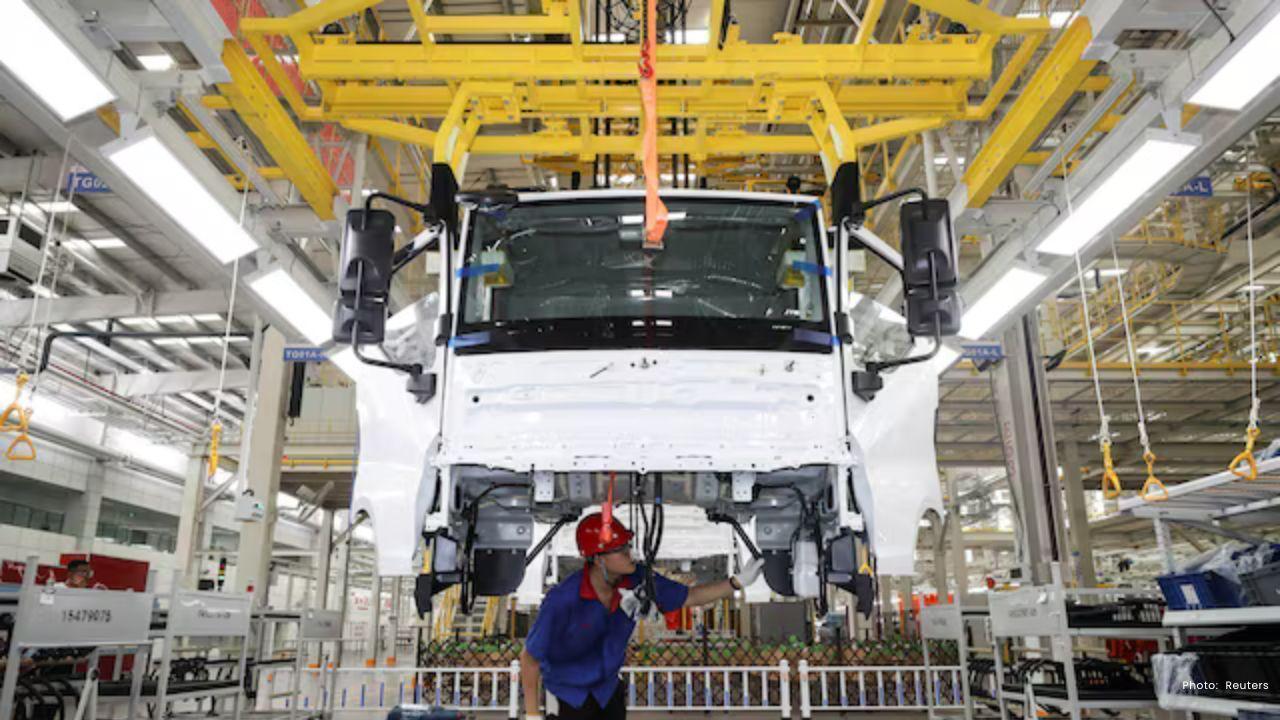
The Middle East has become one of the most important markets for the global automobile industry. In recent years, countries such as China and India have emerged as major suppliers of cars to the region, sending vehicles worth billions of dollars every year. As demand for affordable and reliable vehicles continues to grow across Gulf nations, Asian automakers are strengthening their presence in this fast-growing market.
Recent data shows that China and India are now among the leading exporters of vehicles to the Middle East. These shipments move mainly through important maritime trade routes such as the Strait of Hormuz, which connects the Persian Gulf with international shipping lanes. However, ongoing tensions and military conflicts in the region have raised concerns that these shipments could face disruptions if security risks increase.
The Middle East has long been an attractive destination for car manufacturers. Countries such as Saudi Arabia, the United Arab Emirates, Qatar, and Kuwait have strong demand for vehicles due to growing populations, rising incomes, and expanding infrastructure. Large road networks and long travel distances make private vehicles an essential part of daily life in many parts of the region.
China has become the largest contributor to this export boom. In 2025 alone, Chinese automakers shipped around 8.32 million vehicles to markets around the world. Of that total, about 1.39 million vehicles were exported to Gulf countries in the Middle East. This means roughly one out of every six Chinese vehicles sold overseas went to this region.
Several major Chinese manufacturers are playing key roles in this growth. Companies such as Chery Automobile, BYD, SAIC Motor, Changan Automobile, and Geely have expanded their exports rapidly. Many of these companies are also investing in dealerships, service networks, and local partnerships across Middle Eastern countries in order to strengthen their market position.
Chinese carmakers are benefiting from their ability to produce vehicles at competitive prices. Many of their models are affordable while still offering modern features such as advanced technology and electric power options. These qualities have helped them attract buyers in the Middle East who want reliable vehicles without paying luxury-brand prices.
India has also become an important car exporter to the region. In 2025, India exported about $8.8 billion worth of cars to global markets. Around 25 percent of those exports were sent to Middle Eastern countries, showing how important the region has become for India’s automotive industry.
Several international car companies use India as a manufacturing base for exports. Hyundai Motor, for example, sends about half of the vehicles it exports from India to countries in the Gulf region. Toyota also relies heavily on the Middle East market, sending nearly two-thirds of its India-based vehicle exports to the same region.
Other automakers operating in India are also involved in this trade. Maruti Suzuki, the country’s largest car manufacturer, exported vehicles worth hundreds of millions of dollars to Gulf nations last year. Nissan also shipped a significant share of its India-made vehicles to Middle Eastern markets.
This growing export activity shows how the global automobile supply chain has shifted over the past decade. Asia has become the center of vehicle manufacturing, while regions such as the Middle East have turned into key export destinations. The combination of strong production capacity in Asia and growing consumer demand in the Gulf has created a powerful trade relationship.
However, this trade is also vulnerable to geopolitical tensions. Many shipments of vehicles from Asia to the Middle East pass through the Strait of Hormuz, one of the world’s most important shipping routes. If military conflict or security threats affect this area, it could disrupt the movement of goods and cause delays in deliveries.
Recent tensions involving Iran and other regional powers have already raised concerns about shipping safety. Some shipping companies have slowed or paused operations in the region due to fears of potential attacks or instability. If these problems continue, car exports from Asia to the Middle East could face serious challenges.
The impact would not only affect China and India but also other major car-producing countries. South Korea and Japan also export large numbers of vehicles to the Middle East every year. South Korea exported cars worth about $72 billion globally in 2025, with about $5.3 billion going to the Middle East alone.
Japanese companies are also heavily involved in this market. Toyota, one of the world’s largest carmakers, exported more than 320,000 vehicles from Japan to the Middle East in 2025. That figure represented over 15 percent of its total vehicle exports for the year.
These numbers highlight the importance of the Middle East for the global auto industry. For many manufacturers, the region offers strong demand and long-term growth opportunities. Governments in Gulf countries are investing heavily in infrastructure, tourism, and economic development, which is increasing the need for transportation and mobility.
At the same time, competition among carmakers is becoming stronger. Chinese brands are rapidly gaining market share, while Japanese and Korean companies continue to defend their positions with reliable models and strong dealer networks. Indian-made vehicles are also becoming more visible on Middle Eastern roads as export volumes grow.
Experts say the future of this trade will depend on both economic and political factors. If regional stability improves, the Middle East could become an even larger destination for car exports. However, if conflicts disrupt shipping routes or supply chains, the industry could face delays and rising costs.
For now, China and India remain key drivers of the vehicle trade flowing into the Middle East. Their ability to produce large numbers of cars at competitive prices has helped them capture a growing share of the region’s market. As global demand for vehicles continues to evolve, the connection between Asian factories and Middle Eastern roads is likely to become even stronger in the years ahead.
#trending #latest #AutomobileIndustry #CarExports #China #India #MiddleEast #GlobalTrade #AutoMarket #EconomicNews #Manufacturing #armustnews







Advances in Aerospace Technology and Commercial Aviation Recovery
Insights into breakthrough aerospace technologies and commercial aviation’s recovery amid 2025 chall

Defense Modernization and Strategic Spending Trends
Explore key trends in global defense modernization and strategic military spending shaping 2025 secu

Tens of Thousands Protest in Serbia on Anniversary of Deadly Roof Collapse
Tens of thousands in Novi Sad mark a year since a deadly station roof collapse that killed 16, prote

Canada PM Carney Apologizes to Trump Over Controversial Reagan Anti-Tariff Ad
Canadian PM Mark Carney apologized to President Trump over an Ontario anti-tariff ad quoting Reagan,

The ad that stirred a hornets nest, and made Canadian PM Carney say sorry to Trump
Canadian PM Mark Carney apologizes to US President Trump after a tariff-related ad causes diplomatic

Bengaluru-Mumbai Superfast Train Approved After 30-Year Wait
Railways approves new superfast train connecting Bengaluru and Mumbai, ending a 30-year demand, easi



