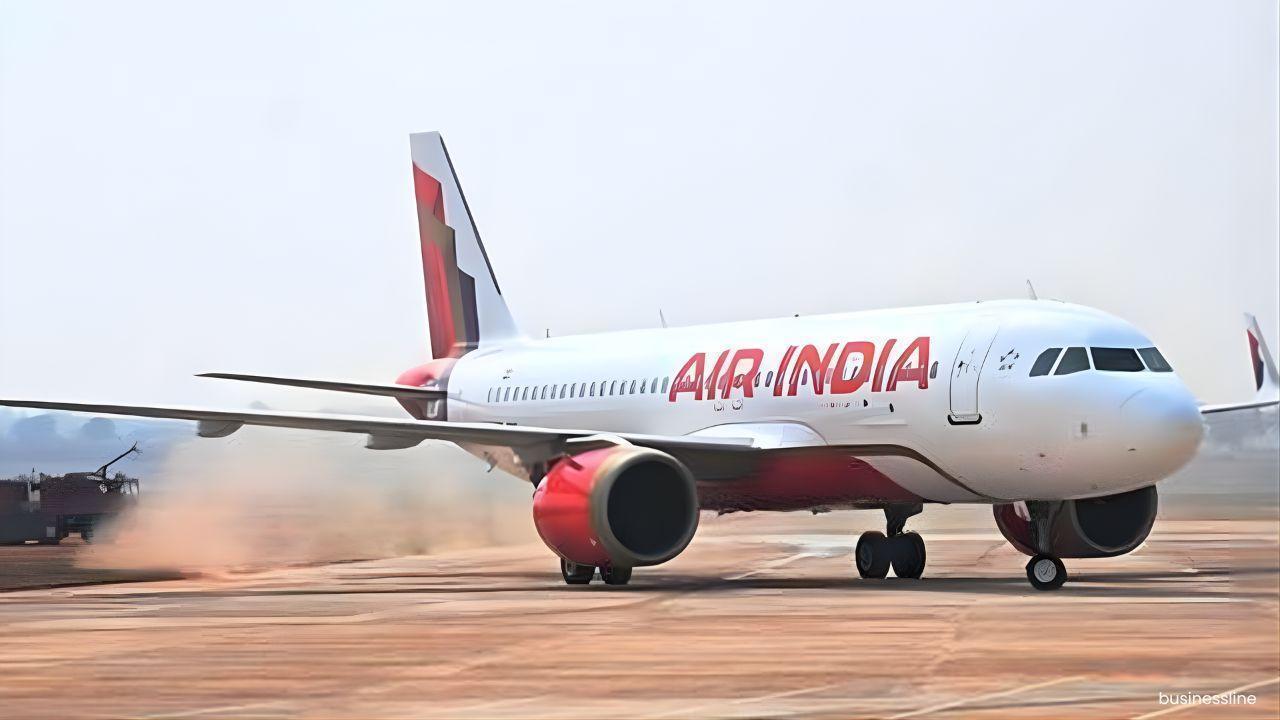
Post by : Avinab Raana
Photo : X / businessline
A fresh wave of scrutiny has emerged around Air India after European aviation authorities raised concerns over safety lapses detected during aircraft inspections. The development has sparked discussion across the global aviation industry, especially at a time when the airline is attempting a major transformation under the Tata Group. While safety inspections are routine in international aviation, the findings have placed Air India under a sharper regulatory lens, highlighting the operational challenges that often accompany legacy fleets and rapid airline expansion.
The concerns surfaced during inspections conducted by the European Union Aviation Safety Agency, commonly known as EASA. Inspectors examining Air India aircraft at European airports reportedly identified several maintenance and compliance issues. These findings were not related to immediate flight safety threats but were categorized as technical deficiencies that airlines are required to address quickly. In the highly regulated world of aviation safety, even minor irregularities can attract regulatory attention, particularly in Europe where inspection standards are known to be among the strictest globally.
Following the alert from European authorities, India’s aviation regulator began closely monitoring Air India’s operational standards. Aviation regulators typically treat such findings seriously because they can indicate underlying maintenance or procedural gaps that need correction. The Directorate General of Civil Aviation has reportedly stepped up surveillance of the airline’s technical processes and maintenance practices to ensure that international aviation safety norms are consistently maintained. Increased monitoring is a common regulatory step designed to support corrective action rather than impose immediate penalties.
A key factor behind the concerns appears to be the airline’s ageing aircraft fleet. Many of Air India’s wide-body aircraft have been in service for well over a decade, and older aircraft naturally demand more frequent inspections and technical upkeep. As aircraft age, components require replacement more often and systems must be carefully monitored to maintain operational reliability. While such challenges are not uncommon for legacy airlines, they often become visible during rigorous international inspections, where regulators assess everything from technical documentation to physical aircraft conditions.
Air India has already launched a sweeping modernization plan aimed at addressing these very challenges. Since its acquisition by the Tata Group, the airline has embarked on one of the largest aircraft procurement and upgrade programs in aviation history. New aircraft orders and interior refurbishment projects are designed to gradually replace or modernize older planes in the fleet. However, global supply chain disruptions and delays in aircraft retrofitting programs have slowed parts of the transformation, meaning some older aircraft remain in active service longer than originally planned.
Maintaining strict airline safety compliance is particularly crucial for Air India as it seeks to expand its international presence. The airline has been steadily increasing long-haul routes connecting India with Europe, North America, and other global destinations. For any carrier operating in multiple regulatory jurisdictions, maintaining consistent maintenance standards and operational discipline is essential. Even relatively small compliance findings can influence how international regulators evaluate an airline’s reliability and safety management systems.
Despite the attention surrounding the issue, aviation experts note that regulatory findings are not uncommon in global airline operations. What truly defines an airline’s safety culture is how quickly and effectively it addresses such issues. For Air India, the warning could serve as an important moment in its ongoing transformation journey. Strengthening maintenance oversight, accelerating fleet upgrades, and reinforcing operational processes may ultimately help the airline emerge stronger as it rebuilds its reputation on the global stage. As the airline continues its ambitious revival strategy, the coming months will be crucial in demonstrating that Air India’s modernization efforts extend beyond branding and expansion to the core pillars of aviation: safety, reliability, and operational excellence.
#trending #latest, Air India safety lapses, EASA aviation safety, ageing aircraft fleet, aircraft maintenance standards, aviation regulatory oversight, airline safety compliance, Air India fleet modernization








Advances in Aerospace Technology and Commercial Aviation Recovery
Insights into breakthrough aerospace technologies and commercial aviation’s recovery amid 2025 chall

Defense Modernization and Strategic Spending Trends
Explore key trends in global defense modernization and strategic military spending shaping 2025 secu

Tens of Thousands Protest in Serbia on Anniversary of Deadly Roof Collapse
Tens of thousands in Novi Sad mark a year since a deadly station roof collapse that killed 16, prote

Canada PM Carney Apologizes to Trump Over Controversial Reagan Anti-Tariff Ad
Canadian PM Mark Carney apologized to President Trump over an Ontario anti-tariff ad quoting Reagan,

The ad that stirred a hornets nest, and made Canadian PM Carney say sorry to Trump
Canadian PM Mark Carney apologizes to US President Trump after a tariff-related ad causes diplomatic

Bengaluru-Mumbai Superfast Train Approved After 30-Year Wait
Railways approves new superfast train connecting Bengaluru and Mumbai, ending a 30-year demand, easi



