Post by : Avinab Raana
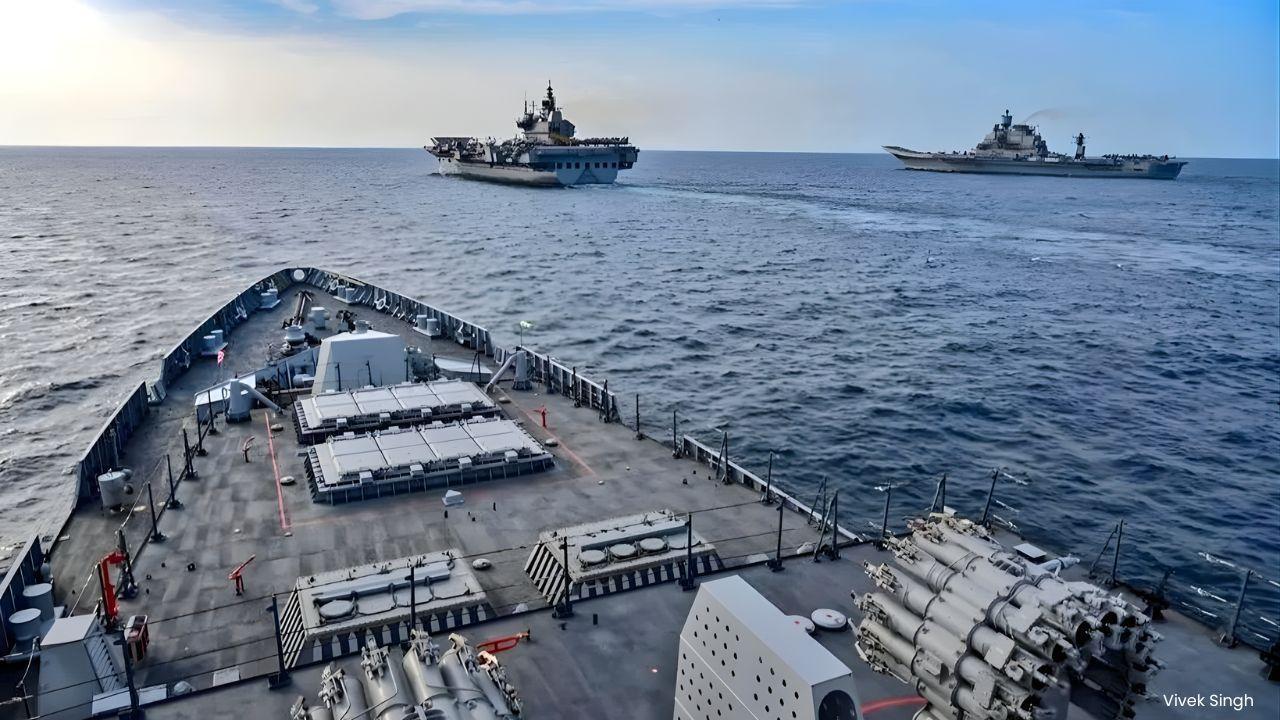
Photo : X / Vivek Singh
The Indian Navy has intensified its maritime vigilance in the Strait of Hormuz, closely monitoring vessels heading toward India as geopolitical tensions continue to shape global shipping routes. Naval warships have been deployed in the region to track India-bound merchant ships and energy carriers moving through the strategic corridor, highlighting India’s growing focus on safeguarding vital sea lanes that support its economy and energy imports.
Indian naval ships operating in the Gulf region are maintaining continuous surveillance of merchant vessels travelling toward Indian ports. The presence of these warships is aimed at ensuring that ships carrying essential cargo including crude oil, liquefied petroleum gas, and other commodities—can safely navigate the narrow maritime corridor. India-bound vessels passing through the Strait of Hormuz shipping route are particularly important for the country’s energy supply chain, making their protection a strategic priority.
As part of the security effort, the Indian Navy has also been prepared to provide escort support to selected vessels transiting through the strait. Energy carriers transporting large quantities of LPG and petroleum products toward India are among the ships receiving heightened monitoring. Such escort operations help reduce risks for commercial shipping in areas where maritime tensions and security concerns can affect normal navigation.
The current deployment forms part of Operation Sankalp, India’s long-standing naval mission designed to safeguard Indian merchant shipping in high-risk maritime zones. Under this initiative, naval vessels patrol critical sea lanes linking the Persian Gulf to the Arabian Sea, ensuring that India’s maritime trade continues without disruption. Through regular surveillance, coordination with merchant vessels, and rapid response capabilities, the operation strengthens maritime security for ships operating in sensitive waters.
The Strait of Hormuz remains one of the most strategically important maritime chokepoints in the world. A substantial portion of global oil and liquefied gas shipments travels through this narrow corridor, connecting energy-producing nations in the Persian Gulf with global markets. For India, the waterway is especially critical because a large share of the country’s energy imports originates from Gulf producers. Any disruption to shipping through the corridor could impact fuel supplies and energy prices.
Indian maritime agencies are also monitoring the broader movement of ships across the Persian Gulf region. Dozens of vessels linked to Indian trade routes operate in these waters, carrying essential commodities and supporting international commerce. By maintaining a visible naval presence, India aims to reassure shipowners and cargo operators that their vessels can navigate the region with greater security.
The Indian Navy’s continued presence in the Hormuz energy corridor underscores the strategic importance of protecting sea-based trade routes. As global shipping becomes increasingly vulnerable to geopolitical tensions, naval deployments are playing a larger role in ensuring the uninterrupted flow of energy and cargo. For India, safeguarding merchant vessels passing through the Strait of Hormuz is not only about maritime security, it is also about protecting the country’s economic lifelines and maintaining stability in one of the world’s most important shipping corridors.
#trending #latest, Indian Navy Strait of Hormuz, India-bound vessels Hormuz escort, Indian Navy warships Gulf security, Strait of Hormuz shipping security, India energy shipping route, Operation Sankalp naval mission, Persian Gulf maritime security








Advances in Aerospace Technology and Commercial Aviation Recovery
Insights into breakthrough aerospace technologies and commercial aviation’s recovery amid 2025 chall

Defense Modernization and Strategic Spending Trends
Explore key trends in global defense modernization and strategic military spending shaping 2025 secu

Tens of Thousands Protest in Serbia on Anniversary of Deadly Roof Collapse
Tens of thousands in Novi Sad mark a year since a deadly station roof collapse that killed 16, prote

Canada PM Carney Apologizes to Trump Over Controversial Reagan Anti-Tariff Ad
Canadian PM Mark Carney apologized to President Trump over an Ontario anti-tariff ad quoting Reagan,

The ad that stirred a hornets nest, and made Canadian PM Carney say sorry to Trump
Canadian PM Mark Carney apologizes to US President Trump after a tariff-related ad causes diplomatic

Bengaluru-Mumbai Superfast Train Approved After 30-Year Wait
Railways approves new superfast train connecting Bengaluru and Mumbai, ending a 30-year demand, easi



