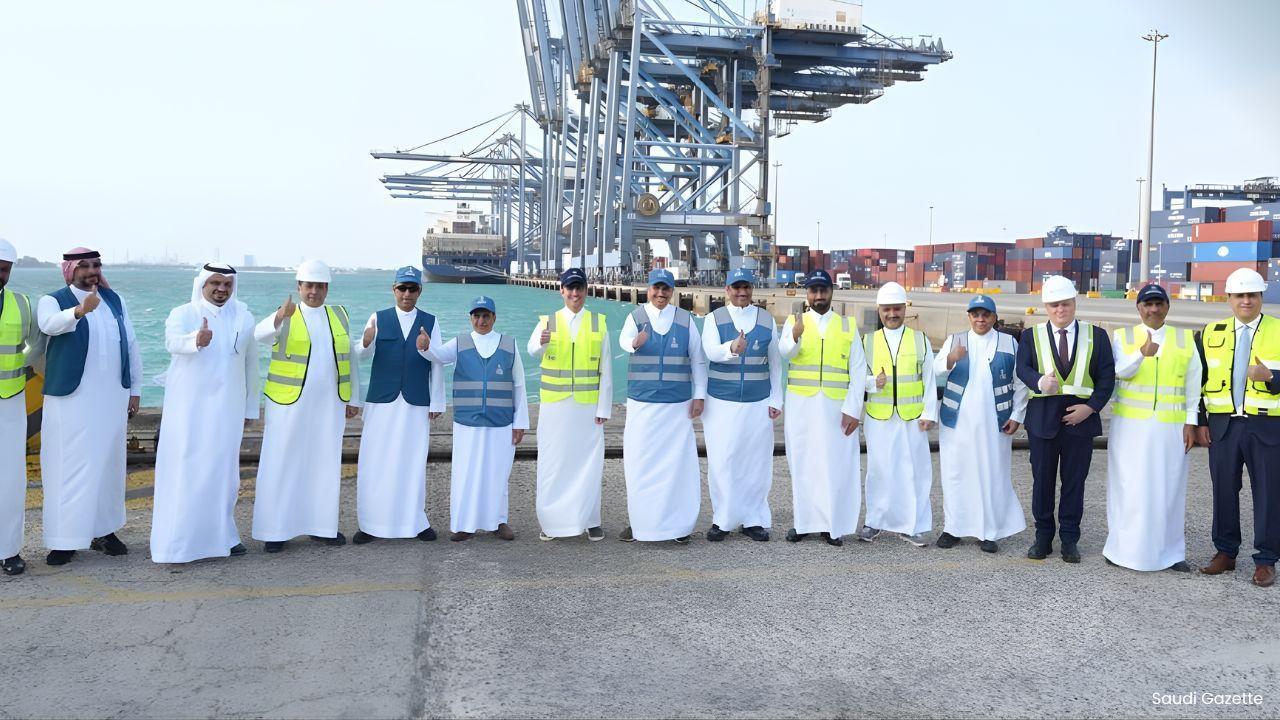
Post by : Avinab Raana
Photo : X / Saudi Gazette
Saudi Arabia has unveiled a major logistics initiative to redirect cargo from Gulf ports to its Red Sea ports, a strategic move aimed at maintaining global trade flows amid disruptions in the Strait of Hormuz. The plan reflects Riyadh’s efforts to strengthen supply-chain resilience and protect international shipping routes as geopolitical tensions in the region continue to impact maritime operations. The initiative signals a broader shift in regional logistics strategy, positioning Saudi Arabia’s western ports as an alternative gateway for cargo moving between Asia, Europe, and Africa.
The new Logistics Corridors Initiative has been launched to establish dedicated operational routes that allow containers and commercial cargo to bypass Gulf ports and instead move through Saudi Arabia’s Red Sea coastline. The program will redirect shipments from ports located in the Kingdom’s Eastern Region and potentially from other Gulf Cooperation Council countries. Through these dedicated corridors, cargo can be transported to major Red Sea gateways such as Jeddah Islamic Port, where it can then be redistributed to international markets via established shipping lanes.
Saudi Arabia’s western ports are rapidly emerging as critical nodes in the global maritime network. Located along major shipping lanes connecting Asia to Europe through the Suez Canal, these ports provide direct access to some of the world’s busiest trade corridors. Facilities along the Red Sea coast have already begun handling cargo redirected from the Gulf region, demonstrating their growing capacity to absorb additional freight traffic during periods of regional instability. The development also strengthens Saudi Arabia’s ambition to position itself as a global logistics hub under its long-term economic diversification strategy.
The move comes at a time when maritime traffic through the Strait of Hormuz- one of the world’s most important energy and trade chokepoints has faced increasing uncertainty due to regional tensions. Shipping companies have been forced to reconsider traditional trade routes as security risks and freight costs continue to rise.By rerouting cargo toward the Red Sea, Saudi Arabia is creating an alternative pathway that reduces dependence on the narrow Hormuz corridor while keeping goods flowing across international supply chains.
Among the ports expected to play a central role in the initiative is Jeddah Islamic Port, one of the largest maritime gateways in the Middle East. The port sits directly on the main east-west shipping lane linking the Indian Ocean with the Mediterranean through the Suez Canal, making it an ideal hub for redistributing cargo to global markets. Other Red Sea ports along the Saudi coastline are also expected to support the increased cargo traffic as logistics operators adapt to the evolving trade environment.
Saudi officials have emphasized that the initiative is designed to ensure the smooth movement of goods despite geopolitical disruptions affecting regional shipping routes. By establishing dedicated logistics corridors, the Kingdom aims to minimize supply chain delays and maintain reliable cargo flows for international trade partners. The plan could also provide relief for shipping companies seeking safer and more predictable routes during periods of heightened maritime risk.
Saudi Arabia’s decision to reroute cargo toward the Red Sea marks a significant shift in how regional logistics networks operate during geopolitical crises. As global trade increasingly depends on resilient maritime infrastructure, alternative corridors like these could reshape shipping patterns across the Middle East. For the global shipping industry, the initiative highlights a growing trend: countries are investing in flexible logistics systems that can adapt quickly when traditional trade routes become uncertain.
#trending #latest, Saudi Red Sea cargo route, Gulf cargo rerouting initiative, Saudi Red Sea ports logistics, Strait of Hormuz disruption trade, Jeddah Islamic Port cargo hub, Red Sea shipping corridor, Saudi logistics corridors initiative







Advances in Aerospace Technology and Commercial Aviation Recovery
Insights into breakthrough aerospace technologies and commercial aviation’s recovery amid 2025 chall

Defense Modernization and Strategic Spending Trends
Explore key trends in global defense modernization and strategic military spending shaping 2025 secu

Tens of Thousands Protest in Serbia on Anniversary of Deadly Roof Collapse
Tens of thousands in Novi Sad mark a year since a deadly station roof collapse that killed 16, prote

Canada PM Carney Apologizes to Trump Over Controversial Reagan Anti-Tariff Ad
Canadian PM Mark Carney apologized to President Trump over an Ontario anti-tariff ad quoting Reagan,

The ad that stirred a hornets nest, and made Canadian PM Carney say sorry to Trump
Canadian PM Mark Carney apologizes to US President Trump after a tariff-related ad causes diplomatic

Bengaluru-Mumbai Superfast Train Approved After 30-Year Wait
Railways approves new superfast train connecting Bengaluru and Mumbai, ending a 30-year demand, easi



