Post by : Avinab Raana
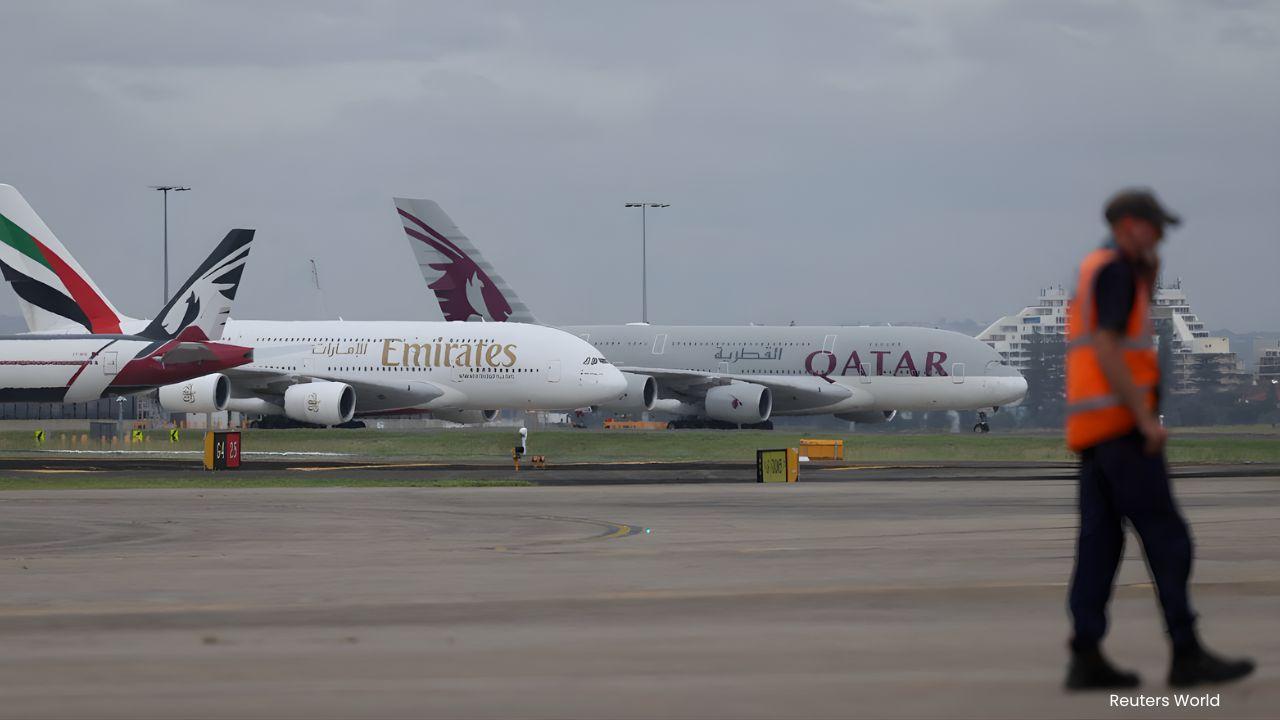
Photo : X / Reuters World
Air freight rates have surged dramatically as conflict in the Middle East disrupts key trade routes, forcing cargo carriers to reroute flights and reshuffle logistics networks. Shippers and logistics firms around the world are now grappling with sharply higher costs as traditional overflight corridors become unavailable or too risky to use.This rapid escalation in air cargo costs is adding pressure on global supply chains already struggling with post‑pandemic volatility.
With major overflight routes across the Middle East now constrained, air cargo operators have been forced to divert planes around conflict zones. These detours increase flight times, fuel consumption, and aircraft utilization costs, all of which are contributing to the rising air freight rates surge. Logistics planners say this has tightened available cargo capacity, especially on long‑haul trade lanes linking Asia, Europe, and North America. As demand for air cargo remains strong, limited available belly space on passenger flights and reduced freighter availability are exacerbating cost pressures.
The rising global logistics challenge is rippling through multiple industries dependent on timely cargo movement. Electronic components, automotive parts, pharmaceuticals, and fashion products are among the categories feeling the immediate effects of higher freight bills and reduced reliability in delivery timelines. Manufacturers and retailers are now scrambling to adjust inventory strategies and assess alternative routing options to mitigate delivery delays and cost spikes.
Air cargo carriers are responding to the crisis by adjusting pricing structures and flight schedules. Many routes are seeing record‑high rates as carriers seek to balance capacity constraints with rising operational costs. This trend is particularly acute on east‑west traffic flows, where air freight has traditionally served as the fastest delivery option for time‑sensitive goods.Logistics firms are also investing in technology to better manage capacity and pricing analytics, aiming to provide customers with more transparency into cost drivers and routing options.
Analysts say the current situation could have lasting effects on how companies manage global supply chains. Long‑term contracts may be renegotiated, alternative trade corridors explored, and investments in air cargo infrastructure accelerated to reduce dependency on sensitive overflight routes. The air cargo cost increase underscores the fragility of global logistics networks in the face of geopolitical shocks, pushing businesses to rethink resilience strategies in an increasingly uncertain world.
#trending #latest, air freight rates surge, Middle East trade disruption, global logistics challenge, air cargo cost increase, supply chain pressure, freight capacity constraints, global trade routes






Advances in Aerospace Technology and Commercial Aviation Recovery
Insights into breakthrough aerospace technologies and commercial aviation’s recovery amid 2025 chall

Defense Modernization and Strategic Spending Trends
Explore key trends in global defense modernization and strategic military spending shaping 2025 secu

Tens of Thousands Protest in Serbia on Anniversary of Deadly Roof Collapse
Tens of thousands in Novi Sad mark a year since a deadly station roof collapse that killed 16, prote

Canada PM Carney Apologizes to Trump Over Controversial Reagan Anti-Tariff Ad
Canadian PM Mark Carney apologized to President Trump over an Ontario anti-tariff ad quoting Reagan,

The ad that stirred a hornets nest, and made Canadian PM Carney say sorry to Trump
Canadian PM Mark Carney apologizes to US President Trump after a tariff-related ad causes diplomatic

Bengaluru-Mumbai Superfast Train Approved After 30-Year Wait
Railways approves new superfast train connecting Bengaluru and Mumbai, ending a 30-year demand, easi



