Post by : Saif
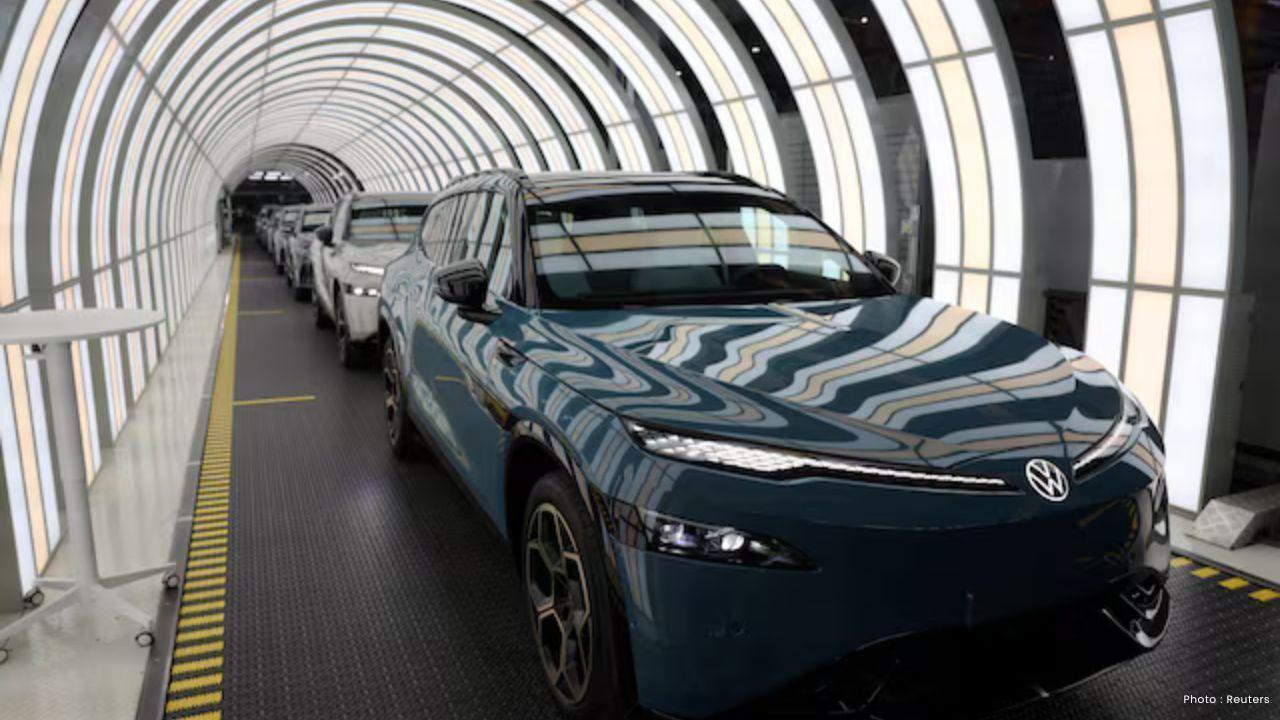
Volkswagen has once again become the best-selling car brand in China, the world’s largest automobile market. The German automaker reclaimed the top position during the first two months of 2026, while Chinese electric vehicle giant BYD slipped to fourth place as government subsidies for electric vehicles began to fade.
The shift shows how quickly the global auto industry is changing. For several years, Chinese companies—especially those focused on electric vehicles—had been gaining strong ground in their home market. But recent policy changes and shifting consumer preferences have allowed traditional automakers to recover some lost market share.
According to industry data from the China Passenger Car Association, Volkswagen’s joint ventures with local partners FAW and SAIC captured about 13.9 percent of the Chinese passenger vehicle market during January and February 2026.
This placed Volkswagen slightly ahead of Chinese automaker Geely, which held about 13.8 percent market share during the same period. Meanwhile, Toyota’s joint ventures in China captured about 7.8 percent of the market.
BYD, which had been the top-selling carmaker in China in recent years, dropped to fourth place with about 7.1 percent market share. The company also recorded its sharpest sales decline since the COVID-19 pandemic began.
The change in rankings comes as China gradually removes some of the incentives that previously supported electric vehicle purchases. For years, government subsidies and tax exemptions helped boost EV sales by making electric cars cheaper for consumers.
However, those incentives have now been reduced or removed in many cases. The end of these benefits has affected companies that relied heavily on affordable electric vehicles and plug-in hybrids.
Industry experts say that as subsidies disappear, the Chinese auto market is shifting toward a more value-driven environment, where buyers pay closer attention to price, reliability, and long-term operating costs rather than simply choosing subsidized electric models.
This shift has helped some traditional automakers regain ground. Many established brands offer a mix of gasoline, hybrid, and electric vehicles, which gives customers more options when government incentives change.
Hybrid vehicles have also gained renewed interest among Chinese buyers. These vehicles combine traditional engines with electric motors, offering better fuel efficiency without requiring full battery charging infrastructure.
Japanese automaker Toyota has benefited from this trend because of its strong lineup of hybrid models. Analysts say some consumers who previously considered plug-in hybrid or fully electric vehicles are now choosing standard hybrid cars instead.
For BYD, the decline in sales represents a new challenge. The company had become one of the most successful electric vehicle manufacturers in the world and briefly overtook several global brands in both production and sales.
But competition in the Chinese EV market has become extremely intense. Dozens of companies are producing electric vehicles, leading to price wars and shrinking profit margins across the industry.
To respond to the slowdown, BYD has begun introducing new technologies to attract customers again. The company recently revealed its first major battery upgrade in several years, aiming to improve vehicle performance and charging capabilities.
Meanwhile, Volkswagen is working aggressively to rebuild its position in China’s fast-changing car market. The company recently started mass production of a new electric vehicle developed together with Chinese technology company Xpeng.
This partnership is part of Volkswagen’s broader strategy known as “In China, for China.” Under this approach, vehicles are designed and developed specifically for Chinese customers rather than being adapted from global models.
Volkswagen also plans to launch more than 20 new electric vehicle models in China during 2026 as it expands its lineup to compete with local manufacturers.
The company hopes that stronger local partnerships and faster product development will help it keep pace with China’s rapidly evolving automotive industry.
China remains the most important automobile market in the world. Millions of vehicles are sold in the country every year, and trends in China often influence the global auto industry.
For many international automakers, success in China is essential for maintaining global growth. However, the market has become increasingly competitive as local companies develop advanced technology and offer lower prices.
The recent change in sales rankings shows that the Chinese auto market is entering a new phase. Instead of rapid growth driven by government incentives, the industry is now moving toward a more balanced environment where companies must compete on technology, value, and brand reputation.
For consumers, this could lead to better choices and more innovation. Automakers will likely focus on improving battery technology, hybrid systems, and digital features to attract buyers.
For companies like Volkswagen and BYD, the battle for leadership in China is far from over. The coming years will determine whether traditional automakers can maintain their comeback or whether electric vehicle specialists will once again dominate the world’s largest car market.
#trending #latest #Volkswagen #BYD #ChinaAutoMarket #ElectricVehicles #EVIndustry #GlobalAutomotive #CarSales #AutoIndustry #ChinaEconomy #armustnews






Advances in Aerospace Technology and Commercial Aviation Recovery
Insights into breakthrough aerospace technologies and commercial aviation’s recovery amid 2025 chall

Defense Modernization and Strategic Spending Trends
Explore key trends in global defense modernization and strategic military spending shaping 2025 secu

Tens of Thousands Protest in Serbia on Anniversary of Deadly Roof Collapse
Tens of thousands in Novi Sad mark a year since a deadly station roof collapse that killed 16, prote

Canada PM Carney Apologizes to Trump Over Controversial Reagan Anti-Tariff Ad
Canadian PM Mark Carney apologized to President Trump over an Ontario anti-tariff ad quoting Reagan,

The ad that stirred a hornets nest, and made Canadian PM Carney say sorry to Trump
Canadian PM Mark Carney apologizes to US President Trump after a tariff-related ad causes diplomatic

Bengaluru-Mumbai Superfast Train Approved After 30-Year Wait
Railways approves new superfast train connecting Bengaluru and Mumbai, ending a 30-year demand, easi



