Post by : Saif
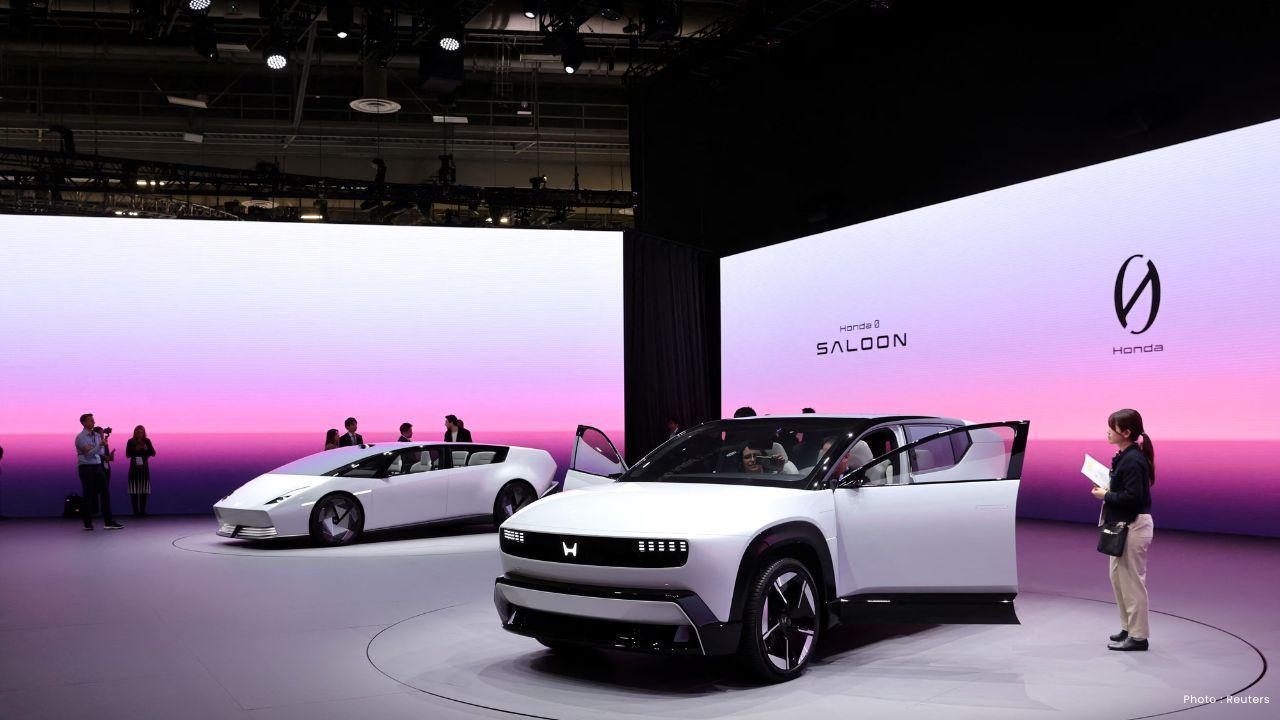
Honda Motor has taken a major financial hit after announcing a massive $15.7 billion writedown linked to its electric vehicle strategy. The decision reflects the growing uncertainty surrounding the global electric car market and highlights the increasing pressure traditional automakers face as they compete with new technology leaders, especially in China.
The Japanese automaker said the losses could reach about 2.5 trillion yen, marking one of the largest setbacks in its history. The charge is so large that Honda now expects to report its first annual loss since it became a publicly listed company nearly seventy years ago.
The company’s decision to take such a large writedown is tied mainly to a reassessment of its electric vehicle plans, particularly in North America. Honda had planned to launch several new battery-powered vehicles, but the company has now canceled three models that were expected to enter production in the United States.
These models included vehicles from Honda’s planned “0 Series,” which were first introduced as concept designs at technology events in recent years. At the time, the company hoped the models would help it compete more strongly in the fast-growing electric car market.
However, the global EV market has become more unpredictable than many automakers expected. Demand in some regions has slowed, while government policies have also changed. In the United States, government support for electric vehicles has weakened after subsidies were removed, which has reduced consumer incentives to buy electric cars.
Because of this shift, Honda believes it is too risky to continue investing heavily in certain electric vehicle programs that may not deliver strong sales.
The company’s EV business has so far represented only a small share of its overall car sales. Last year, battery-powered vehicles accounted for about 2.5 percent of Honda’s global vehicle sales, or roughly 84,000 units out of more than 3 million vehicles sold worldwide.
This small share shows how difficult it has been for Honda to catch up with companies that moved earlier and faster into the electric vehicle sector.
While the financial loss is painful, analysts say the bigger concern may be Honda’s long-term competitiveness in China, the world’s largest automobile market.
China has become the center of the global electric vehicle revolution. Local companies such as BYD and other Chinese manufacturers have developed advanced electric cars that feature powerful software systems, fast charging technology, and highly competitive pricing.
Honda, however, has struggled to keep pace with this rapid technological progress. Its battery electric vehicle sales in China remain very small compared with local competitors. Last year the company sold only about 17,000 electric cars in China, representing a tiny portion of its overall sales in the country.
Industry experts say the gap between traditional automakers and China’s new electric vehicle companies is widening, especially in areas such as digital technology and software-driven features inside vehicles.
Many Chinese EV makers now treat cars more like smartphones on wheels, offering advanced user interfaces, frequent software updates, and integrated digital services. These features have become important selling points for younger car buyers.
Honda’s challenges in China also highlight how quickly the auto industry is changing. For decades, Japanese automakers dominated global markets through reliability, strong engineering, and fuel-efficient engines.
But in the electric vehicle era, software, batteries, and digital technology are becoming just as important as traditional mechanical engineering.
Another area of uncertainty for Honda involves its partnership with Sony in a joint venture called Sony Honda Mobility. The two companies have been developing a high-tech electric sedan known as the Afeela.
Analysts say Honda’s recent financial adjustments may raise questions about how the partnership will move forward and whether the project can compete with established electric car leaders.
Despite the large writedown, Honda is not abandoning electrification entirely. Instead, the company appears to be shifting toward a more balanced strategy that relies more heavily on hybrid vehicles in the near term.
Hybrid cars combine gasoline engines with electric motors, offering improved fuel efficiency without depending fully on battery charging infrastructure. Many analysts believe hybrids could serve as a practical transition technology while the electric vehicle market continues to evolve.
The current situation at Honda also reflects a broader trend across the global auto industry. Several major automakers have recently announced billions of dollars in losses or writedowns related to electric vehicle investments as companies adjust their strategies to match real market demand.
The rapid shift toward electric vehicles was once expected to happen quickly, driven by government policies and environmental goals. However, the transition has proven more complex than predicted.
High battery costs, charging infrastructure challenges, and changing government policies have all slowed adoption in some markets.
For Honda, the immediate priority is stabilizing its finances and rebuilding its long-term strategy in a changing automotive landscape.
The company is expected to focus more on profitable segments such as hybrid vehicles, motorcycles, and emerging markets where demand for affordable transportation continues to grow.
At the same time, the global race toward cleaner transportation is far from over. Electric vehicles will likely remain a central part of the future auto industry, but the path toward that future may be slower and more uneven than many companies once expected.
Honda’s massive writedown serves as a reminder that the shift to electric mobility is not just a technological revolution—it is also a financial gamble that even the world’s most established automakers must carefully navigate.
#trending #latest #Honda #ElectricVehicles #EVIndustry #AutoIndustry #ChinaAutoMarket #HybridCars #GlobalEconomy #AutomotiveNews #EnergyTransition #armustnews






Advances in Aerospace Technology and Commercial Aviation Recovery
Insights into breakthrough aerospace technologies and commercial aviation’s recovery amid 2025 chall

Defense Modernization and Strategic Spending Trends
Explore key trends in global defense modernization and strategic military spending shaping 2025 secu

Tens of Thousands Protest in Serbia on Anniversary of Deadly Roof Collapse
Tens of thousands in Novi Sad mark a year since a deadly station roof collapse that killed 16, prote

Canada PM Carney Apologizes to Trump Over Controversial Reagan Anti-Tariff Ad
Canadian PM Mark Carney apologized to President Trump over an Ontario anti-tariff ad quoting Reagan,

The ad that stirred a hornets nest, and made Canadian PM Carney say sorry to Trump
Canadian PM Mark Carney apologizes to US President Trump after a tariff-related ad causes diplomatic

Bengaluru-Mumbai Superfast Train Approved After 30-Year Wait
Railways approves new superfast train connecting Bengaluru and Mumbai, ending a 30-year demand, easi



