Post by : Saif
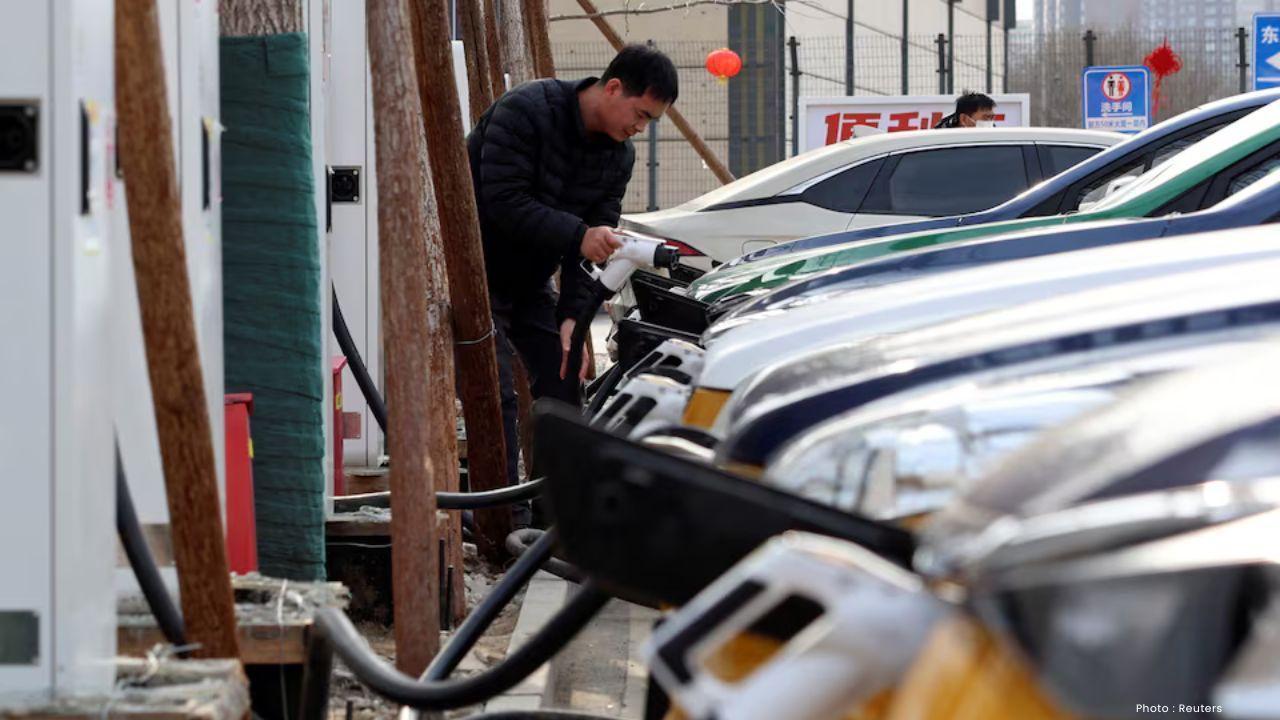
transition to cleaner transportation. New data from market researchers shows that registrations of electric vehicles dropped around 11 percent worldwide, marking the second month in a row that the market has weakened.
In total, just over one million electric vehicles were registered globally during February, which is the lowest monthly level since early 2024.
The decline was mainly caused by a sharp slowdown in two of the world’s largest EV markets: China and the United States. Changes in government policies, weaker consumer demand, and intense competition between automakers have all contributed to the drop.
China, which is the world’s largest market for electric vehicles, recorded the biggest decline. EV registrations in the country dropped about 32 percent compared with the previous year, the steepest fall since the early months of the COVID-19 pandemic.
Several factors caused the slowdown. One of the biggest reasons was the expiration of certain government incentives that had encouraged people to buy electric vehicles. China ended some purchase tax exemptions and reduced subsidies that previously helped lower the cost of EVs.
These policy changes made electric vehicles more expensive for many buyers, which slowed demand. At the same time, the overall car market in China also weakened, adding more pressure on EV sales.
Another challenge in China is the intense competition between domestic car companies. The market is crowded with manufacturers offering similar models, leading to price wars and shrinking profit margins. Some companies have struggled to sell their vehicles as inventories continue to grow.
In the United States, the EV market also faced difficulties. Sales dropped about 35 percent, marking the fifth straight month of decline.
One reason for the slowdown is the change in government policies related to tax incentives. Some EV tax credit programs have been reduced or ended, which has made electric cars less attractive for certain buyers. In addition, new proposals to relax carbon-emission rules have reduced pressure on automakers to sell more electric vehicles.
Automakers that invested heavily in electric vehicle development are now feeling the financial impact. Industry analysts say companies with large EV investments in the U.S. have already recorded more than $70 billion in write-downs as they adjust their strategies.
However, not all regions saw declining sales. Europe showed some positive growth during the same period. Electric vehicle registrations in Europe increased by around 21 percent, although the growth was slower compared with previous years.
Experts say this increase shows that strong environmental policies and stricter emissions rules can still support EV demand in certain markets.
Meanwhile, other emerging markets experienced rapid growth. Countries in Asia, Australia, and parts of Europe saw EV registrations rise about 78 percent, largely driven by Chinese automakers expanding their exports to new regions.
China remains the dominant force in the global electric vehicle industry. The country produces and sells more EVs than any other nation and accounts for a large share of global manufacturing and exports.
Even with the recent slowdown, analysts believe electric vehicles will continue to grow over the long term. Governments around the world are still working toward reducing carbon emissions and limiting the use of fossil-fuel vehicles. Many countries have already announced plans to phase out traditional petrol and diesel cars over the coming decades.
However, the current slowdown shows that the transition to electric vehicles may not be smooth or predictable. Consumer demand can be influenced by many factors, including vehicle prices, government incentives, charging infrastructure, and overall economic conditions.
High interest rates and rising living costs in several countries have also made consumers more cautious about buying new vehicles, especially expensive electric models.
Another factor is the increasing availability of used electric vehicles. In some markets, buyers are choosing second-hand EVs instead of new ones because prices for used models have fallen sharply in recent years.
Industry experts say the EV market is entering a new phase where companies must compete not only on technology but also on price and practicality. Consumers are now paying more attention to battery range, charging speed, and overall affordability.
Despite the recent decline, many analysts believe the electric vehicle industry will recover as technology improves and prices fall. Advances in battery production, charging infrastructure, and manufacturing efficiency could help make EVs more affordable in the coming years.
Automakers are also expanding their product ranges, offering more models at different price levels. This could attract new customers who previously found electric vehicles too expensive.
The recent drop in global EV sales highlights an important reality: the shift toward electric transportation is a long process that will experience periods of rapid growth as well as temporary slowdowns.
For governments, automakers, and consumers, the challenge now is to ensure that the transition continues while balancing economic pressures, technology development, and environmental goals.
The coming years will determine whether the electric vehicle revolution regains its momentum or moves forward at a slower but more stable pace.
#trending #latest #ElectricVehicles #EVMarket #GlobalAutoIndustry #CleanEnergy #EVSales #AutoIndustry #GreenTransport #SustainableMobility #ClimateAction #armustnews








Advances in Aerospace Technology and Commercial Aviation Recovery
Insights into breakthrough aerospace technologies and commercial aviation’s recovery amid 2025 chall

Defense Modernization and Strategic Spending Trends
Explore key trends in global defense modernization and strategic military spending shaping 2025 secu

Tens of Thousands Protest in Serbia on Anniversary of Deadly Roof Collapse
Tens of thousands in Novi Sad mark a year since a deadly station roof collapse that killed 16, prote

Canada PM Carney Apologizes to Trump Over Controversial Reagan Anti-Tariff Ad
Canadian PM Mark Carney apologized to President Trump over an Ontario anti-tariff ad quoting Reagan,

The ad that stirred a hornets nest, and made Canadian PM Carney say sorry to Trump
Canadian PM Mark Carney apologizes to US President Trump after a tariff-related ad causes diplomatic

Bengaluru-Mumbai Superfast Train Approved After 30-Year Wait
Railways approves new superfast train connecting Bengaluru and Mumbai, ending a 30-year demand, easi



